The method, in the open
Last updated
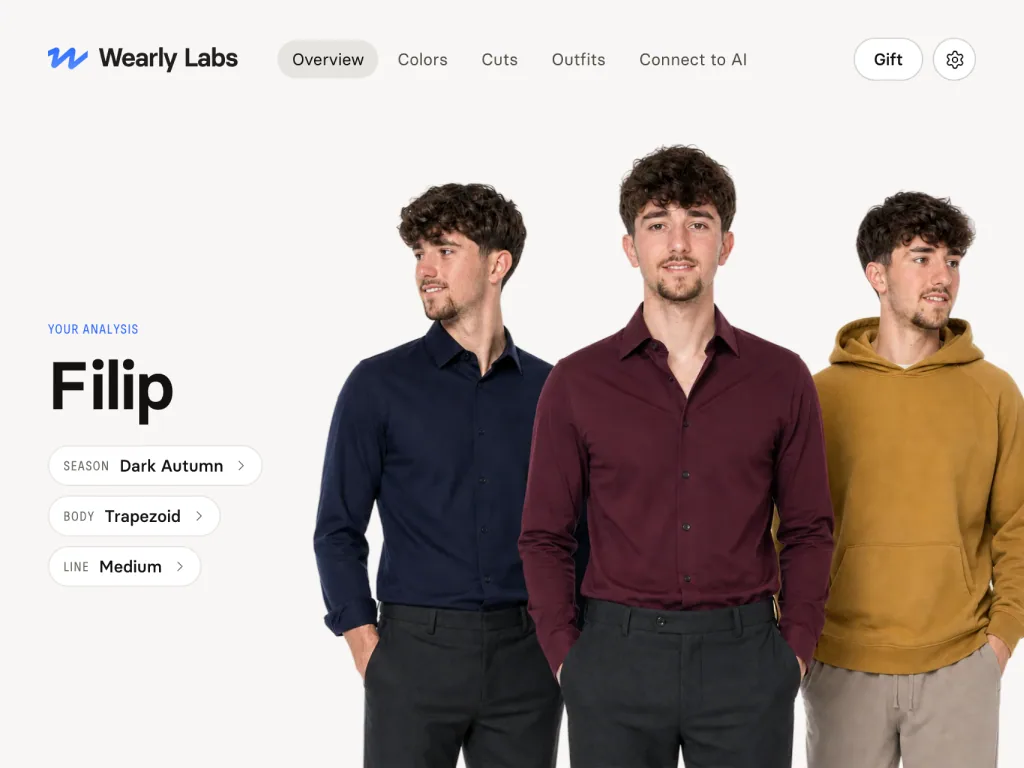
Wearly Labs is online color analysis and body type analysis. It places you in one of 12 color seasons, names your body shape and how sharp your line is, and turns all three into a verdict, with a reason, on 50 colors and 125+ cuts. This page says what goes in, what decides what, what we cannot see, and what changed and when.
On this page
What goes in
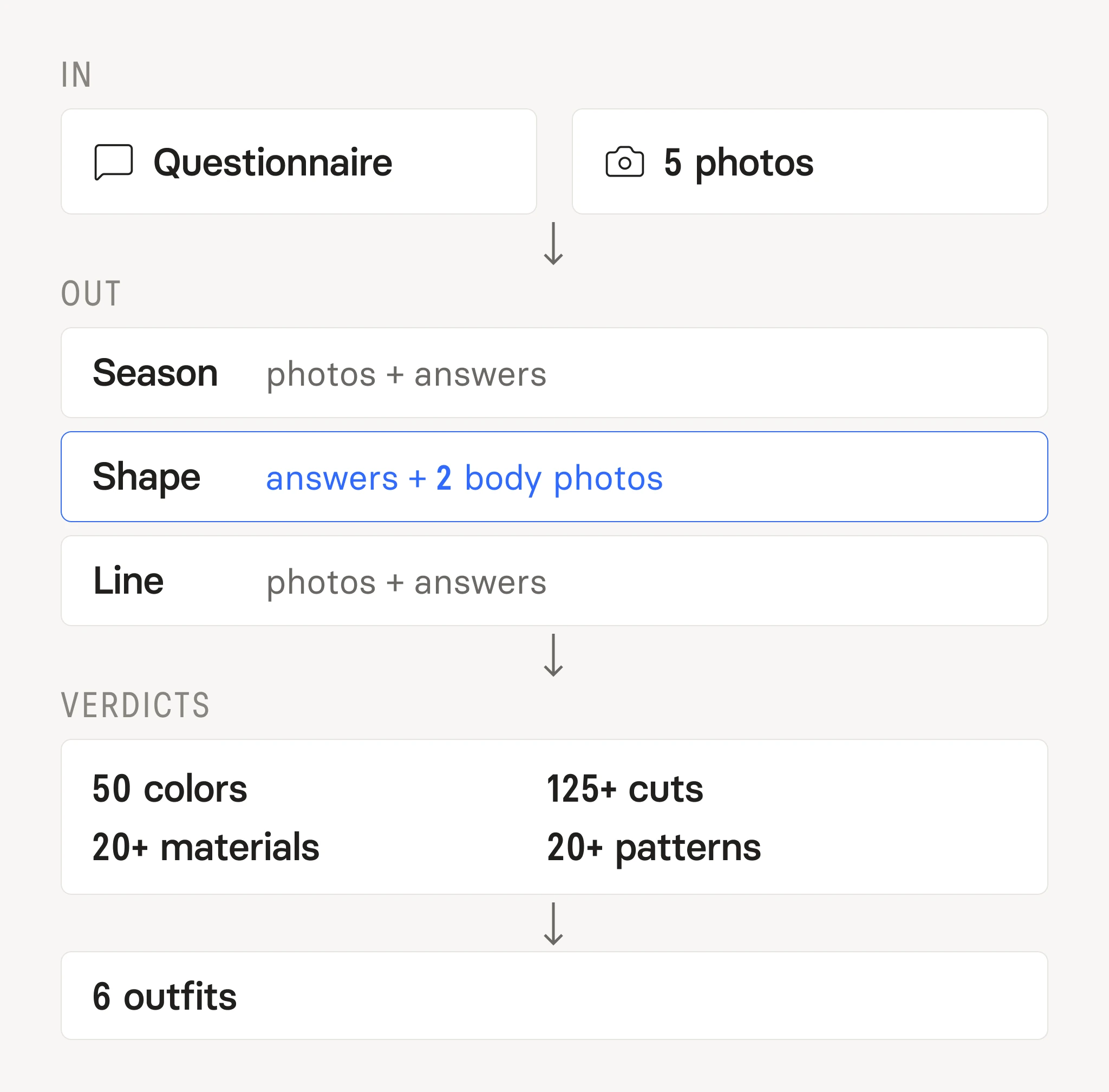
Your answers. About your coloring: your natural hair, your eyes, the veins on your wrist, what the sun does to your skin. About your proportions: your height, your shoulders against your hips, your waist, where you carry weight, your torso against your legs. And about your life: the situations you dress for, and what you always or never wear.
5 photos, in daylight. Your face straight on with a sheet of white paper next to it, your face at 45 degrees, your profile, and your body from the front and from the side.
That is all. No account, no tailor's measurements, no purchase history.
Your season
Color analysis reads three qualities of your coloring and the contrast between them.
Undertone: warm or cool. Value: light or deep. Chroma: clear or muted. Contrast: how far apart your skin, hair and eyes sit.
The sheet of white paper tells us what white looks like in your light, so every photo is read against it instead of against whatever your camera decided. Your answers about your veins, your natural hair and how you tan check what the photos show. Where a photo is unclear, your answers decide.
The result is one of 12 seasons. Two of them are known under another name elsewhere, so here are both.
| Family | Seasons in Wearly Labs | Also called |
|---|---|---|
| Spring | Light Spring, True Spring, Bright Spring | |
| Summer | Light Summer, True Summer, Soft Summer | |
| Autumn | Soft Autumn, True Autumn, Dark Autumn | Deep Autumn |
| Winter | Dark Winter, True Winter, Bright Winter | Deep Winter |
Your shape
Your shape is a proportion: how your shoulders, waist and hips relate. It sets how much volume you can carry, and where.
For women: hourglass, pear, rectangle, inverted triangle, apple. For men: triangle, trapezoid, rectangle, inverted triangle, oval.
We take your shape from your answers and the two body photos, weighed by fixed rules. A photo of a clothed body cannot measure a circumference, and a sweater has already softened the outline by the time the camera sees it. That is why the photos check your answers instead of replacing them.
A shape is not a problem to hide. Each of the ten has cuts that work and cuts that fight it, and the verdicts say which.
Your line
Your line is how sharp the edges of your clothes should be: sharp, medium or soft. It comes from your bone structure, the line of your shoulders and your facial features, read from your photos and checked against your answers.
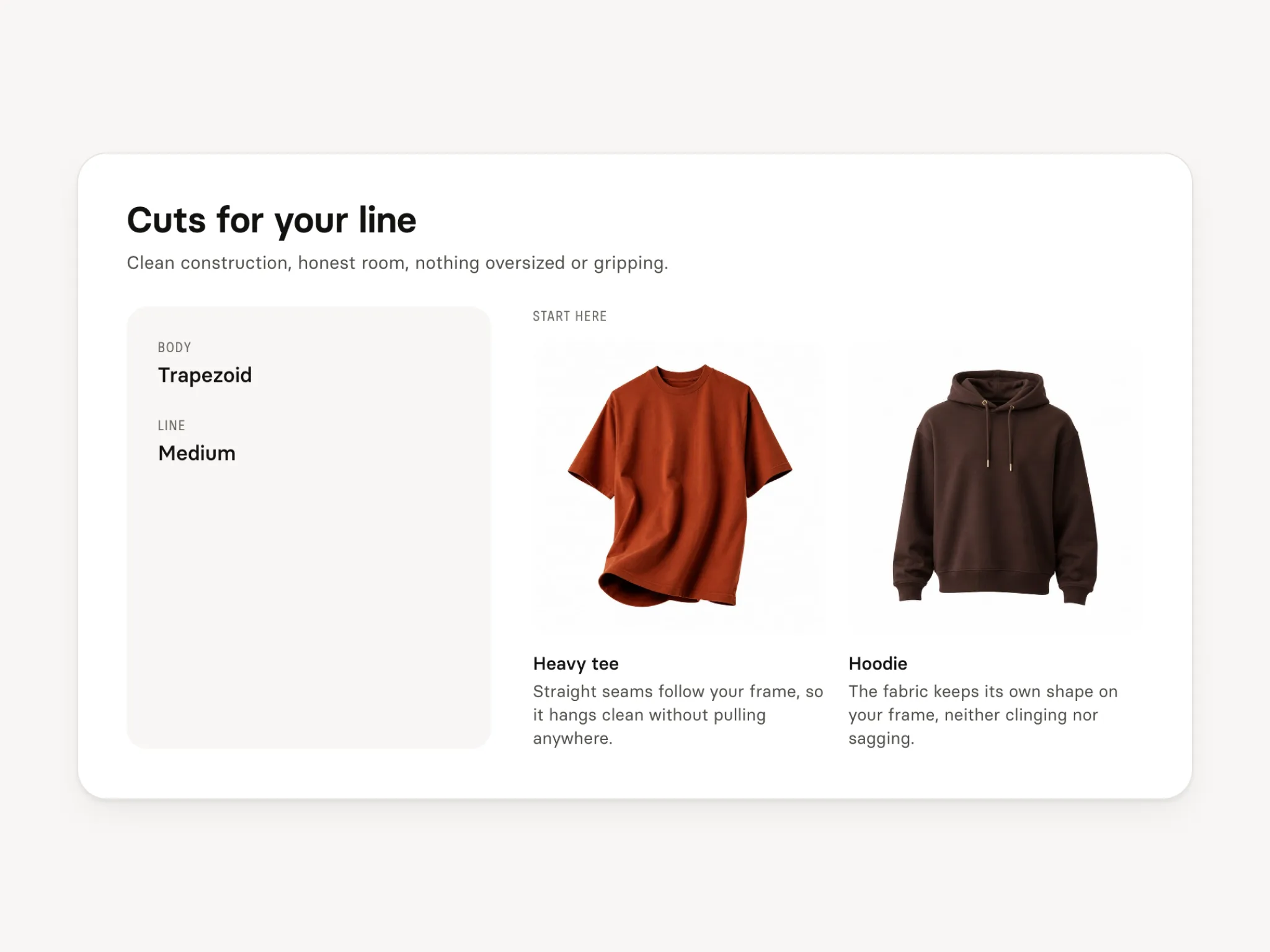
Your shape sets how much volume you can carry, your line how sharp its edges should be. The two are independent. A trapezoid man can have a soft line and a pear-shaped woman a sharp one, and each dresses differently from someone with the same shape and the opposite line.
How a verdict is made
Every color and every cut gets a verdict: Wear, Depends or Skip, and the reason.
A color is judged against your season: whether it matches your undertone, sits at your depth, and is as clear or as muted as you are. A cut is judged against your shape and your line: where it adds volume, where it takes it away, and how sharp its edges are. The same goes for 20+ materials and 20+ patterns.
The six outfits are built only from colors and cuts that came out as Wear, for the situations you picked in the questionnaire.
AI helps read your photos, writes the reasons in plain language and generates the outfit images. It does not choose your season, your shape or your line. The rules do, from your answers and what your photos show.
What we cannot see
Fabric in your light. A color that is right for your season can still look wrong in a shiny or thin fabric. The verdict is about the color, not the garment.
A fresh tan, dye or makeup. That is why we ask for your natural hair color. A strong tan shifts your value for weeks, so the week after a beach holiday is the wrong week for an analysis.
Coloring on a border. Some people sit between two neighboring seasons. The verdicts closest to that border are where a daylight test with real fabric is worth your time.
One brand's sizing. A cut verdict says the shape of a garment suits you. It cannot say whether one label's medium fits your shoulders.
Makeup and hair color. We do not advise on either.
How we check it
Every change to the rules runs against a fixed set of reference people whose results we already know, before it ships. If one of them moves, we find out why first.
Wearly Labs is built by two brothers, one on the method and design, one on the engineering. More about us on the About page.
Changelog
. Results live on your own page, opened with a key from your email, on any device. The full cut library opens up: 125+ cuts per gender, 20+ materials and 20+ patterns, each with a verdict and a reason. The second body layer is named line, with three levels: sharp, medium and soft.
. Wearly Labs launches with 12-season color analysis, body shape, verdicts on 50 colors, cuts for your shape, six outfits and an AI profile file.
FAQ
They work from different evidence. Draping holds fabric against your face in real light. We read your photos against white paper and check them against your answers, which controls for the light, the thing that most often moves a photo-based result.
Because photos go wrong in predictable ways. Light shifts your undertone, clothes hide your proportions, dye hides your natural hair. Your answers cover what a photo cannot, and they decide wherever a photo is unclear.
Yes. Your page includes an AI profile file with your season, shape, line and verdicts. Attach it to a chat and ask about specific pieces.
See what the result looks like.
A real analysis, click through every tab.