Body type analysis
Your body shape, and the cuts that follow from it.
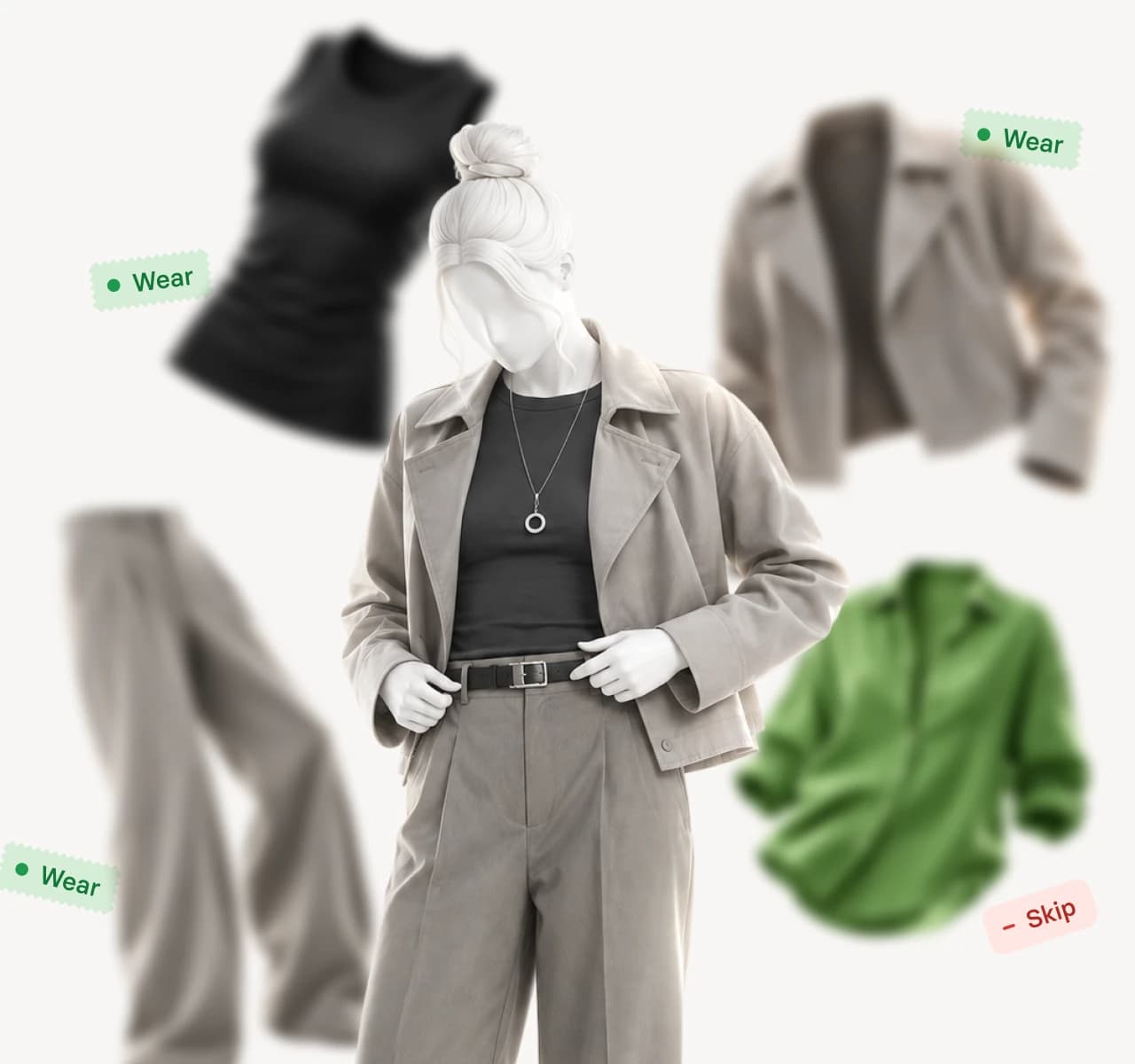
Body type analysis from your answers and two body photos: it names your shape and your line, sharp, medium or soft. Then every cut in the library, 125+ for each gender, gets a verdict, Wear, Depends or Skip, with the reason.
- Wardrobe library
- 125+ cuts
- men and women
Shape and line
Your shape names it. Your line decides it.
Two readings, not one: where the width of your frame sits, and whether its edges run sharp or soft. Two people with the same shape and different lines get different cuts.
Try it: pick a shape and the form's width moves, pick a line and only its edges change, and the pieces from the catalog change with both.
Schematic, not a measurement.
Shape
Line
Your shape: where the width sits
Shoulders a little broader than the hips, narrowing gradually.
Your line: how the edges read
A frame that commits to neither pole, with edges that are neither cut nor rounded.
What it asks of a cut
- Moderate construction. Structure that is there without announcing itself.
- A natural shoulder, neither built up nor dropped.
- Fabric with body that still moves. A mid-weight knit, a soft twill.
What works against it
- Both extremes, and this is the one level where that is the whole answer: a rigidly architectural piece reads as costume, a fully fluid one reads as unmade.
In the sample analysis, with its verdicts
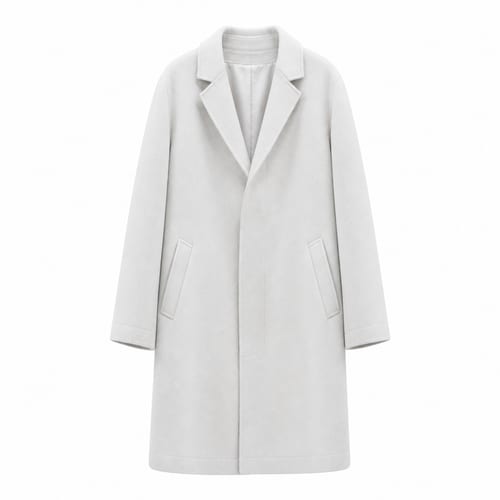 Jackets and layersKnee-length straight coat
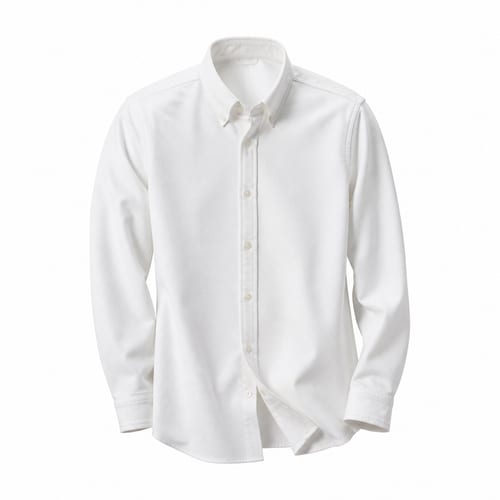 Shirts and topsOxford shirt
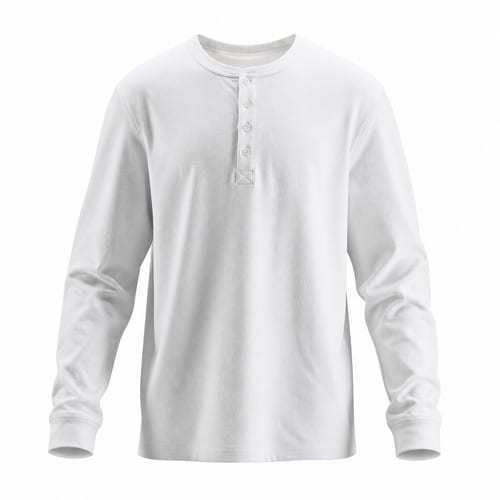 Shirts and topsHenleyIn a longer cut
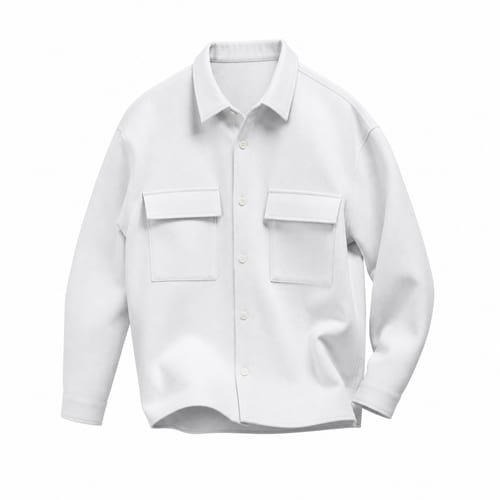 Shirts and topsBoxy overshirt
Find your shape
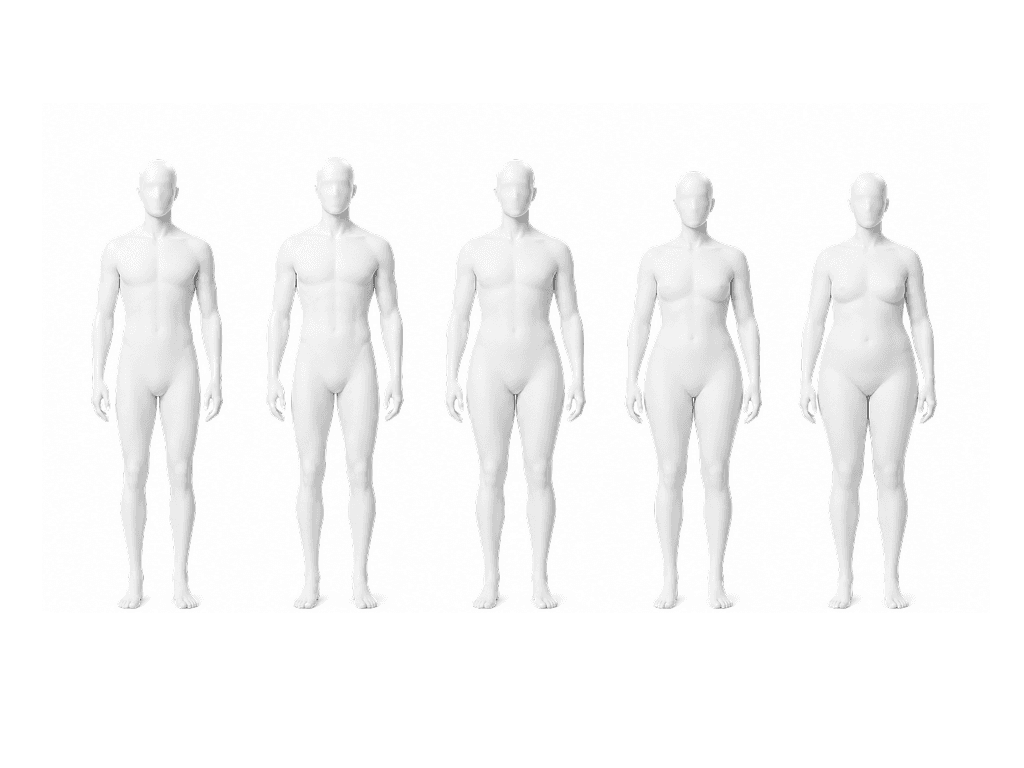
Five shapes for women, five for men.
Each one is defined by where the width of your frame sits, and by whether the waist breaks that width or runs with it. Your answers and two body photos place you in one of them.
Women
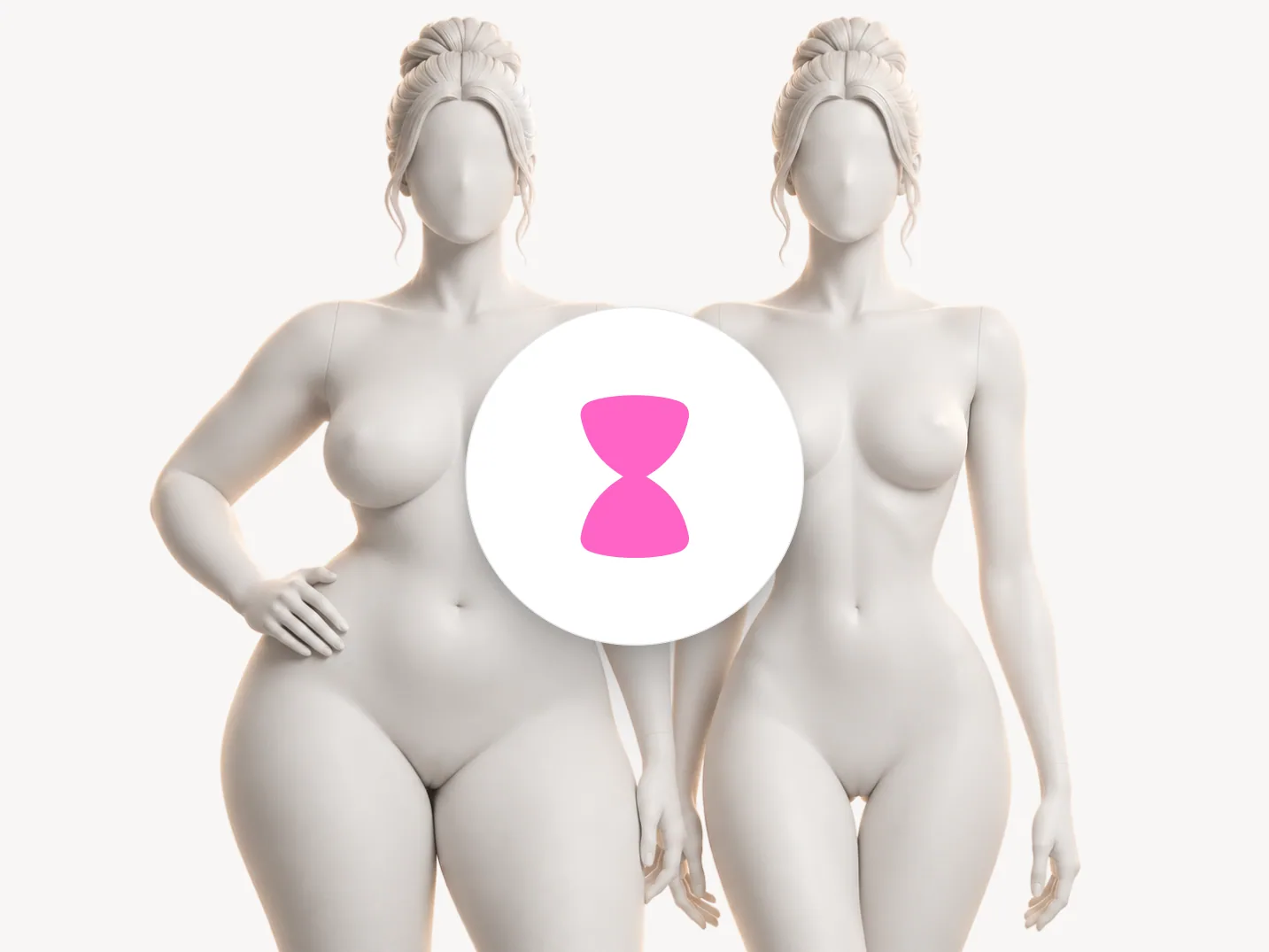
- HourglassShoulders and hips level with each other and a waist that clearly narrows between them.
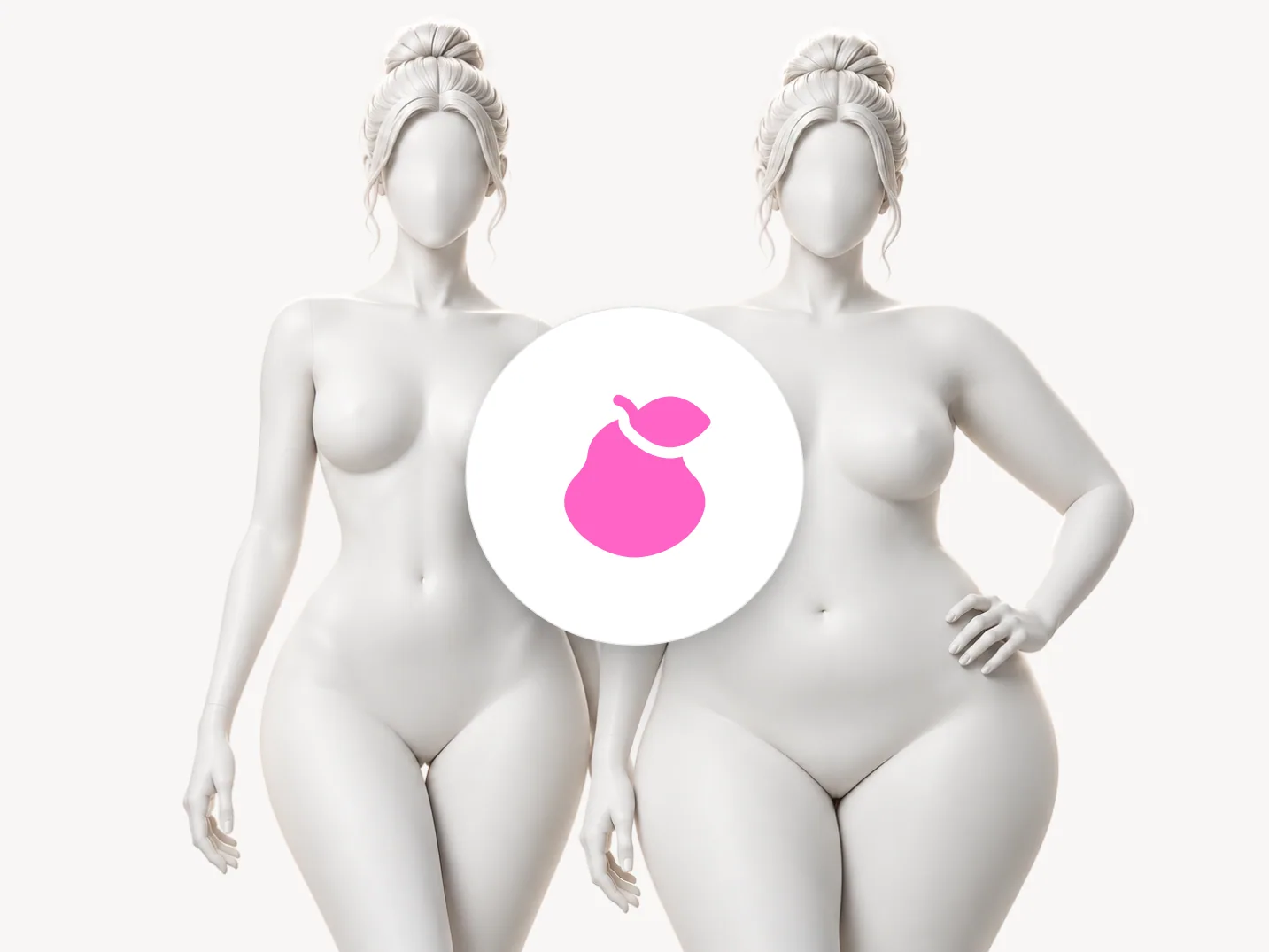
- PearHips carrying more width than the shoulders.
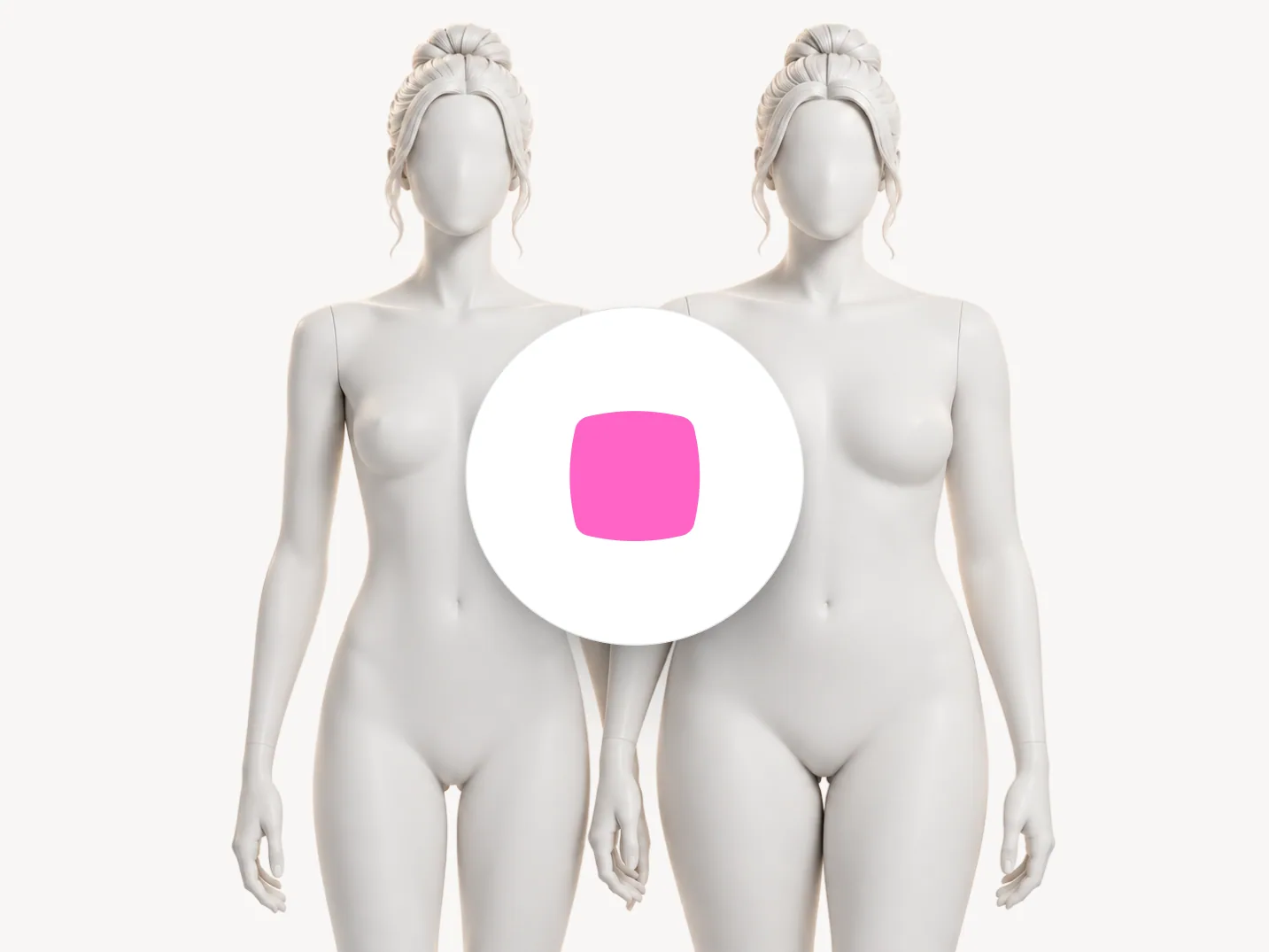
- RectangleShoulders, waist and hips running close to the same width, with no sharp narrowing at the waist.
- Inverted TriangleShoulders carrying more width than the hips.
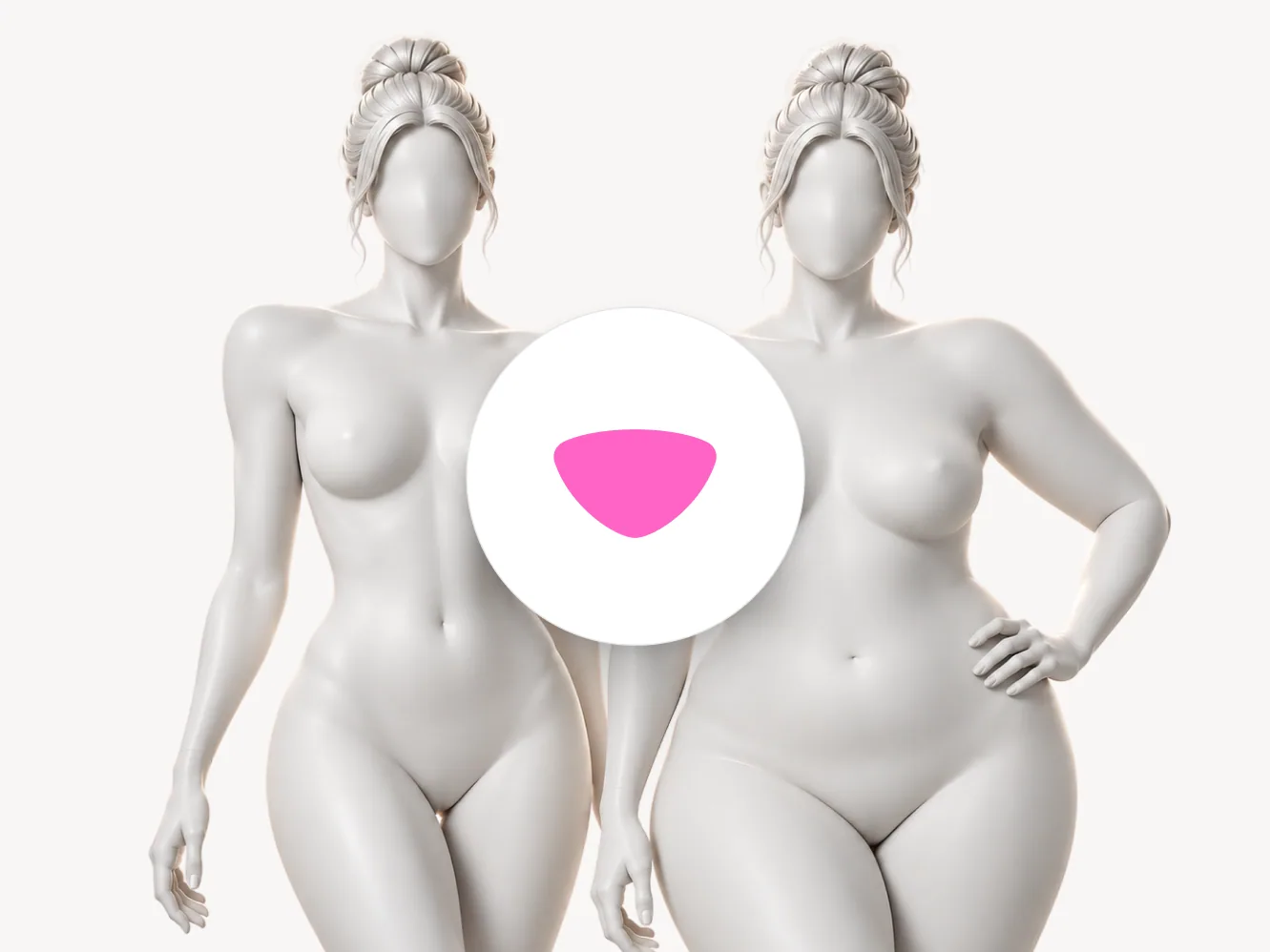
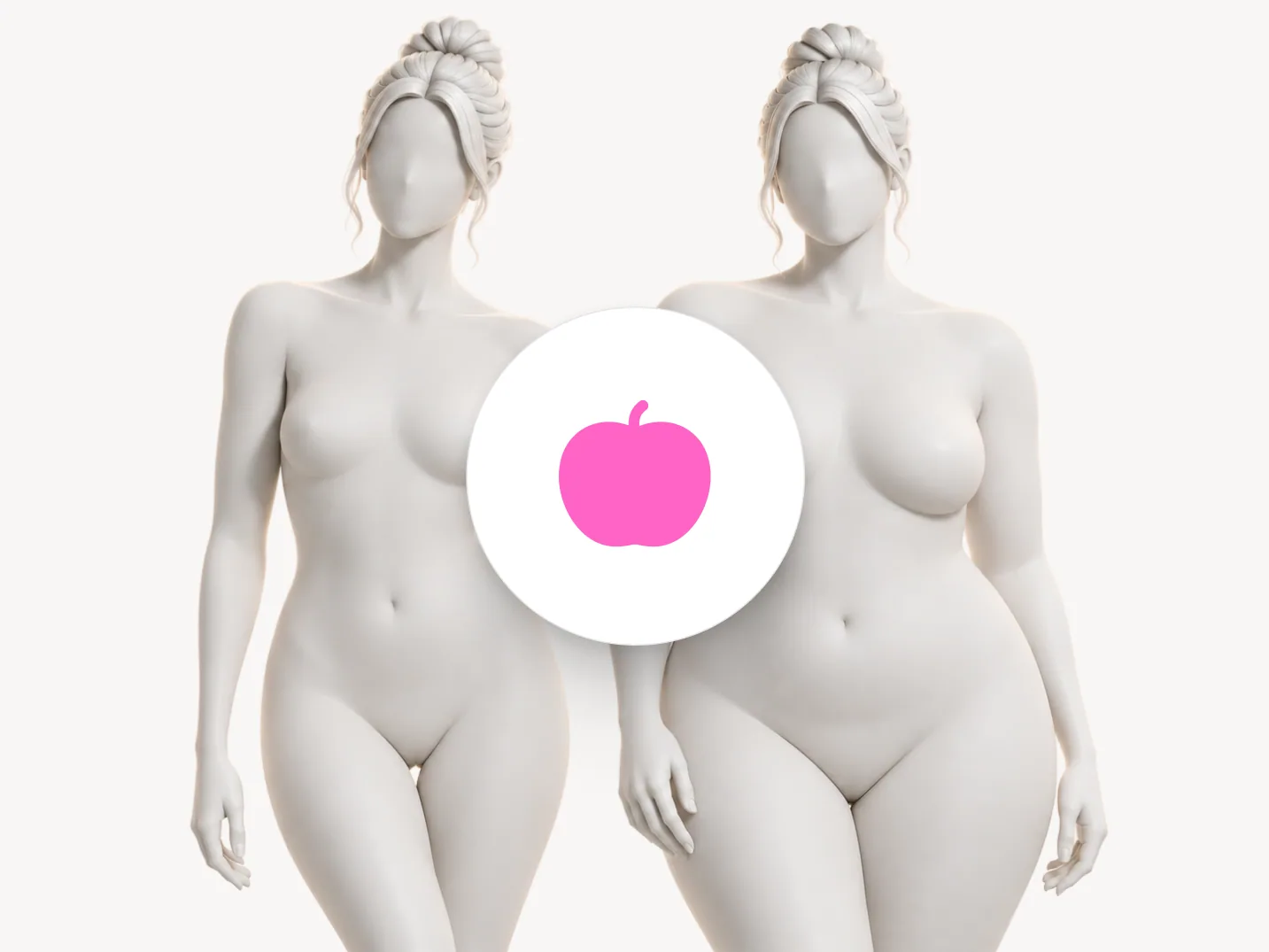
- AppleVolume gathered around the middle, with the waist the fullest part of the frame.
Men
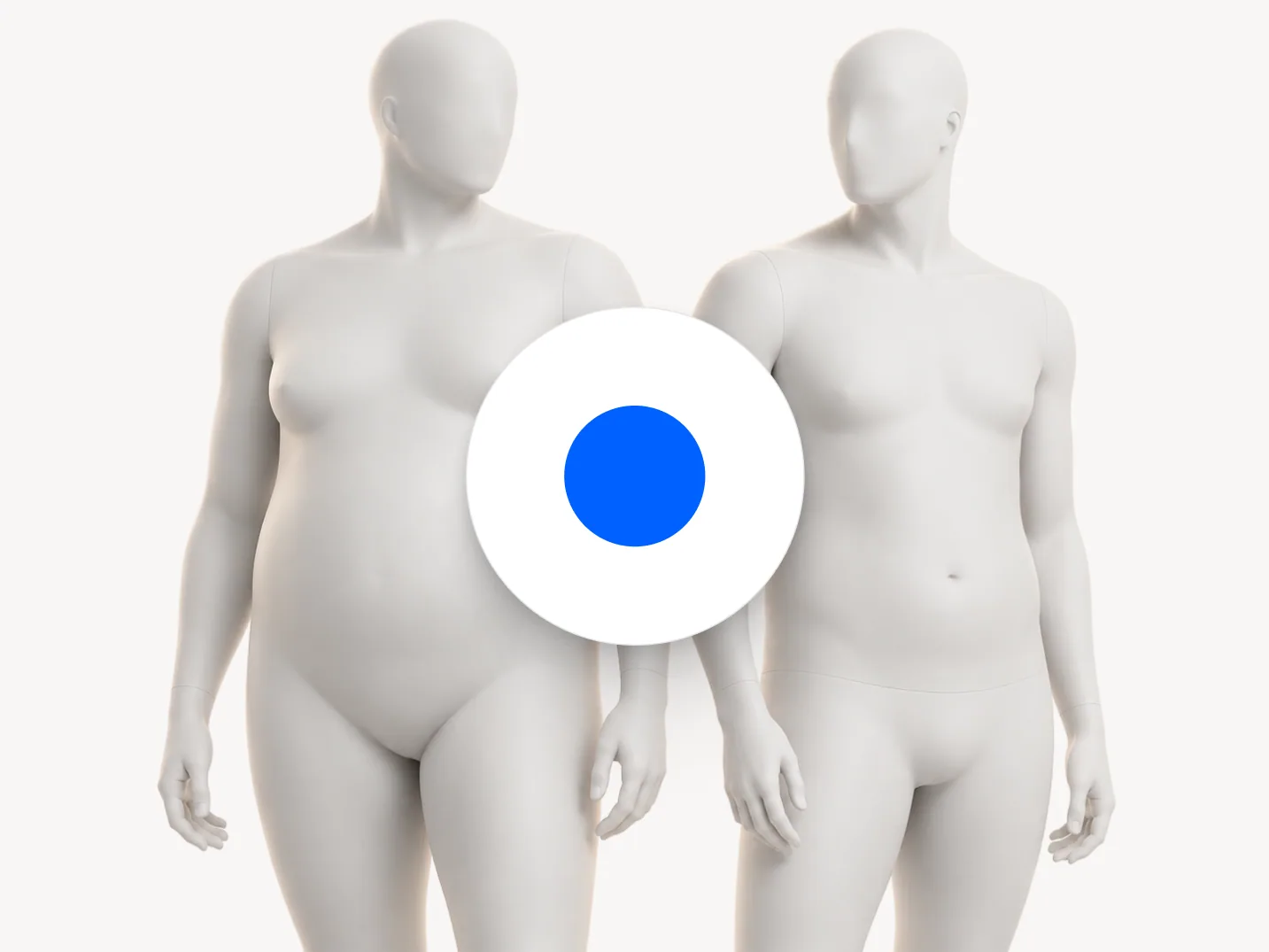
- TriangleWaist and hips carrying more width than the shoulders.
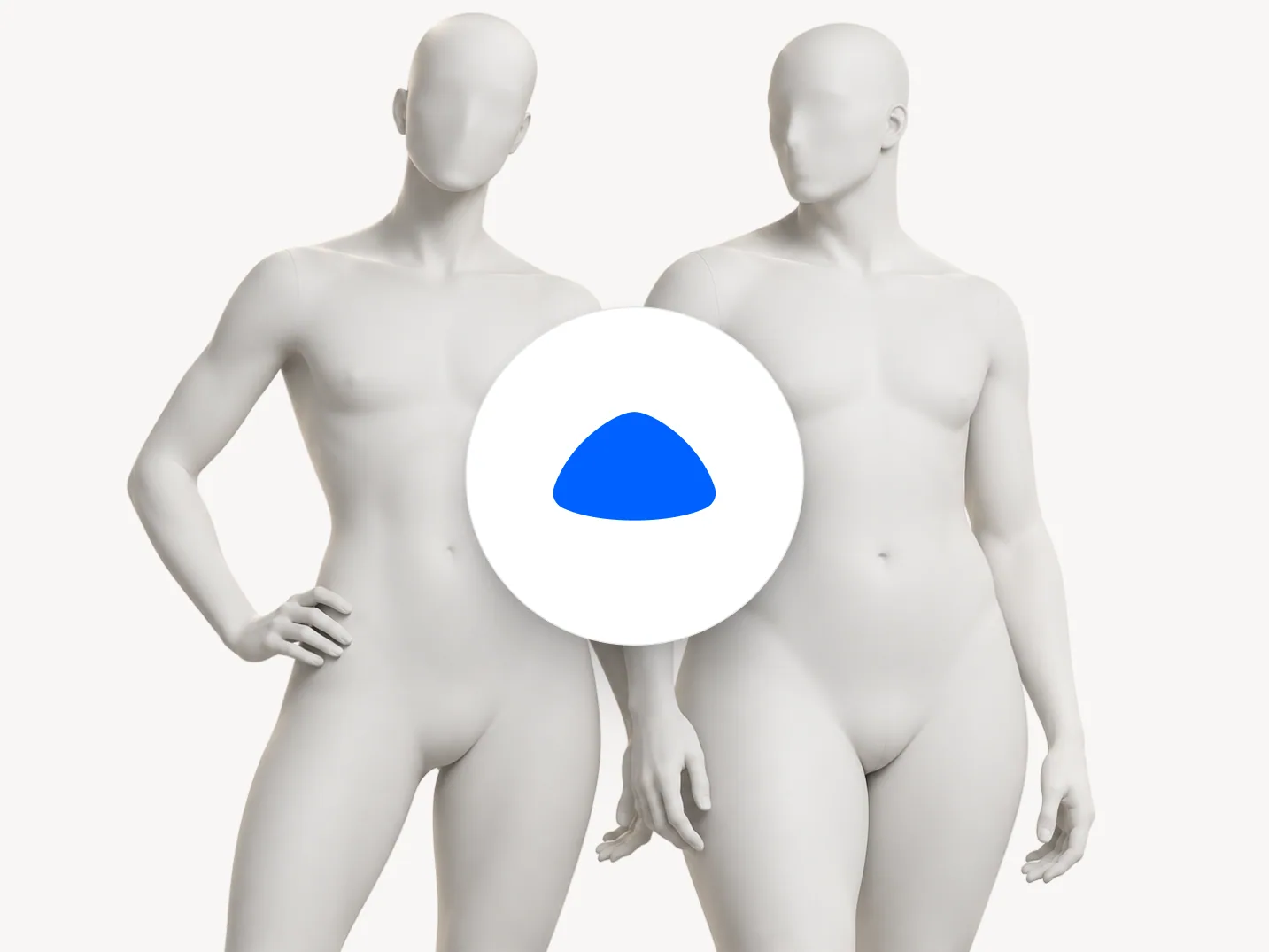
- TrapezoidShoulders a little broader than the hips, narrowing gradually.
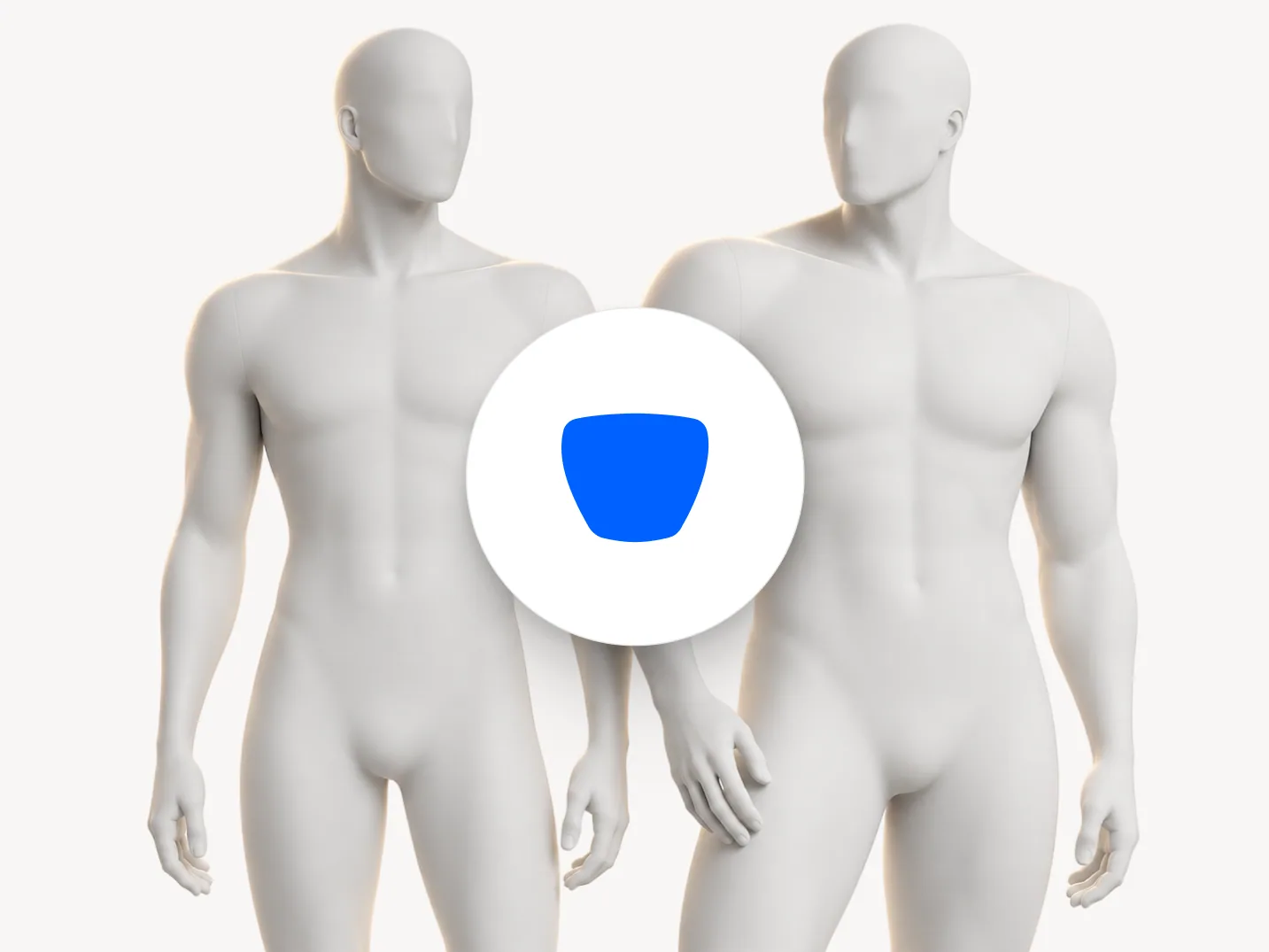
- RectangleShoulders, waist and hips running close to the same width, with no sharp narrowing at the waist.
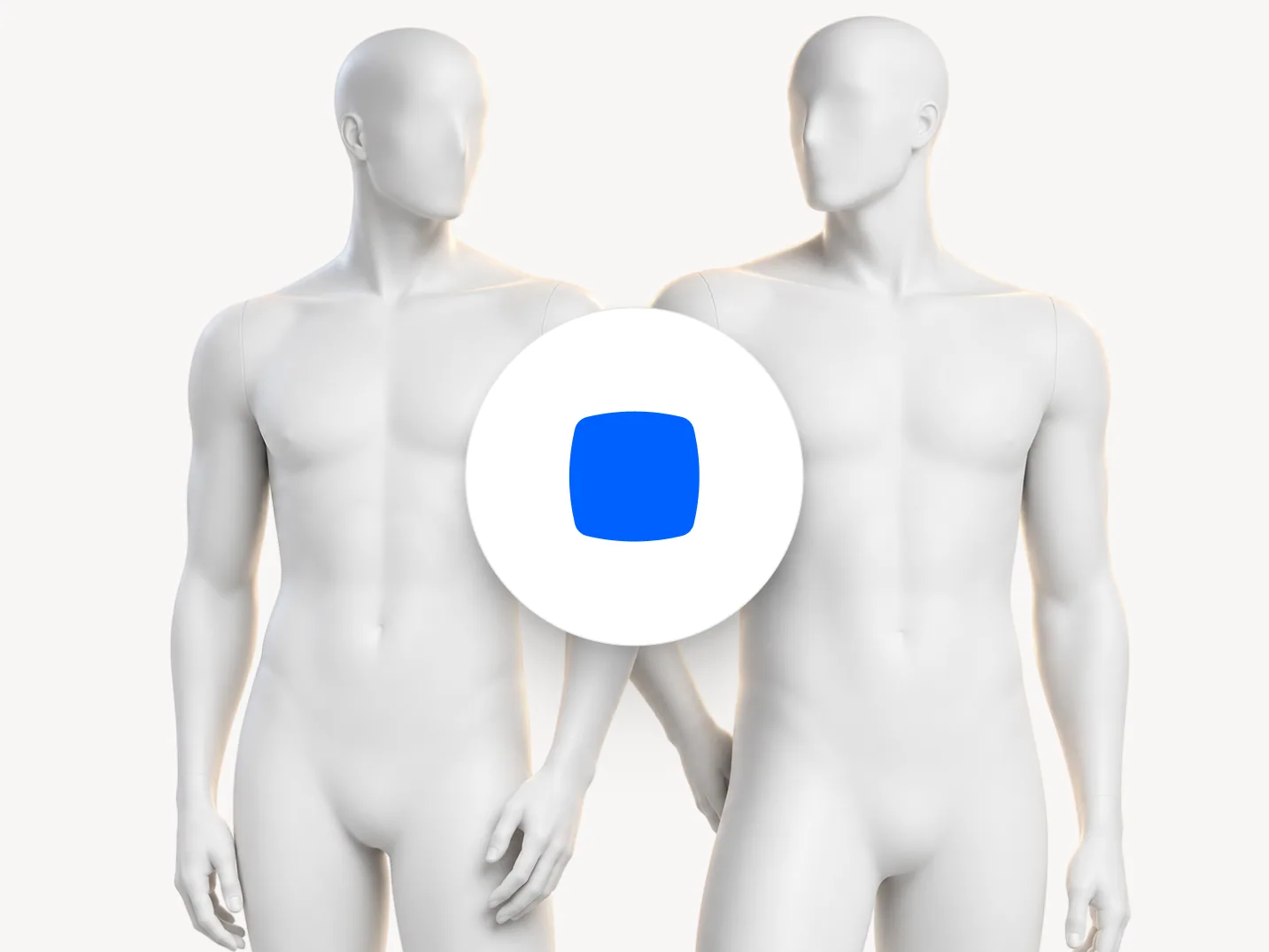
- Inverted TriangleShoulders much broader than the hips, narrowing sharply to the waist.
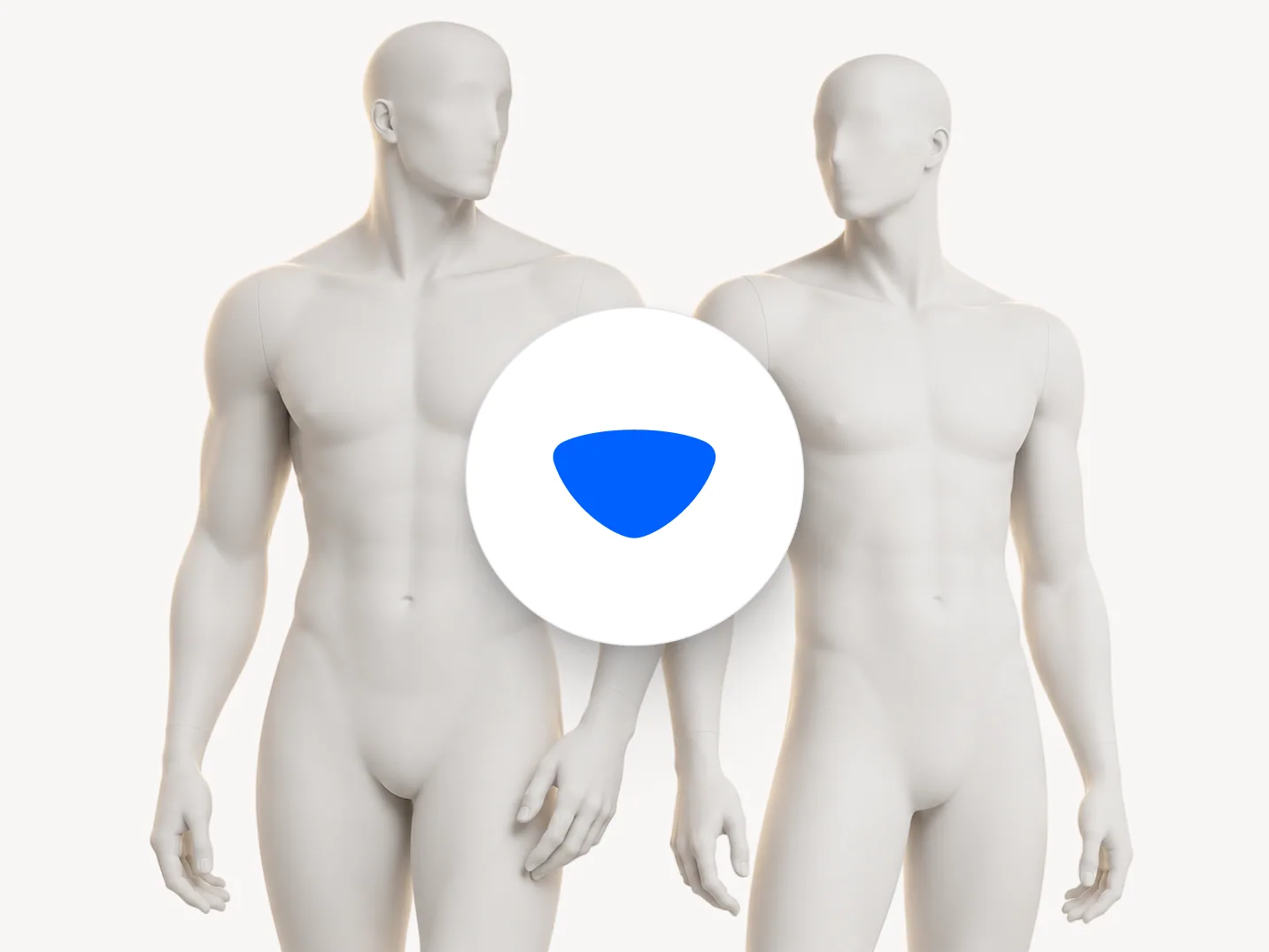
- OvalVolume gathered around the middle, with the waist the fullest part of the frame.
Cut library
Every cut gets a verdict, with the reason.
Jackets, tops, trousers, shirts. 125+ cuts for each gender, every one scored against your shape and your line.
Jackets
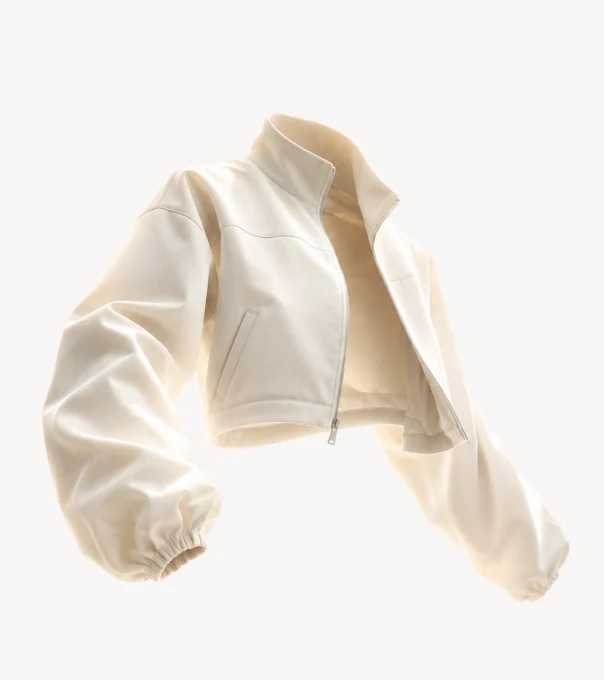
Cropped jacket
A short, structured jacket keeps your line sharp.
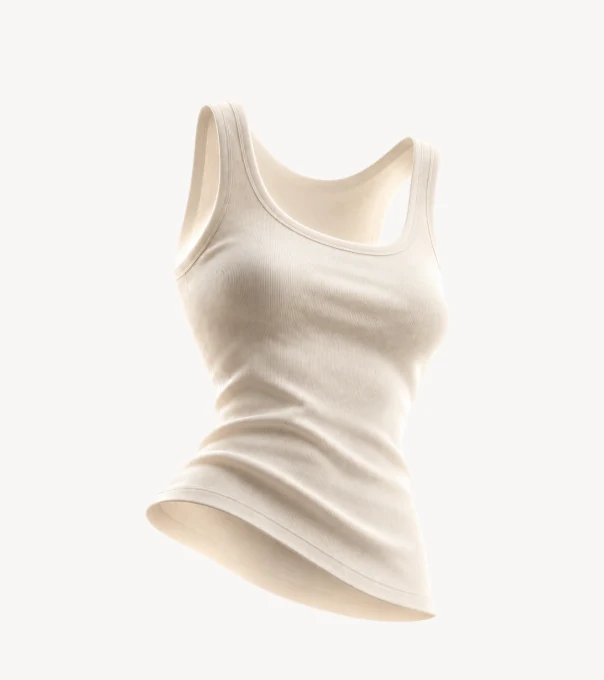
Tops
Fitted tank
Close and simple, lets the jacket lead.
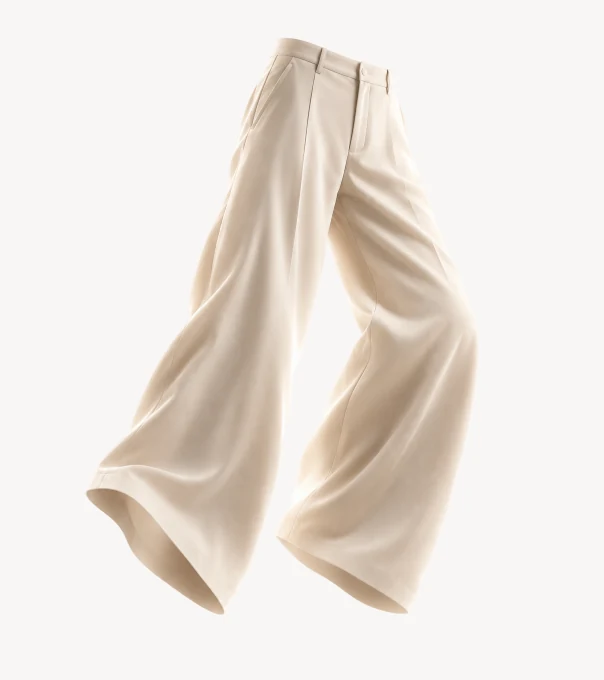
Trousers
Wide-leg trousers
Only with a defined waist on top.
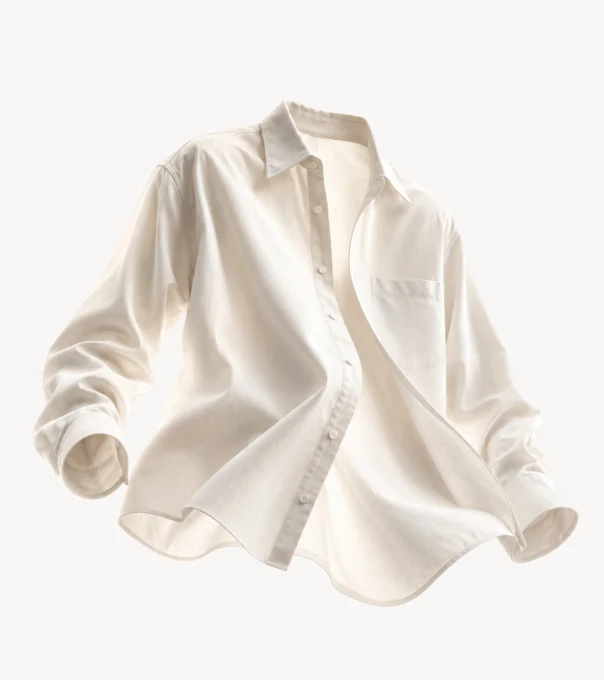
Shirts
Relaxed shirt
Soft volume blurs your structure.
How it is decided
How your shape, line and cut verdicts are decided
Your shape comes from your answers and two body photos, weighed by fixed rules. Your line is read from your photos and checked against your answers. Every cut is then judged against both.
Your answers
Your height, your shoulders against your hips, your waist, where you carry weight, and your torso against your legs.
Two body photos, and your face
The front and side photos check your answers. Your bone structure, the line of your shoulders and your features show how sharp your line is.
A shape and a line
Fixed rules name one of five shapes from your proportions, and a line: sharp, medium or soft. The two are set independently.
125+ cuts, judged against both
Where a cut adds volume, where it takes it away, and how sharp its edges are.
Five shapes and three lines, set independently
Choose a pair. The same proportions with a different line dress differently.
| Sharp | Medium | Soft | |
|---|---|---|---|
| Triangle | |||
| Trapezoid | |||
| Rectangle | |||
| Inverted Triangle | |||
| Oval |
Marked: the sample analysis
How each cut is judged
Every cut in your library is judged against both readings: where it adds volume, where it takes it away, and how sharp its edges are.
- It works for your shape and line as it is.
- It works with one condition, and your page names it, for example: in a longer cut.
- No condition makes it work for your shape and line.
Learn more
Learn more about body shape and line
On Wearly Labs
The method, in the open
How your shape and your line are decided, and what photos cannot show.
Body types and Kibbe · 15 min
Kibbe body types, explained
Kibbe without the cult. What the system measures, the ten types with their 1987 heights, how to read your own, and how it fits with apple and pear.
Men · 11 min
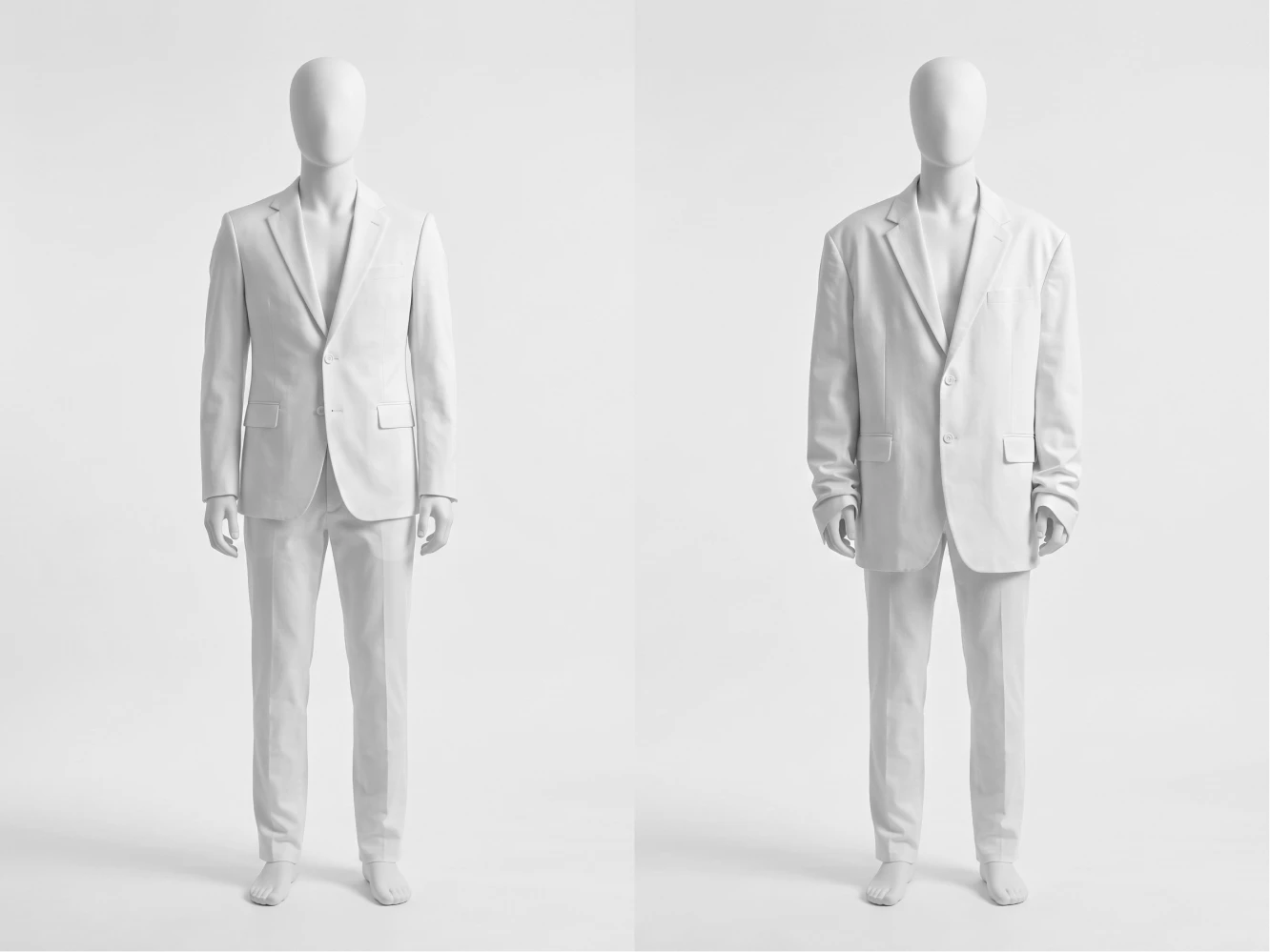
Men's proportions and fit: why the same jacket looks different on two men
The five men's body shapes, a mirror test and a tape test to tell yours, and what each one changes, from the jacket to the rise of your trousers.
On Wearly Labs
The sample analysis
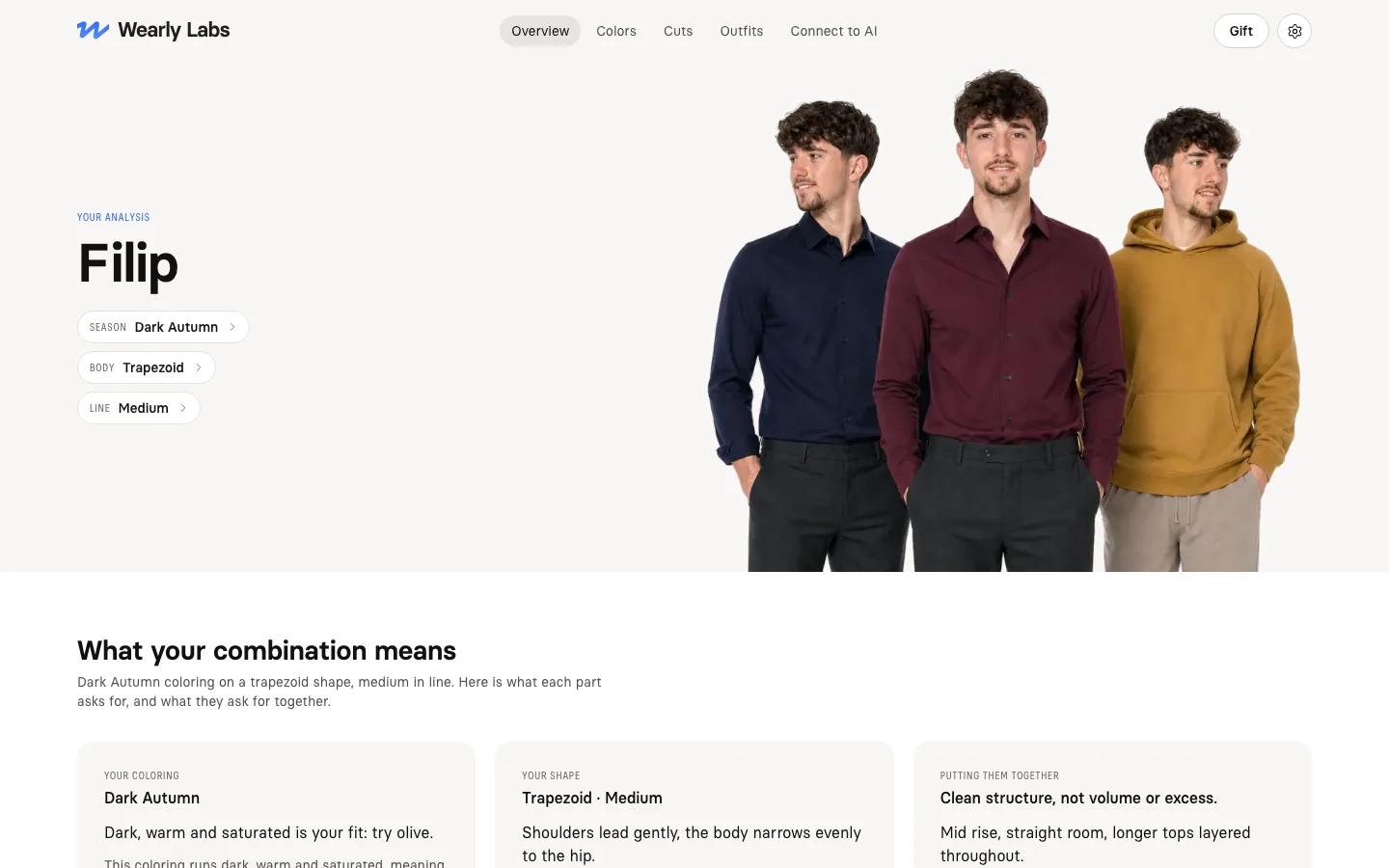
The shape, the cut map and the reasons of a Trapezoid with a medium line, as a paid page shows them.
FAQ
Body type questions.
Your shape says where your frame carries its width: at the shoulders, the waist or the hips. Your line says how sharp or soft the edges of that frame are, sharp, medium or soft. The shape names you and the line decides your cuts, so two people with the same shape and different lines get different cuts.
No. You describe your proportions in a few questions, and two body photos let the analysis check them. Fixed rules weigh both, so one loose shirt in one photo cannot decide your shape.
A body shape and a line. The shape, hourglass, pear, rectangle, inverted triangle or apple, says where your frame carries its width. The line, sharp, medium or soft, says whether your clothes should run structured or fluid. The cut rules underneath come from the Kibbe system, which is why this page explains it, but your page names the shape and the line, the two things you can use straight away.
Something that follows your outline rather than hiding it. Fitted clothes, not a coat, and stand square to the camera. We show you what a usable photo looks like before you upload, and the analysis tells you when one did not work instead of guessing from it.
Read the reason it gives. A disagreement usually points at one answer worth revisiting rather than at the whole result. If something on your page is clearly wrong, email us and we will regenerate it.
Another question about the method or your result? Write to us
Find out what suits you, and why.
A short questionnaire and five photos. Your key arrives by email, usually within 10 minutes.