Deep Winter is the darkest cool season in the 12 season system. The undertone is cool-neutral, the value is deep, the chroma runs from medium to bright, and the contrast is high. The palette is built on midnight blue, emerald, burgundy and plum, with black as a genuine neutral and pure white as the white.
Am I a Deep Winter?
Deep Winter coloring is dark and cool at once. Dark hair, veins on the inside of the wrist that look blue or purple rather than green, and a clear gap in depth between hair, skin and eyes. In a shop, hold black up to your face, then hold camel. On Deep Winter coloring black looks intentional and camel looks like it is draining you. Do the same with pure white against ivory. If pure white sharpens your face and ivory dulls it, that pair of results is the strongest home signal there is.
What Deep Winter actually means
Cool-neutral undertone. Blue sits under your skin. A few near neutral shades still work, but anything with a golden cast does not.
Deep value. Your palette lives at the dark end. Black, charcoal and midnight blue are backgrounds for you, not statements.
Medium to bright chroma. Deep Winter takes clean saturated color. Emerald and royal blue at full strength look correct on you. Dusty versions of the same colors do not.
High contrast. Black with pure white is not too much for Deep Winter. It is the natural setting.
Your core colors
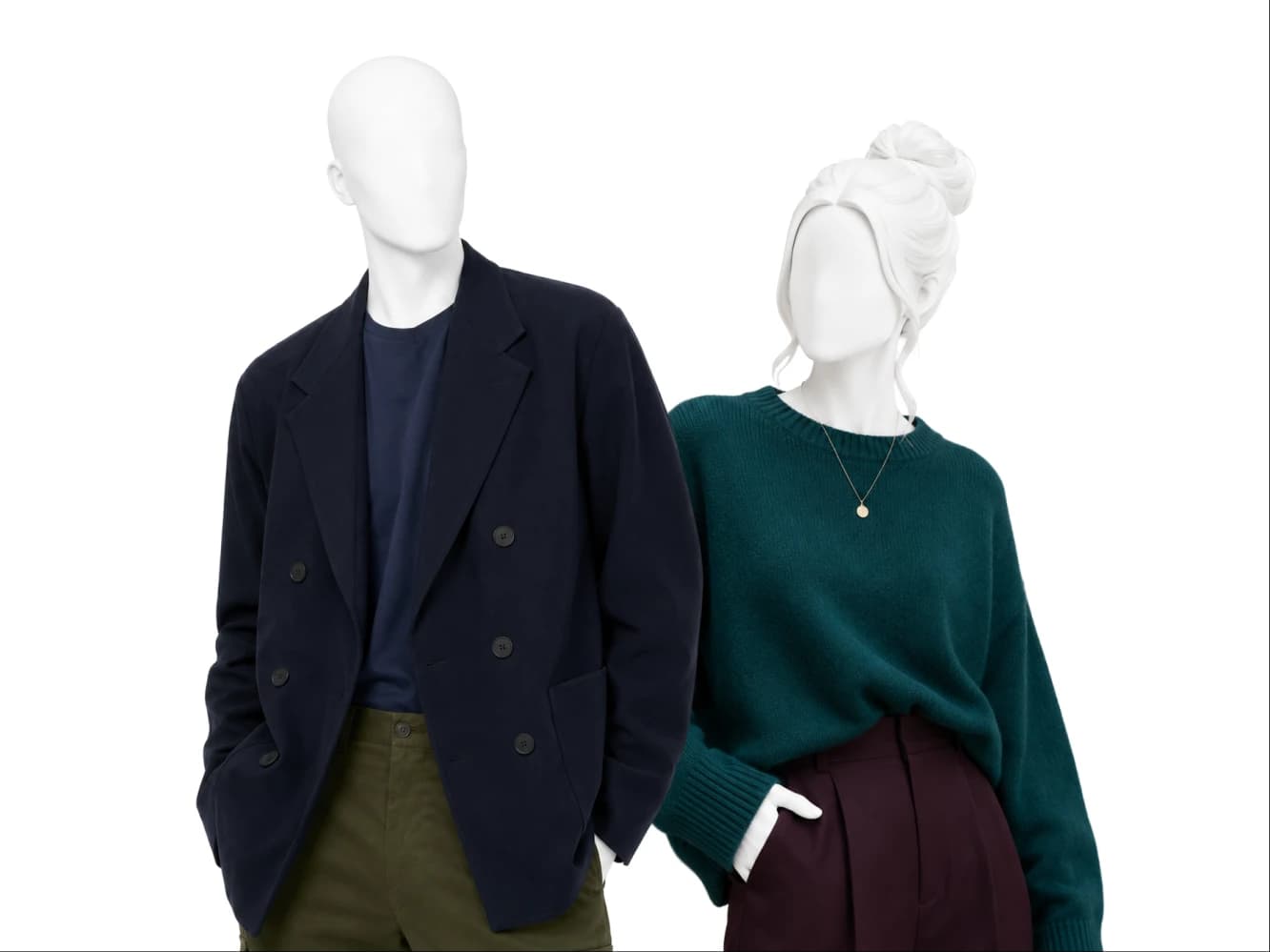
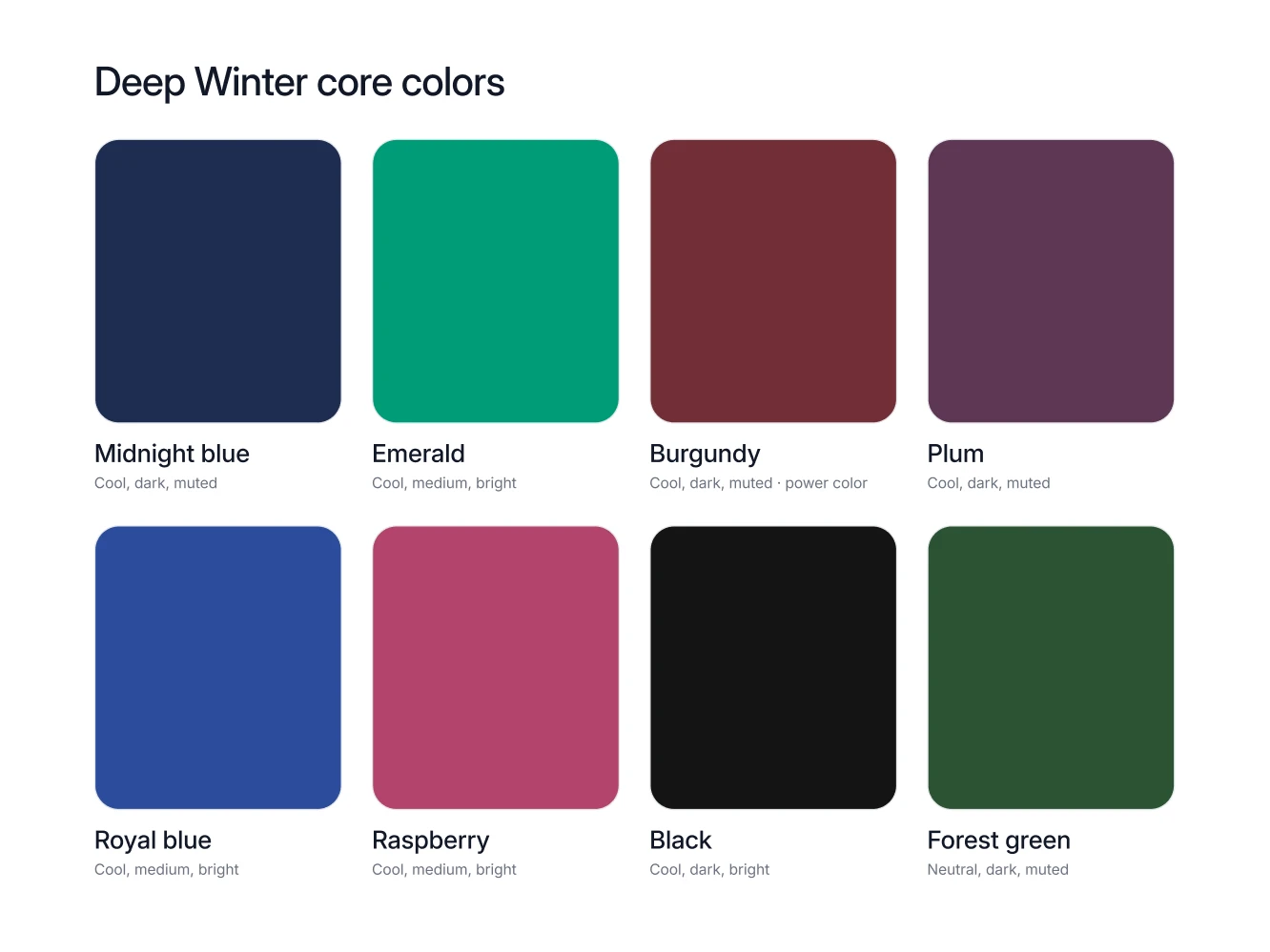
Midnight blue. The everyday alternative to black. A midnight blue coat, suit or knit does everything black does with slightly less weight.
Emerald. Wear it near the face, a knit or a shirt, where the brightness has something to do. Emerald is the color people notice on Deep Winters.
Burgundy. The cool version, closer to black cherry than to wine. This is the Deep Winter power color, so put it in something you wear often.
Plum. A quieter partner to burgundy. Plum behaves almost like a neutral in an outfit that already has black in it.
Royal blue. The clean bright note. One royal blue piece against charcoal or black is the whole outfit.
Raspberry. The cool pink Deep Winter can actually wear. Keep it clean and bright, never softened.
Black. Deep Winter is one of the few seasons where black is genuinely a core color and not a compromise. Wear it right up to the face.
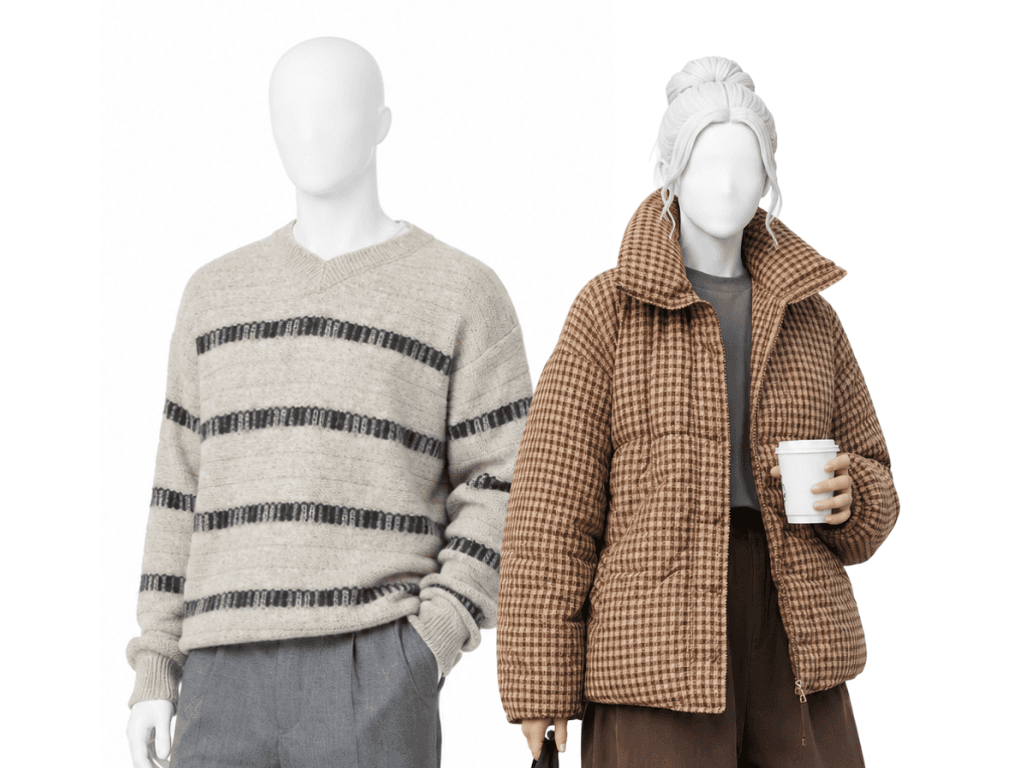
Forest green on its cool edge. The bluer forest green, not the olive leaning one. Best in outerwear and knitwear, where the depth has room to carry.
Your neutrals, your white, your metal
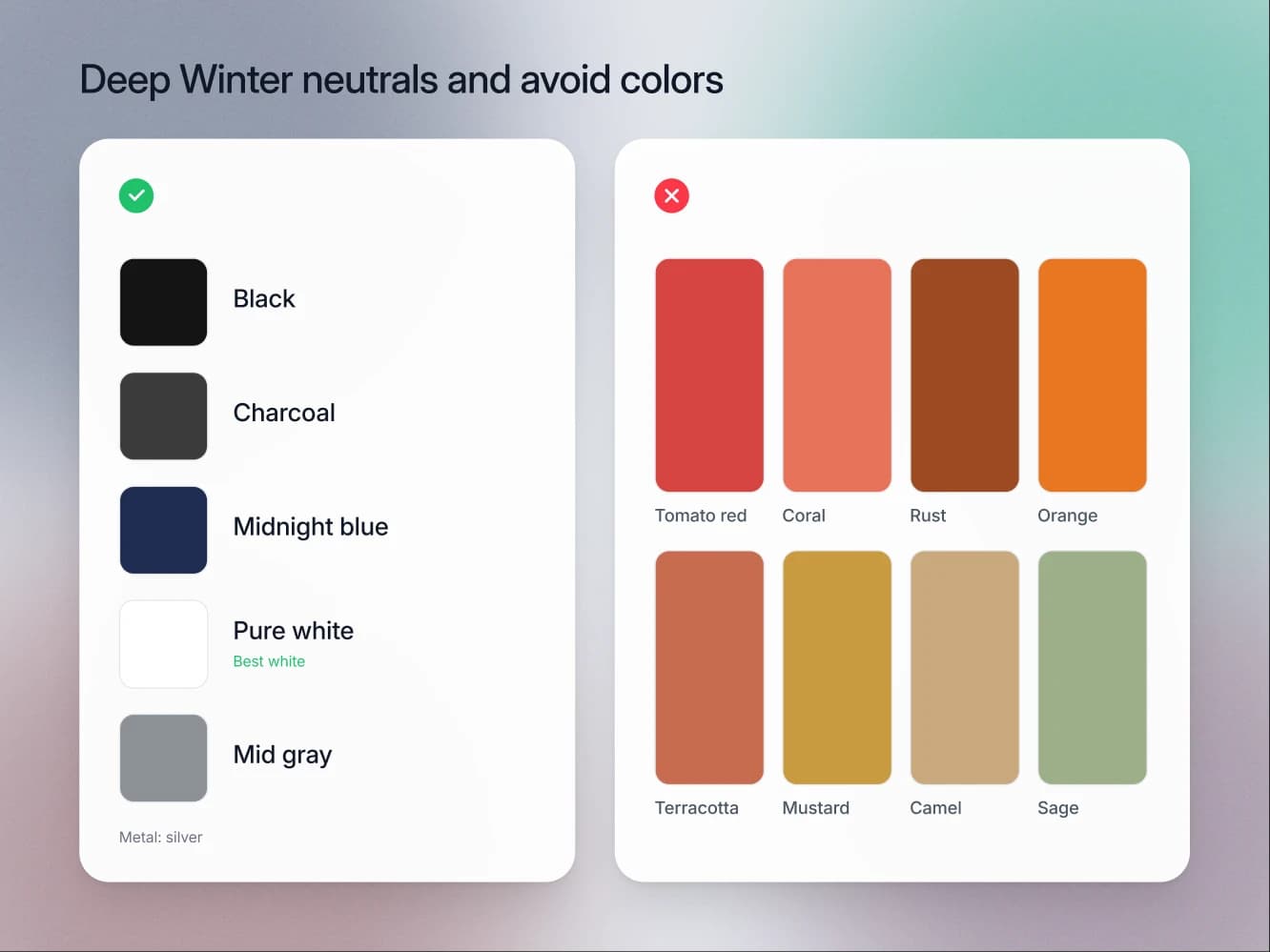
Deep Winter neutrals are black, charcoal, midnight blue, pure white and mid gray. That is an unusually strong set, because four of the five can go right up to the face with no help from anything else.
Your white is pure white, and ivory is the white that fails you. Ivory lays a yellow cast over cool-neutral coloring, so a Deep Winter face goes sallow and the crisp line between your hair and your skin softens into something blurred, which is the one asset this season cannot afford to lose. Pure white does the reverse. It sharpens the edges of your features and gives black and emerald something to work against. Ivory is on your avoid list for exactly this reason.
Your metal is silver. Steel, white gold, platinum, a silver watch case. Gold next to charcoal and midnight blue turns the whole outfit warm and muddy.
Your power color is cool burgundy. If you buy one new item this season, buy it in that.
The colors that fight you
The Deep Winter avoid list is long and it is consistent. Everything on it is warm, dusty, or both.
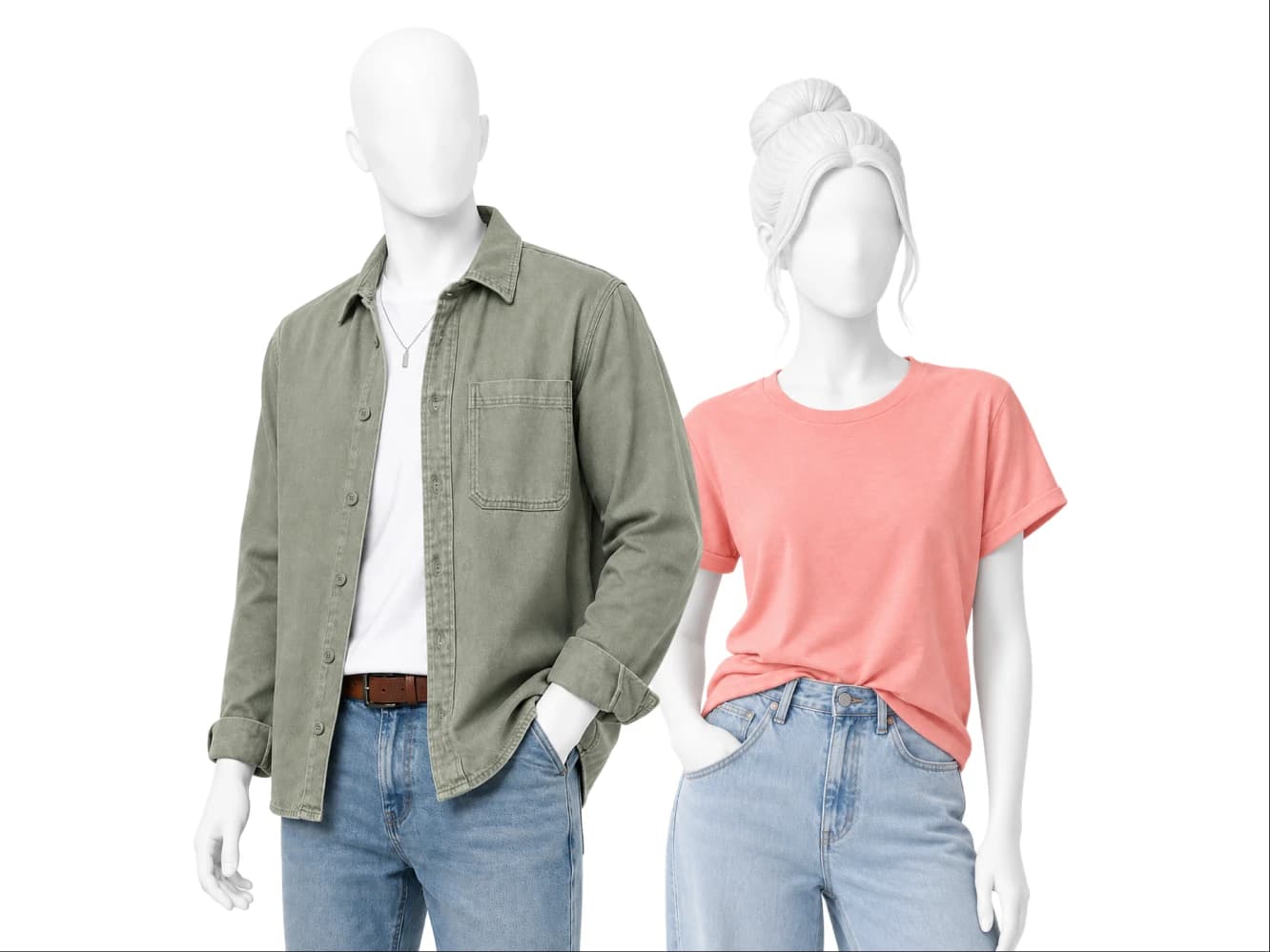
Warm reds and oranges. Tomato red, coral, rust, orange, terracotta and peach. Each carries an orange cast that fights your cool-neutral undertone and pulls redness up into the skin.
Dusty and warm pinks. Soft rose, warm pink, dusty rose and mauve. Deep Winter wants pink clean and cool, which is why raspberry works and these do not.
Golden yellows. Mustard, golden yellow and light gold. This is the loudest golden cast in any palette and the least forgiving next to a Deep Winter face.
Warm and softened greens. Leaf green, olive, sage and khaki. Emerald and cool forest green already cover green for you.
Warm and softened blues. Warm aqua, dusty blue and light denim. Blue is a strong Deep Winter color, but only when it stays cool and clean.
Warm light neutrals. Camel, latte, ivory and warm greige. These are the ones bought by accident, because they look neutral on the rail and only fail once they are near your face.
Softened cool shades: soft navy, mint and soft white. These are the ones that look close enough on a screen and fail in the mirror. Each is a quieted version of something your palette already holds in clean form, so soft navy goes to midnight blue, mint goes to emerald, and soft white goes to pure white. All three are on the avoid list.
One thing worth stating plainly, because it gets misread as a loophole. Ice blue and icy lavender are on the Deep Winter palette, and the spec is placement: they are the light end of a high contrast outfit, so an ice blue shirt under a charcoal suit or an icy lavender knit with black. What they are not is an outfit on their own, because a whole look built at that lightness has nothing for your depth to push against.
How to combine them
The Deep Winter formula is a dark base plus one bright cool accent. Black trousers with an emerald knit. A charcoal coat over royal blue. Midnight blue with a raspberry scarf.
Push the contrast rather than smoothing it. Deep Winter outfits fail when every piece sits at the same middle depth, and they work when one thing is very dark and one thing is clean and bright. Keep warm dusty tones out entirely, even in small amounts, because a camel bag or a rust scarf is the fastest way to make a good Deep Winter outfit look secondhand.
Seasons this one gets confused with
Deep Autumn. Same depth, opposite undertone. The tell is rust and mustard. Both are Deep Autumn core colors and both sit on the Deep Winter avoid list. Ivory against pure white confirms it in one try.
True Winter. Both are cool, both take clean color, both wear silver. The split is how much of the work depth does. If your best colors are the very darkest ones and cool burgundy is the shade that lands, you are Deep Winter. If bright clean colors at medium depth do more for you than near black does, look at True Winter.
FAQ
Yes. Deep Winter and Dark Winter are two names for the same season.
No. Ivory is on the Deep Winter avoid list. Pure white is the white for this season, and it is not a close call.
Midnight blue is a Deep Winter core color and one of the five neutrals, so yes. Soft navy is a different color, the softened version, and it sits on the avoid list. In daylight the navy you want is the one that reads almost black.
For Deep Winter, yes. Black is both a core color and a neutral here, which is not true of most of the 12 seasons.
Silver. Gold carries a golden cast, and a golden cast is the common factor across most of your avoid list.