Scandinavian style is a formula you can copy: a tight neutral palette, a small number of high-quality basics, function treated as a feature, and texture doing the work of pattern. It has a reputation for looking easy. Nobody in Copenhagen seems to be trying, and everybody looks good anyway, but that look is not luck and it is not genetics.
On this page
Below are the four parts with a one-minute test for each, the brands that sell the idea, and the one thing the standard version leaves out: your own coloring and shape.
The formula at a glance
That is the entire trick. Everything else is execution, and each part has a test you can run in a minute.
| Part | What it means | One-minute test | You pass when |
|---|---|---|---|
| Tight palette | About six compatible neutrals and one dusty accent | Lay out every top and every bottom you own and pair them without looking | Every top works with every bottom |
| Few quality basics | The money goes into fabric and cut, not quantity | Crush the cloth in your fist for five seconds, then let go | The creases fall out |
| Function first | The clothes do the job the weather asks for | Stand outside in the outfit for ten minutes | You are not thinking about your coat |
| Texture over print | Variety comes from surfaces, not patterns | Touch each piece in the outfit and count the surfaces | Two or three different surfaces, and no print |
Why the palette is tight
Part climate, part culture. Winter days are short: on the shortest day of the year Stockholm gets just over six hours of daylight (The Local), and muted tones photograph the weather honestly: off-whites, grays, camel, navy, black, the occasional dusty accent. But the practical effect matters more than the mood: when your whole wardrobe lives inside six compatible colors, every piece combines with every other piece. Getting dressed in the dark literally works.
Brands build whole collections on the same idea, in their own words. Filippa K calls itself "Effortless Scandinavian minimalism since 1993" and describes "an approach to dressing where fewer, better choices define a lasting sense of style" (Filippa K). Arket offers "essential collections" (H&M Group), and COS "blends contemporary with timeless" (H&M Group). All three sell the same promise, pieces that stay in use, so an older piece still goes with the new rack and nobody has to chase the season's color story.
Our Legacy, from Stockholm, shows where the formula bends. It leans on shape and fabric more than on a fixed palette, with "custom-developed fabrics on signature shapes" and "a progressive exploration of seasonal themes" (Our Legacy). Trends are temporary, your colors aren't has a filter for the few trends worth borrowing.
Quality basics, few of them
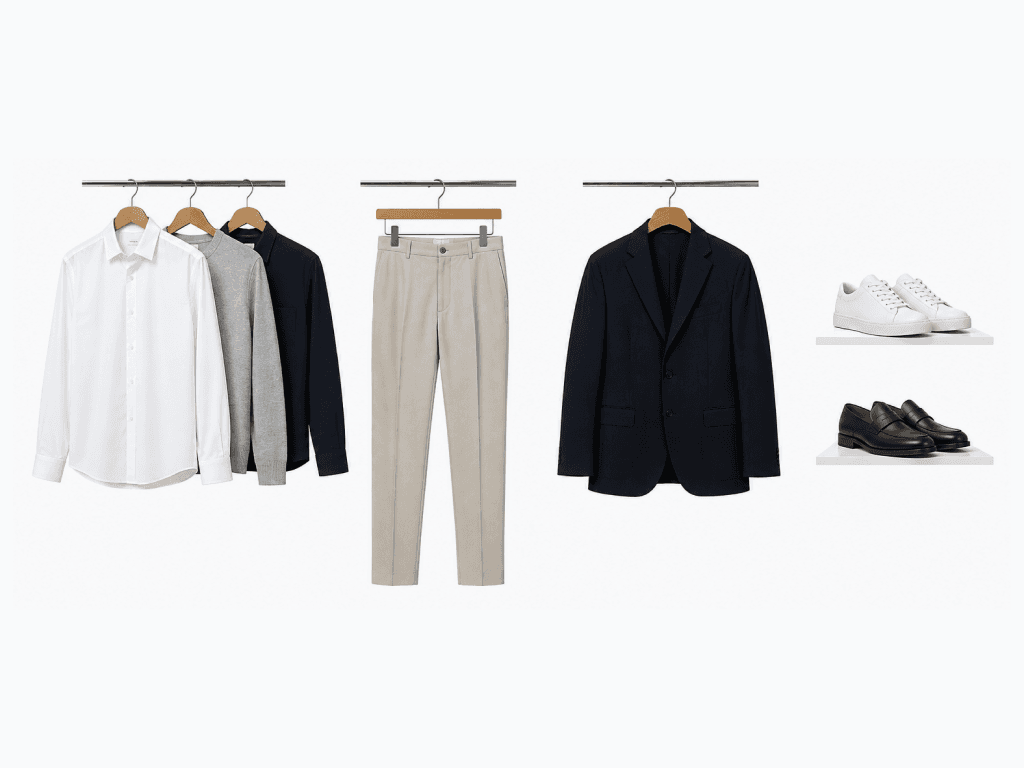
The Scandi wardrobe is small on purpose. A heavy overcoat, a couple of fine merino knits, well-cut trousers, white sneakers kept clean, one proper scarf. The money goes into fabric and cut instead of quantity, because ten mediocre sweaters lose to two good ones every single winter.
This is the honest reason the look reads as expensive: cost per item is higher, cost per wear is lower. Cost per wear is the price divided by the number of times you wear the piece, and a small wardrobe means every piece is worn often. The 8 basics of dressing well has the fit and fabric tests that separate a basic worth paying for from one that is not, and Build a capsule wardrobe from your color palette shows the same idea as a 12-piece example.
Function is not the enemy of style
Nordic dressing never pretends the weather away. The coat actually warms. The boots actually grip. Technical fabrics sit next to wool without apology. Norse Projects, the Copenhagen label that mixes classical workwear into its collections (Wikipedia), shows it in one catalog: a Gore-Tex Windstopper range with wool linings and storm-sealed pockets, "built for the coldest conditions" (Norse Projects), next to knitwear in lambswool, merino and alpaca (Norse Projects).
That practicality is a big part of the aesthetic: clothes that visibly work project competence, and competence is attractive. A beautiful coat you are shivering in is not a beautiful coat.
Texture instead of print
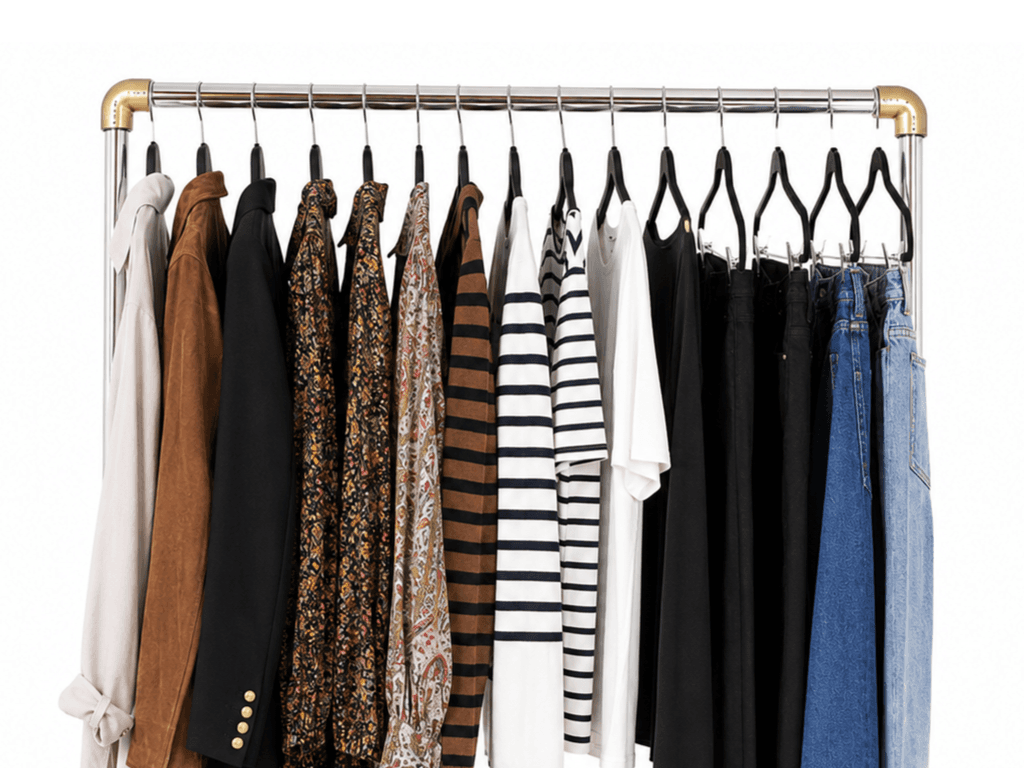
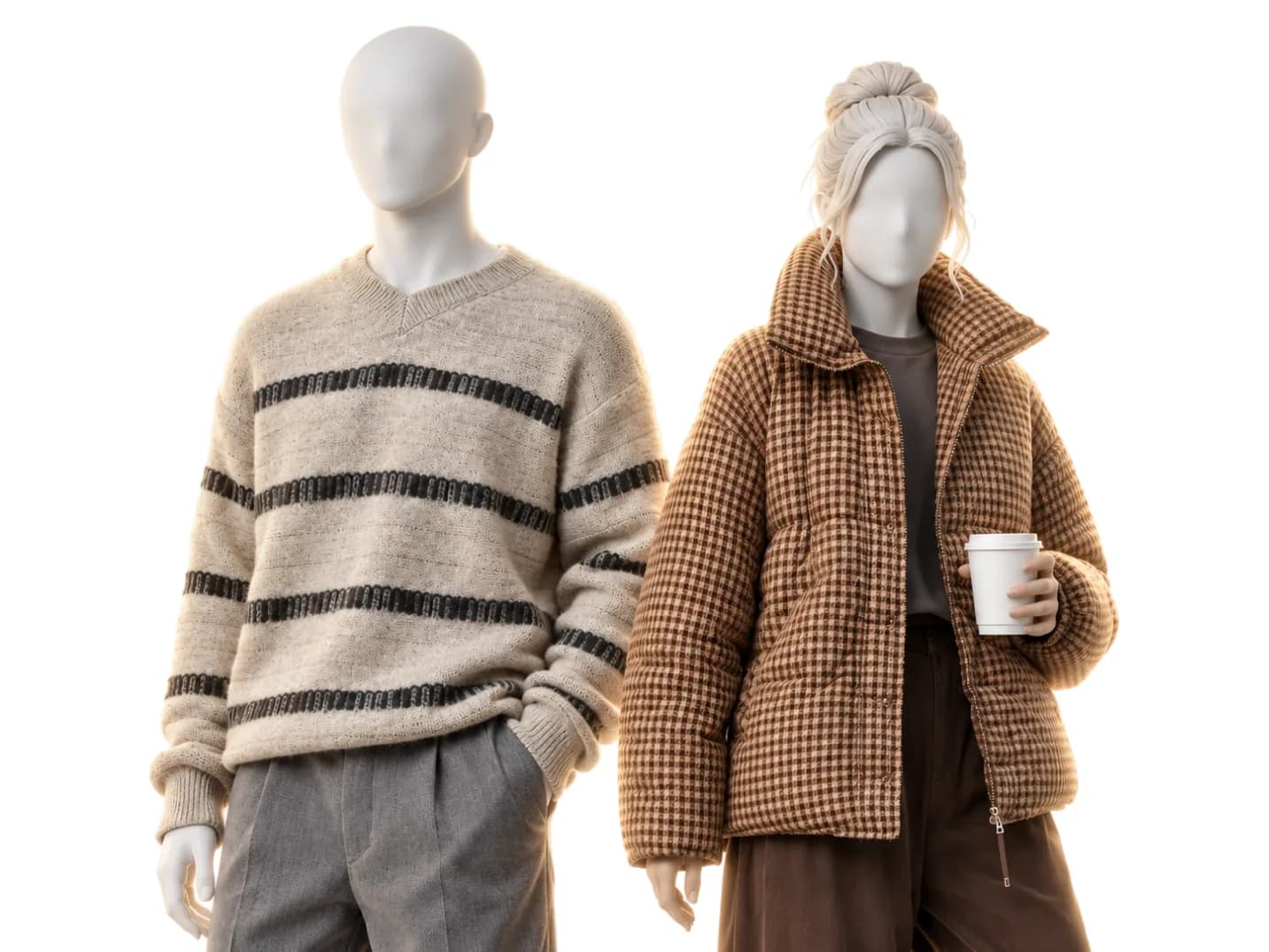
Walk through Stockholm and count the printed shirts. You will not need both hands. Variety comes from material contrast: a chunky knit against smooth wool trousers, brushed cotton under crisp poplin, suede against denim. Texture gives the eye something to do without shouting, which is the whole Scandi thesis in one styling move.
The sample analysis, the real result of Wearly Labs co-founder Filip Poláček, published with his consent, says the same about pattern: it "works best in something fine and low-key like a marl knit or a small bird's eye texture on tailoring." Cloth gets a verdict there too, Wear, Depends or Skip, each with a reason. Depends means the cloth works under a condition the analysis names. His page shows that the surfaces are a choice, not a rule:
| Cloth | Verdict | Reason in the sample analysis |
|---|---|---|
| Fine knit (merino, cashmere) | Wear | "A soft, plain cloth that drapes cleanly for everyday basics." |
| Technical nylon | Wear | "A firm, smooth cloth that keeps a crisp edge and crease." |
| Suede | Depends, one piece per outfit | "A richly textured cloth, best kept to one piece per outfit." |
| Rigid denim | Depends, one piece per outfit | "Heavy and textured, it stands on its own without going limp." |
| Chunky knit | Skip | "Heavy and textured, it collapses into folds rather than holding a line." |
So the three pairings above are a starting point. On Filip's page a chunky knit is a Skip, and suede and denim are each a one-per-outfit cloth. Your list will differ, and the test stays the same: touch each piece, count the surfaces, keep to two or three.
Scandinavia is more than one look
Susanne Holzweiler, co-founder of the label Holzweiler, splits the region by country: "Denmark is often more colorful and stylish, where Sweden is very crisp and minimalistic and Norway is a little more about great knitwear and outdoor details due to the weather and landscape" (TZR). The tight neutral formula above is closest to the Swedish look.
Danish designers have widened it. Ganni's Ditte Reffstrup calls her label "Scandi style 2.0," "full of contrasts and personality," and Maj-La Pizzelli of ATP Atelier says Scandinavians "used to be all about black and beige" and have "added orange, pink, and green as our new neutrals" (both in the same article). The formula survives the added color because its rule is compatibility: whatever you add has to go with the rest.
Where the formula needs your own data: color and cut
Color
Here is our honest footnote: the standard Scandi palette is mostly cool, white, gray, navy and black, with camel as the warm exception, and how much of it can sit at your face depends on your coloring. In a Wearly Labs analysis, where every color is a Wear, a Depends (below the waist or as an accent only) or a Skip:
- The three Winters wear black, charcoal and pure white at the face, and no other season does (True Winter palette).
- The Summers keep soft white, light gray and soft navy at the face and send black below the waist (Soft Summer palette).
- The Autumns send gray and black to the trousers and the shoes, and ivory, camel and chocolate do the work (Dark Autumn palette).
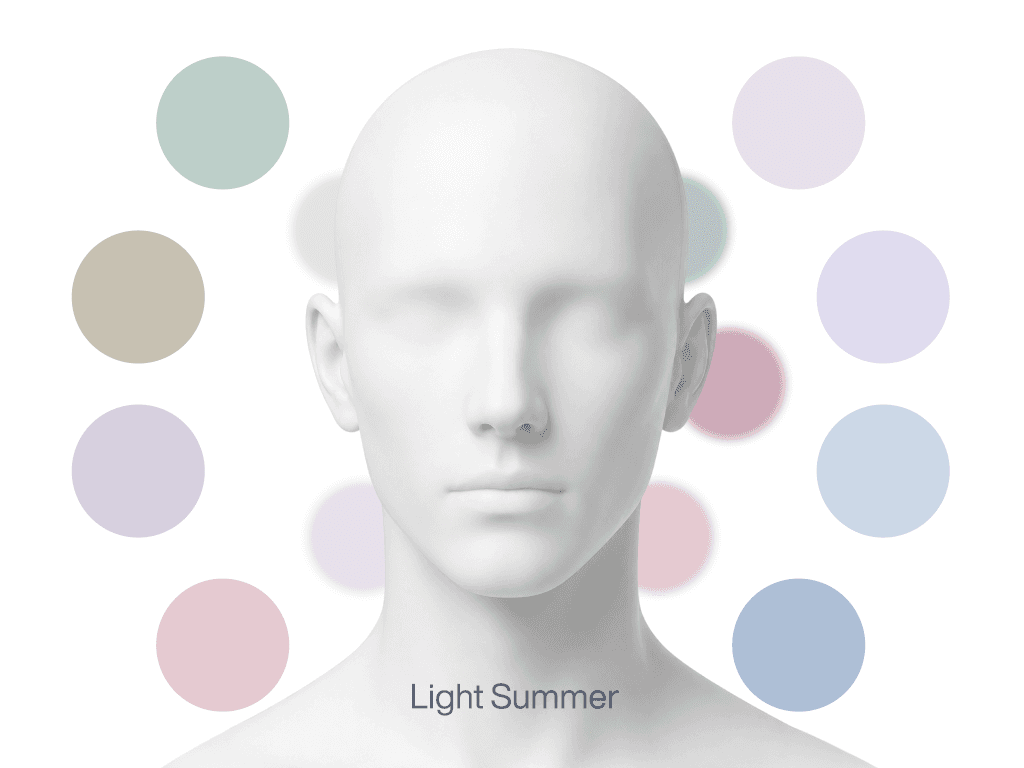
Color analysis places you in one of 12 seasons, and each season page lists its own neutrals.
In the sample analysis, Filip's coloring is Dark Autumn: dark, warm and saturated. It sorts the standard Scandi neutrals like this:
| Standard Scandi neutral | Verdict in the sample analysis | Reason |
|---|---|---|
| Ivory (the off-white) | Wear | "A warm, soft neutral that gives your darker colors somewhere to rest." |
| Soft white (the off-white) | Depends, below the waist | "Soft and pale, it has no depth to meet your coloring." |
| Pure white | Depends, below the waist | "Clean and bright, but with none of the warmth your face needs." |
| Charcoal | Depends, below the waist | "A steady neutral that anchors the lower half rather than the face." |
| Black | Depends, below the waist | "Clear and deep, but its coolness sits wrong close to your skin." |
| Midnight blue (the navy) | Wear | "Its weight and quiet tone match the depth you carry." |
| Soft navy | Depends, as an accent only | "A quiet strength that works best as a small, deliberate touch." |
| Camel | Wear | "A dependable neutral that sits easily against your depth and warmth." |
| Espresso (the black that suits him) | Wear | "Warm, deep and soft, this shade mirrors your coloring closely." |
None of this is a ban. Gray, black and the pale whites keep a place on his palette, in the trousers and the shoes. The fix is not abandoning the formula. It is running the formula in your own neutrals: camel and ivory and espresso instead of gray and white and black, if that is what your coloring calls for. His page builds the everyday base from ivory and espresso, with chocolate between them: "Ivory opens the chest, chocolate layers deep above it, and espresso trousers hold the whole outfit down."
Test: by a window, out of direct sun, with a bare face, hold black and then camel under your chin, then pure white and then ivory. If black and pure white make your face look sharper and clearer, the standard palette is yours. If camel and ivory do, run the formula in the warm set. If neither pair is right, hold soft navy and then black: soft navy that looks finished while black looks severe points to the Summers. Find your undertone at home has three tests for your undertone.
Cut
The standard silhouette is loose too. Primer's guide to Scandinavian men's style names loose shapes, muted tones and a lack of branding as the defining elements (Primer), and SCANDI describes the womenswear look as layered boxy and oversized cuts, with O-shaped coats and oversized jumpers (SCANDI). Whether loose works is a question about your shape, not about the formula. Filip's shape is Trapezoid with a medium line: shoulders lead gently and the body narrows evenly to the hip. In his analysis the straight version of each Scandi staple is a Wear and the oversized version a Skip:
| Staple | Verdict | Reason in the sample analysis |
|---|---|---|
| Knee-length straight coat | Wear | "The shoulder is drawn along the line your own shoulder actually runs." |
| Soft oversized draping overcoat | Skip | "Draping this oversized stands away from your body at every point." |
| Slim fine-gauge merino crewneck sweater | Wear | "Merino keeps its shape close to your chest without clinging or sagging." |
| Chunky cable-knit sweater | Skip | "Cable knit this thick hangs off your shoulders and hides your shape." |
| Tapered trousers | Wear | "Cut for your build, the waist stays level while the knee-down taper keeps a clean line." |
| Baggy loose-fit jeans | Skip | "So much loose cloth through the leg that your own outline gets lost in it." |
Another shape gets another list. A different balance of shoulders and hips, or a sharper or softer line, does not get the same verdicts, which is why the body type analysis reads shape and line before it picks cuts. Tight palette, quality basics, texture over print. Same system, your colors and your cuts.
FAQ
A tight neutral palette, a few high-quality basics, clothes that work in the weather, and texture instead of print. The four parts are the same in gray, camel or olive, which is why the style travels.
Start with Arket or COS, both H&M Group labels, move to Filippa K or Norse Projects, and go to Our Legacy when you want the fashion-forward end. That order is our reading of the market, not a price comparison, and prices differ by country. Filippa K opened its own preowned marketplace in Sweden in 2021 (FashionUnited), so a secondhand piece is a way into a brand built on "fewer, better choices."
No. The basics are the visible half. The invisible half is the discipline of a tight palette and a small wardrobe. You can fail at Scandi style with a big budget and nail it with a small one.
You can do it with color. Scandi is a structure, not a color list. One or two dusty accents inside a tight palette are fully in the spirit. The rule is compatibility, not grayness.
It suits every one if you run it in your own neutrals and cuts. The standard version is a mostly cool palette with loose shapes. In a Wearly Labs analysis, black is a Wear at the face only for the three Winters, and an oversized overcoat is a Skip on the Trapezoid shape in the sample analysis. Keep the structure and swap the details.
Hold black and camel under your chin by a window, then pure white and ivory, and see which of each pair makes your face look clearer. The test above has the full version. A Wearly Labs analysis gives a Wear, Depends or Skip with a reason for all 50 colors.