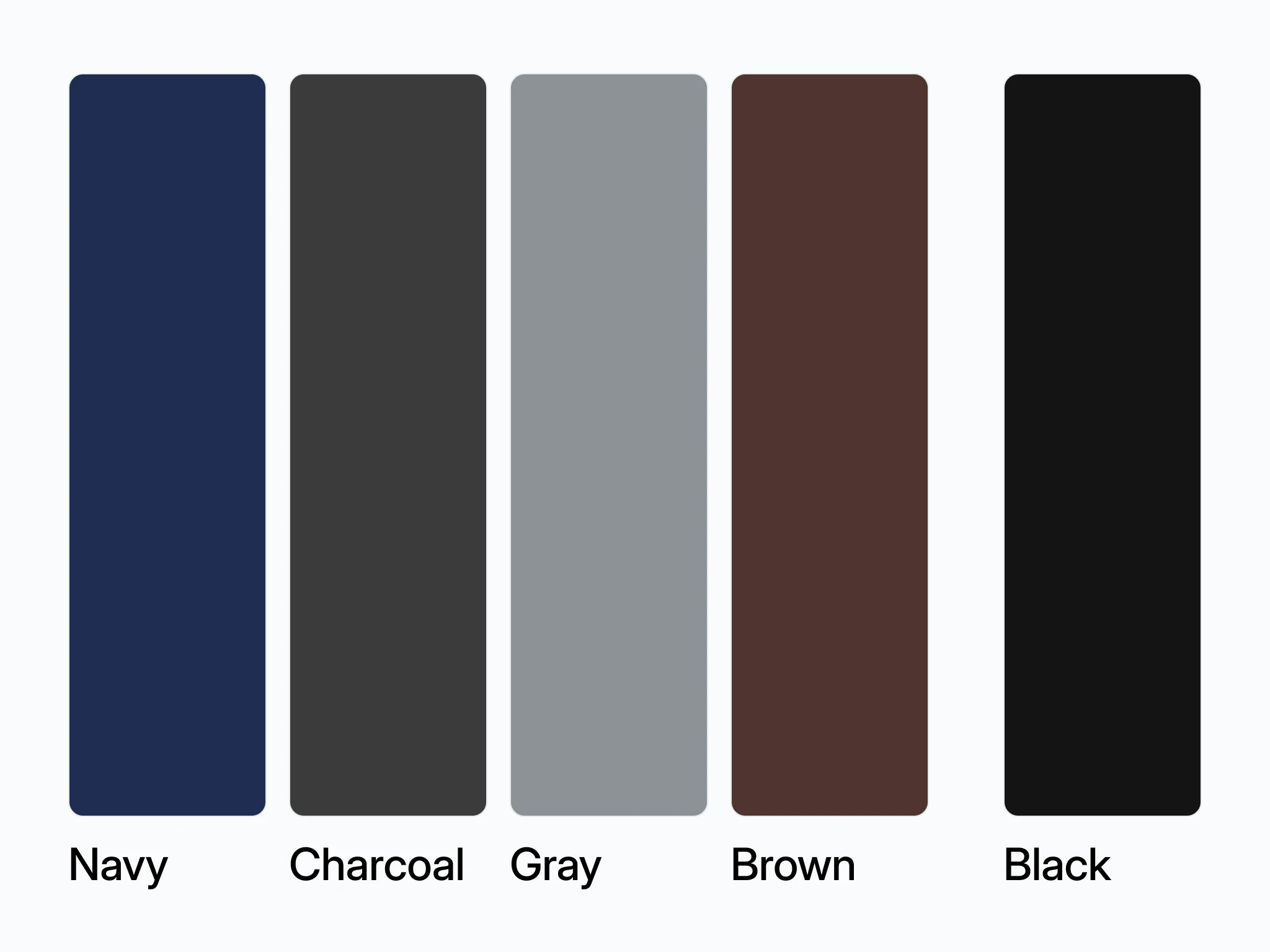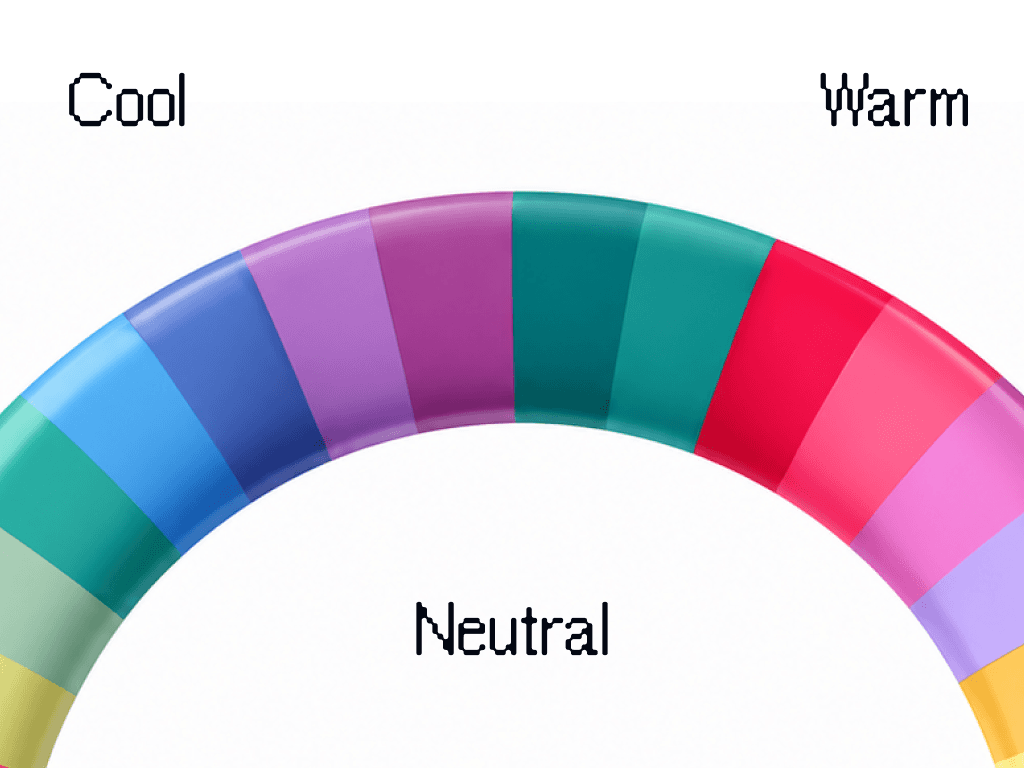
To find your undertone at home, stand by a window in daylight and run three tests: the color of the veins on your inner wrist, gold against silver on your skin, and your bare skin next to a sheet of white paper. Green veins, gold and cream point to warm, blue or purple veins, silver and pure white point to cool, and a mix, or both metals working, points to neutral.
On this page
Undertone is the single most useful thing to know about your coloring. It decides whether camel or gray is your neutral, whether gold or silver is your metal, and why some whites make you glow while others make you look like you slept badly.
Here is the good news: you can get a solid read at home in five minutes. You need daylight, a sheet of white printer paper, something gold and something silver. Trust the answer when at least two of the three tests agree.
What undertone actually is
Your skin has two layers of color. The surface tone is what changes: it tans in summer, goes pale in February, flushes after a run. The undertone sits underneath and never moves. It is the fixed cast of your skin: warm (golden, peachy), cool (pink, bluish), or neutral (a genuine mix).
This is why "I'm pale" or "I'm tan" tells you nothing about undertone. Pale skin can be warm. Deep skin can be cool. Undertone is a direction, not a depth.
Before you start
- Daylight from a window, out of direct sun. Not the bathroom, not a lamp.
- Bare skin. No makeup, no self-tanner, and not the week after a beach holiday.
- Skin that sees little sun. The inside of your wrist and the inside of your upper arm show your coloring with the least tan and the least redness on top.
- One minute in the light before you judge. Your eyes need it to adjust, as the lighting section below explains.
Test 1: the vein test
The classic, and the one most people try first.
Stand by a window in daylight. Look at the veins on the inside of your wrist.
- Mostly green: warm undertone.
- Mostly blue or purple: cool undertone.
- A real mix of both: neutral.
Read it as a lean, not a verdict. Blood is red, and a vein only looks blue or green through your skin. A 1996 study in Applied Optics, Why do veins appear blue?, found four things that set the color you see: how your skin scatters and absorbs light, how much oxygen the blood carries, how deep and how wide the vein runs, and how your eye reads the result. Only the first of those is your skin itself.
One rule: daylight only. Warm indoor bulbs tint everything yellow, your veins included, and push the reading toward warm. And if your skin is deep enough that the veins are hard to see at all, skip this test and let the other two decide.
Test 2: the jewelry test
Hold a gold piece against your bare skin, under your chin or on the inside of your wrist, then a silver one, in the same light. Watch your skin, not the metal.
- Gold makes your skin look clear and even, silver makes it look flat or gray: warm.
- Silver makes your skin look clear and even, gold looks brassy or makes it look sallow: cool.
- Honestly both work: neutral. Note which one works slightly better, because that lean matters (see the table below).
No jewelry? A watch, a belt buckle, or a strip of kitchen foil against gold gift wrap does the same job.
Judge the metal that looks better on you, not the one you happen to own. Habit and taste get in the way here, so treat this test as a second opinion, not a verdict.
Test 3: the white test
Hold a sheet of plain white printer paper next to your face in daylight and look at your skin, not the paper. Then swap the paper for something cream or ivory: a t-shirt, a scarf, a napkin.
- Next to the paper your skin looks golden, yellow or peachy, and cream looks natural: warm.
- Next to the paper your skin looks pink or rosy, pure white looks crisp and cream looks dingy: cool.
- Neither stands out, and both whites look fine: neutral.
- A green or gray cast next to the paper: probably olive (see the FAQ).
The paper is what makes this test work. It is the one thing in front of your mirror whose color you already know.
How to read your results
Count the tests. Two out of three in agreement is your answer. If they split, or every test says "both", you are probably neutral, and neutral is a real result, not a failed test.
In seasonal color analysis, neutral is not the odd one out. As The Concept Wardrobe's season guides lay out the 12-season system, undertone leads in only four seasons, the True ones. In the other eight, lightness, depth or clarity leads and undertone comes second, and all eight are described the same way: gold and silver both look good, one of them better. Its Soft Summer guide calls that skin "neutral, olive or neutral-cool" and says "both silver and gold look good against the skin, but silver looks better". Its Soft Autumn guide says the same with gold in front.
Two of those seasons go by two names: Deep Autumn and Deep Winter, which Wearly Labs calls Dark Autumn and Dark Winter.
| What the tests show | Undertone | Seasons it usually points to |
|---|---|---|
| Green veins, gold wins, cream looks natural | Warm | True Spring, True Autumn |
| Blue or purple veins, silver wins, pure white looks crisp | Cool | True Summer, True Winter, Dark Winter |
| Mixed veins, both metals work, gold slightly better | Neutral-warm | Light Spring, Bright Spring, Soft Autumn, Dark Autumn |
| Mixed veins, both metals work, silver slightly better | Neutral-cool | Light Summer, Soft Summer, Bright Winter |
Undertone narrows the field, it does not pick your season. A warm or warm-leaning result still leaves six seasons open, from Light Spring to Dark Autumn, and value and chroma settle the rest.
Why your lighting lies to you
Most people run these tests in a bathroom under warm bulbs and get a false warm reading. Artificial light has a color cast: warm bulbs add red and yellow, old fluorescents add green. Your eyes adjust to it, which is why the room looks normal to you while the cast is still on your skin. Color scientists Mark Fairchild and Lisa Reniff timed that adjustment in 1995: a fast stage over a few seconds, then a slower one, about 90 percent complete after a minute. A phone camera makes its own guess about what white is and bakes it into the photo.
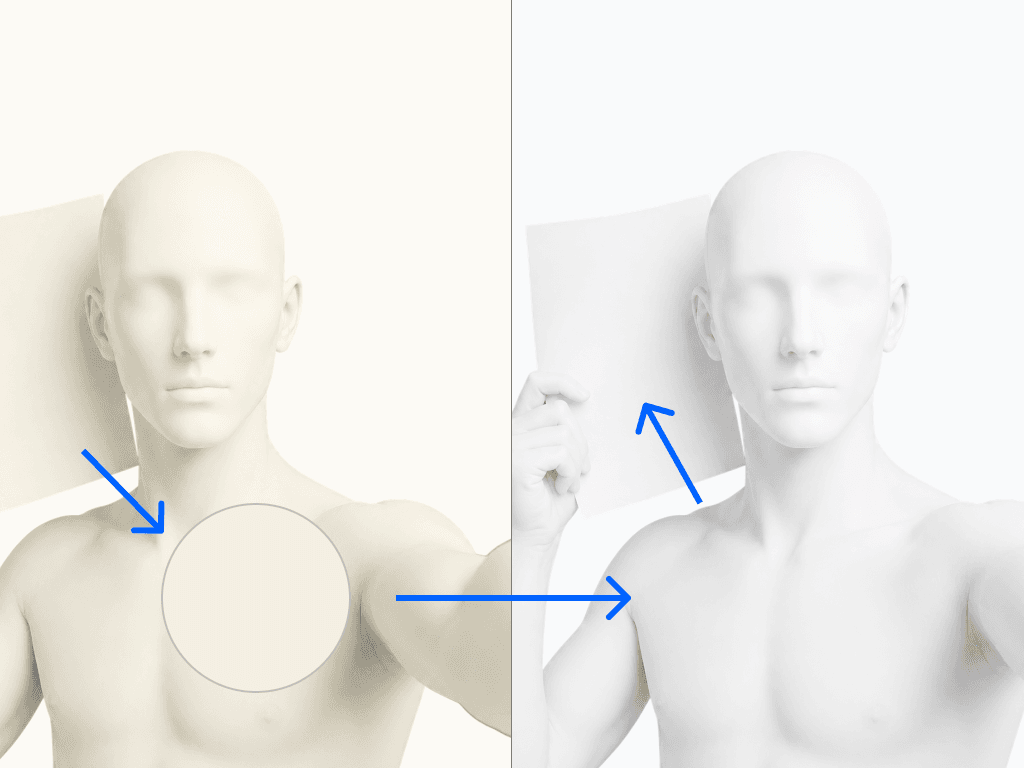
This is exactly why our analysis asks you to hold a sheet of white paper next to your face in one photo. The paper acts as a reference point. We measure the color cast of your lighting on the paper, remove it, and only then read your skin. No guessing about whether your lamp is lying. Your answers about your veins, your natural hair and what the sun does to your skin then check what the photos show, and where a photo is unclear, your answers decide. The method page has the details, and the photo guide shows the setup.
What your undertone decides
Undertone is one of three axes. The other two are value (how light or deep your coloring is) and chroma (how clear or muted). Albert Munsell defined both in A Color Notation: value is "the quality by which we distinguish a light color from a dark one", chroma the one "by which we distinguish a strong color from a weak one". Together they place you in one of the 12 color seasons, and that season gives you a full palette: your best white, your version of black, your power color, your metal.
Here is what that looks like in a finished palette. The sample analysis is the real result of Wearly Labs co-founder Filip Poláček, a Dark Autumn: dark, warm and saturated. Every color in it gets Wear, Depends or Skip with a reason, where Depends means below the waist or as an accent only. The white test and the jewelry test show up almost word for word:
- Ivory is his best white and a Wear, because it "carries enough warmth to sit at the collar".
- Pure white is a Depends, below the waist only: "Clean and bright, but with none of the warmth your face needs."
- Black is a Depends too, for the same reason: "its coolness sits wrong close to your skin". Espresso is his black.
- Gold is his metal, and mirror-bright silver stays away from his face.
If the tests above gave you a clear answer, you are a third of the way there. If they disagreed, that is normal too. Mixed signals usually mean a neutral undertone, and neutrals are exactly where self-diagnosis tends to fall apart.
FAQ
No, not in the sense color analysis means. Tanning, aging, and redness change your surface tone and your value, not the direction your skin leans. That is what makes it worth finding out once, on untanned skin.
Olive skin has a green or gray cast that the warm-or-cool tests do not sort cleanly, so it often comes out mixed: the veins look both green and blue, and both metals seem to work. Olive skin often tans easily, which people misread as warm. Tanning is a value signal, not an undertone signal. Start from neutral and let the white test find the lean.
Not on its own. How you burn or tan is a reaction to the sun, and that is what dermatologists sort skin by: Thomas Fitzpatrick created his sun-reactive skin types in 1975 to choose ultraviolet doses for treatment, not to read color. A tan hints at depth, not direction, so let the three tests decide.
Not necessarily. Redness from a flush, the sun, a fresh shave or rosacea sits on the surface and can cover a warm undertone. Run the tests on calm skin that sees little sun, the inside of your wrist or upper arm, and read your face only when it is not flushed.
Not by themselves. Golden freckles fit a warm reading and ashy ones a cool one, but a freckle is a supporting clue, not a test. Decide with the three tests and let the freckles agree or not.
Then you are likely neutral, or your lighting skewed a test. Redo the odd one out by a window, then look for the lean in the table above. This is the exact case where a structured analysis earns its keep: it weighs multiple signals against each other instead of betting everything on one.