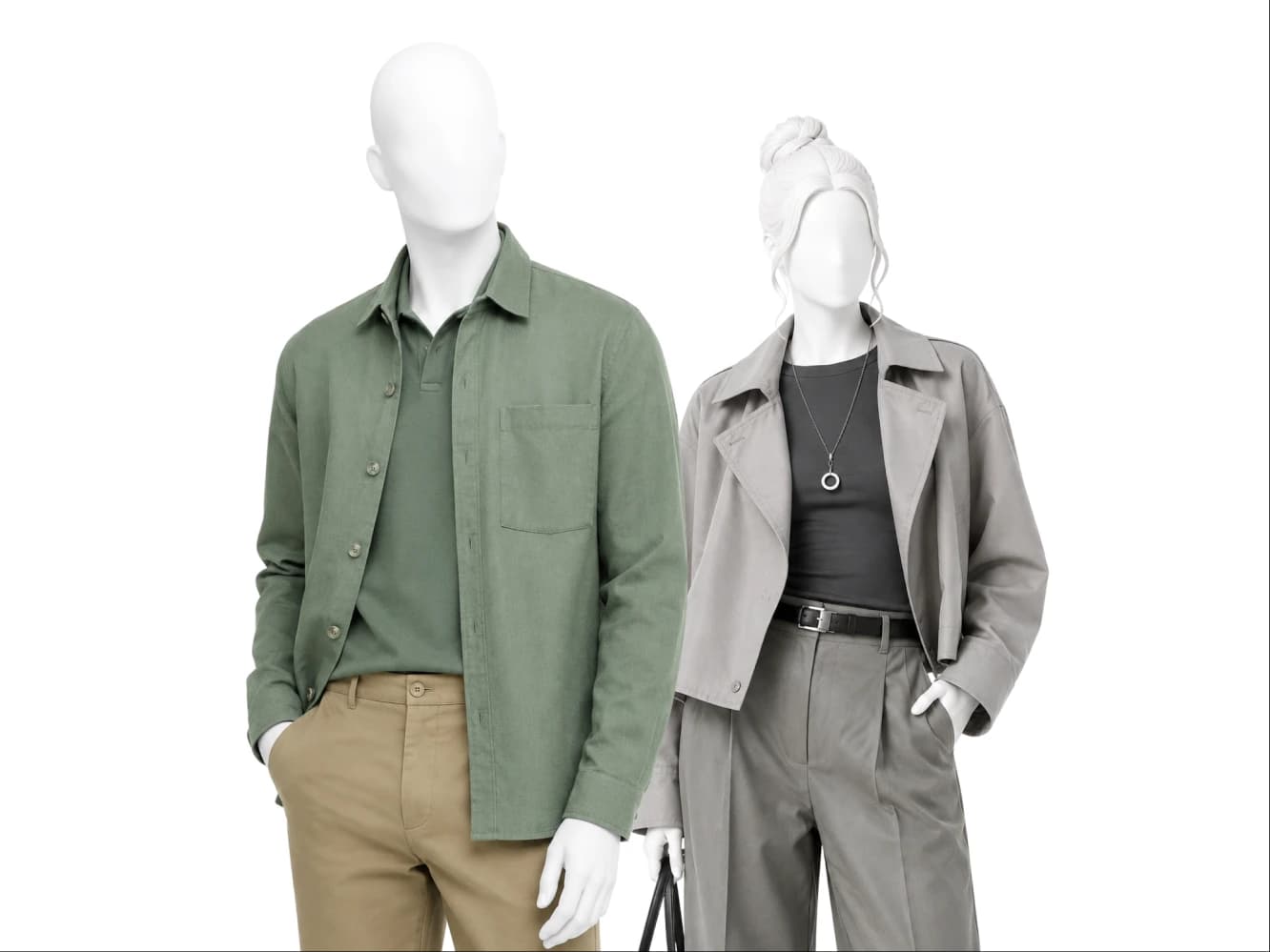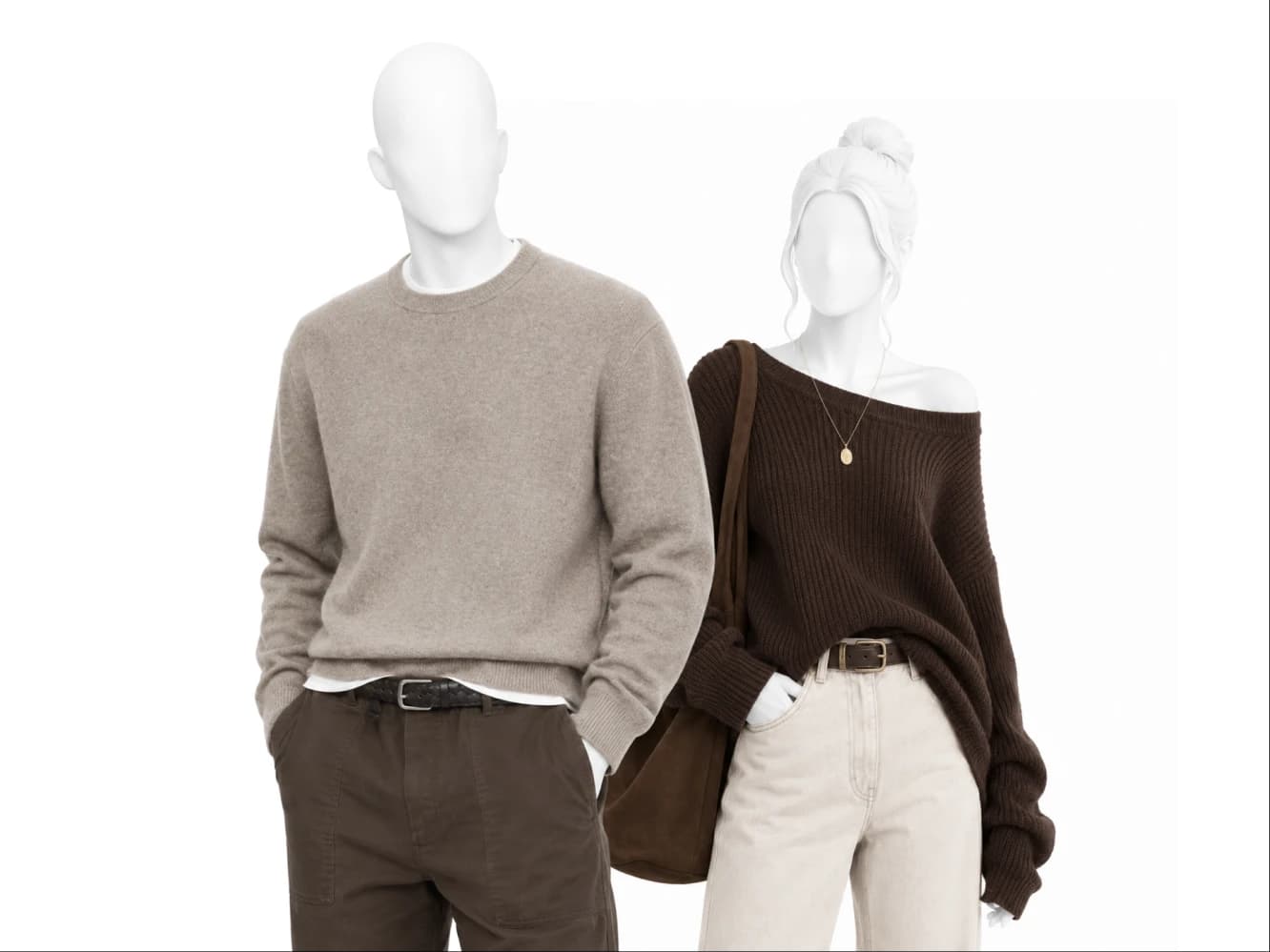
True Autumn, also written Warm Autumn, is the fully warm center of the Autumn family. Value runs medium to deep, chroma runs muted to rich, and contrast sits at medium. Rust, mustard, olive, chocolate, terracotta. This is the season with the most physical palette in the whole system, earth and spice rather than water and ice.
Am I a True Autumn?
Three signals, checked in daylight without makeup.
Veins first. Turn your wrist to the window. True Autumn veins read green, clearly and consistently, which is the outward sign of a fully warm undertone. Freckles second. If you freckle, True Autumn freckles are golden rather than gray or rosy, and they scatter across the nose and shoulders in summer. Eyes third. Warm brown and green are the True Autumn eyes, often with visible gold flecking around the pupil and a soft rather than icy rim.
Then confirm it. Hold rust under your chin, then hold ice blue. Rust should make your skin look lit from inside. Ice blue should drain it and leave your face looking gray and tired. A big gap between those results is the True Autumn answer.
What True Autumn actually means
Undertone: fully warm. No cool component at all. Every color in the True Autumn palette has gold sitting inside it, including the greens and the browns.
Value: medium to deep. Your natural coloring has real depth to it. Chocolate and espresso are comfortable near your face, which is not true of the lighter Autumn seasons.
Chroma: muted to rich. This is the range that separates True Autumn from Soft Autumn. Your colors are never neon, but they are allowed to be full. Rust at real strength is yours.
Contrast: medium. The distance between your hair, skin, and eyes is moderate. Ivory over chocolate is right. Optic white over black is a jump built for a different face.
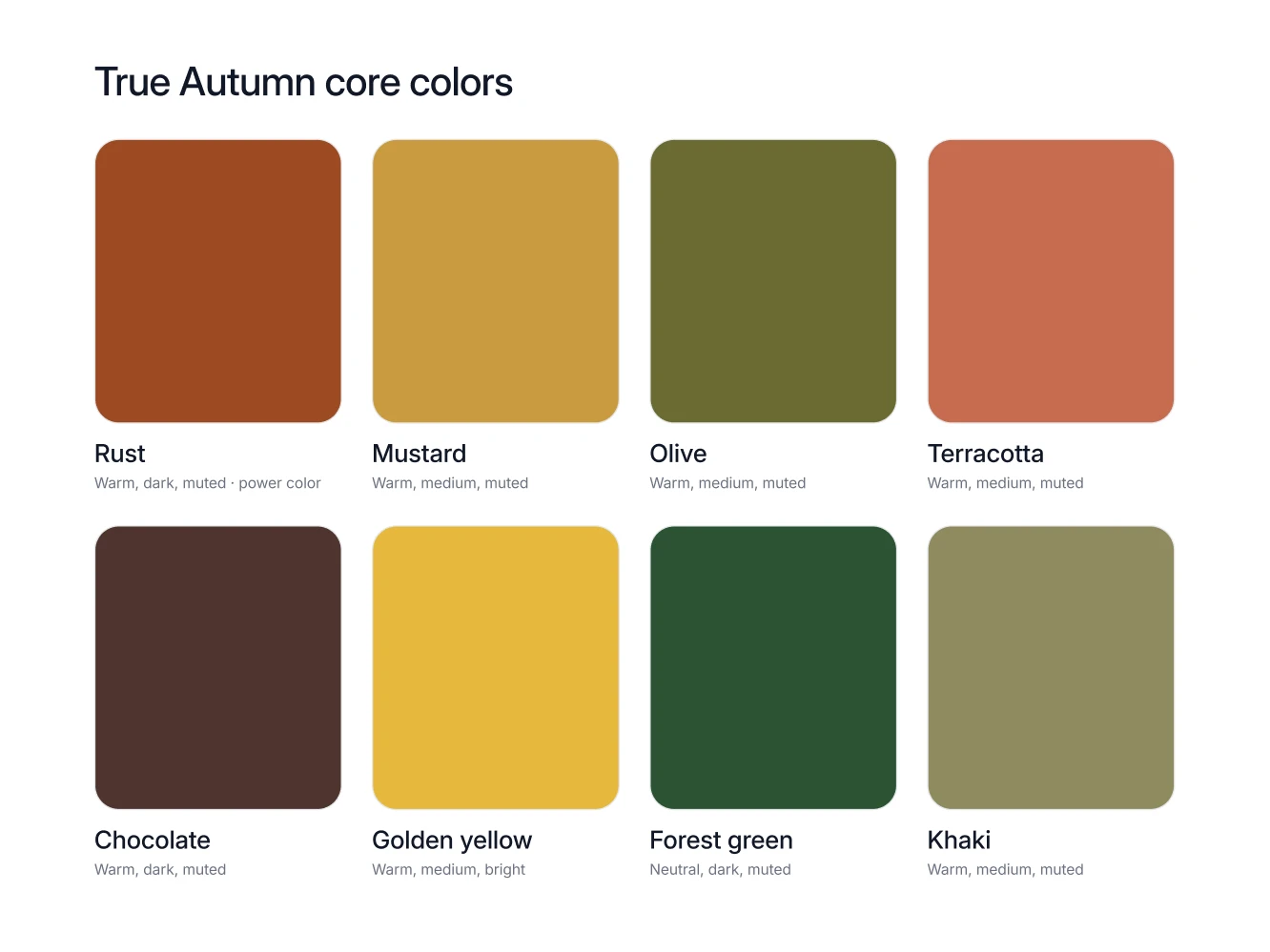
Your core colors
Rust. The power color, and the one purchase worth making first. A rust knit, a rust jacket, or a rust dress, worn where it reaches the face.
Mustard. Your best yellow, and far more wearable than people expect. Mustard over olive or khaki reads as a considered outfit rather than a bold one.
Olive. Neutral and color at once. Olive trousers, an olive field jacket, an olive knit. Nothing in the palette clashes with it.
Terracotta. Rust with more clay in it. Best as a top, a scarf, or a lighter weight dress in warm months.
Chocolate. Your dark. Chocolate trousers, chocolate boots, a chocolate coat. This is what black would be if black belonged to you, and it grounds an outfit without stealing light off your skin.
Golden yellow. The one that reads as confidence. Keep it near the face, in a knit or a shirt, and let the rest of the outfit stay in earth tones.
Forest green. Your deep green, ideal in outerwear and heavy knits. Forest green with camel is a reliable True Autumn pairing.
Khaki. The everyday base. Khaki trousers, a khaki shirt, a khaki jacket. It sits under rust and mustard without asking for attention.
Your neutrals, your white, your metal
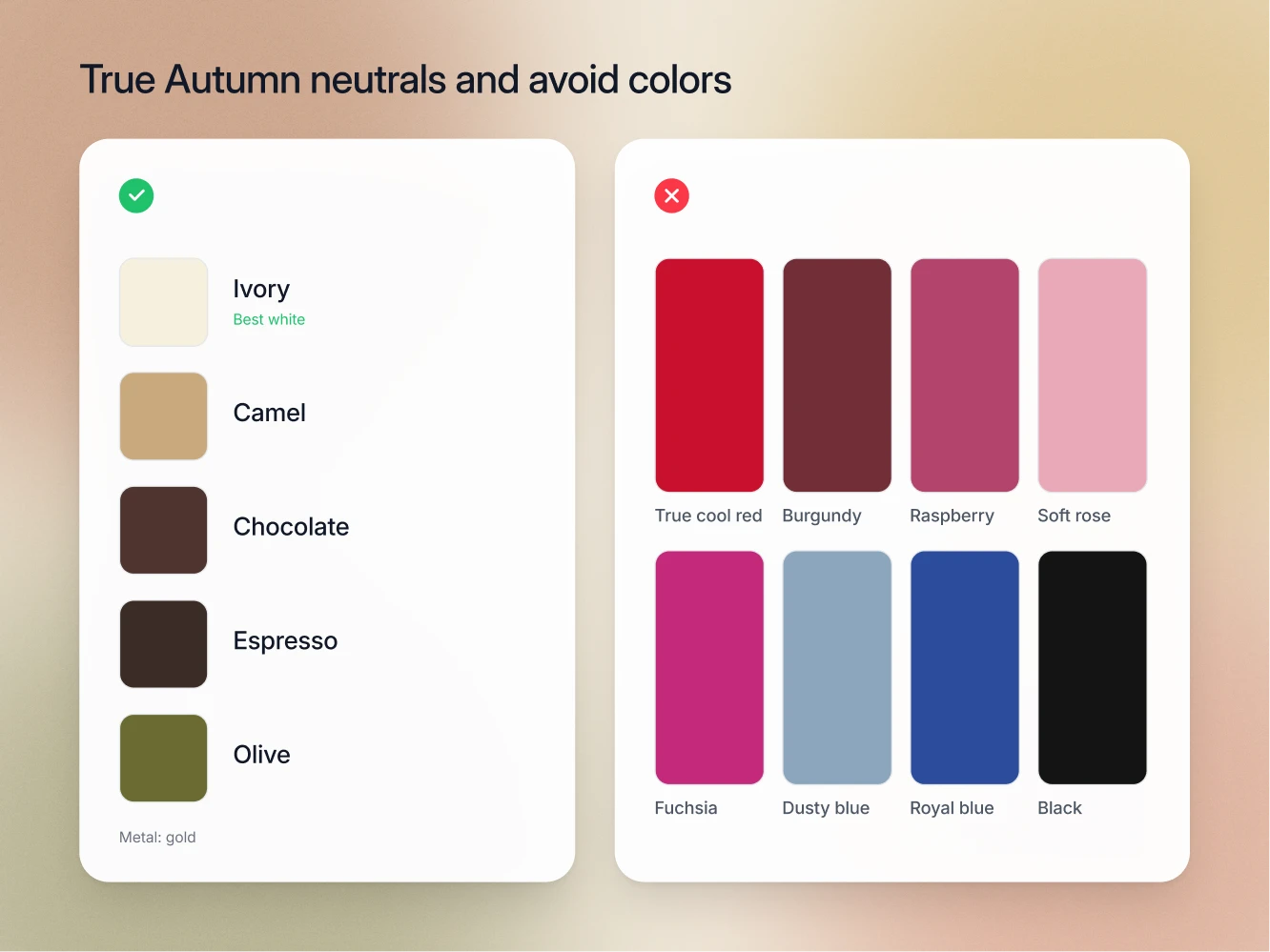
True Autumn neutrals are ivory, camel, chocolate, espresso, and olive. That is a full wardrobe of anchors, and every one is warm. Nothing gray, nothing navy, nothing black.
Your white is ivory, and optic white is the white that fails you. Against medium to deep warm coloring optic white is too bright by several steps, so the eye lands on the collar instead of on you, and the warm brown and green that make your eyes worth looking at go muddy behind it. Ivory carries the warmth your skin already has, so it recedes and your face steps forward. If you own a stack of optic white shirts and have never understood why photographs of you look off, that is very likely the reason.
Your metal is gold. Not matte gold, gold. True Autumn has enough depth and chroma to carry polished yellow gold, brass, and bronze at the throat and the wrist. Silver near the face introduces the cool cast the palette exists to exclude, and it flattens the warmth in your skin.
The colors that fight you
The True Autumn avoid list is long for one reason. Every color on it is cool, and True Autumn is fully warm.
Cool reds and pinks. True cool red, burgundy, raspberry, soft rose, fuchsia, dusty rose, and mauve. Each one puts blue against warm skin, which reads as an argument at the collarbone. Burgundy is the trap here, because it looks autumnal on the hanger and turns your face gray the moment it is on.
Cool blues. Dusty blue, royal blue, midnight blue, and ice blue. Ice blue is the harshest of the four on warm skin, and midnight blue is the sneakiest, since it is sold as a friendlier substitute for black.
Cool purples and greens. Lavender, plum, rich purple, and emerald. Emerald is worth naming twice, because greens feel safe to an Autumn and this one is not. Forest green and olive are your greens.
Lemon. A yellow, but the cool one. Golden yellow and mustard belong to you. Lemon does not, and the difference is visible in a mirror in two seconds.
Black. No black. It is the deepest cool neutral there is, and against fully warm coloring it drains every bit of gold out of your skin. Chocolate and espresso do the same anchoring work and keep your face lit.
How to combine them
The rule is rich earth tones side by side at medium contrast, with no cool pastels and no black anywhere in the outfit.
Side by side is the part people get wrong. Most palettes ask for one color against neutrals. True Autumn is the season where two or three saturated earth tones in the same look is the correct answer. Rust knit with olive trousers. Mustard shirt under a forest green jacket. Terracotta with chocolate and camel. None of those clash, because all of them share the same gold base.
Keep the contrast at medium. Ivory with chocolate is right. Ivory with black is not, and neither is chocolate with ice blue. When an outfit needs a lift, add rust, then stop. Your power color is strong enough that everything around it can stay in khaki, camel, and olive.
Seasons this one gets confused with
Soft Autumn. Same family, same warmth, so undertone settles nothing. The tell is what a dark neutral does at the collar. Put a chocolate knit right under your chin in daylight. On a True Autumn the depth suits you and your features hold their own against it, which is why chocolate is a collar color in this palette. On a Soft Autumn the same chocolate cuts a line at the jaw and the face goes quiet behind it, which is why the Soft Autumn palette keeps chocolate below the waist. The eyes back it up: True Autumn eyes usually show gold flecking and a defined edge, while a Soft Autumn iris blurs at conversation distance.
Deep Autumn. Both are warm, both take chocolate and espresso, so the family test fails again. The tell is contrast. Deep Autumn wants a bigger jump between light and dark than True Autumn does. Put ivory next to your espresso, then look at your face. If that medium jump feels balanced rather than gentle, True Autumn is your season.
FAQ
Yes. True Autumn and Warm Autumn are two names for the same season, the fully warm center of the Autumn family. Some systems write it True / Warm Autumn.
No. Black is on the True Autumn avoid list, and chocolate and espresso replace it completely. Both go as dark as any occasion asks for, in a suit, a coat or an evening dress, and both keep the gold in your skin that black takes straight out.
A rust knit. Rust is the True Autumn power color, it pairs with all five of your neutrals, and it works September through spring.
Because emerald is a cool green and your greens are warm. Forest green and olive share the gold base your skin has. Emerald does not, and it puts a blue cast next to warm skin.
For True Autumn, yes. Burgundy is a cool red wearing autumn clothing. Rust, terracotta, and chocolate give you the same depth with the warmth intact.