men's body shape
The Inverted Triangle, and the cuts that follow from it.
Your shoulders are much broader than your hips, so the work is to add no width up top and keep the lower half from reading slight. Here is what that means in practice, and why the shape on its own is only half of what decides a cut.
- Widest at your shoulders
- 125+ cuts scored
- 10 minutes to get yours
Last updated
Inverted Triangle at a glance
Shoulders much broader than the hips, narrowing sharply to the waist.
- Widest at
- Your shoulders.
- Closest shapes
- Trapezoid and Rectangle
- Three to wear
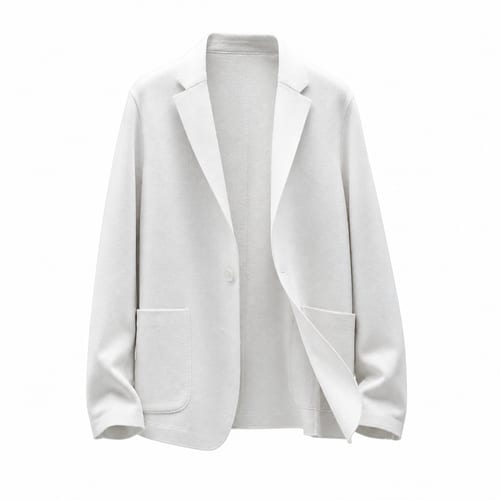 Unconstructed blazer
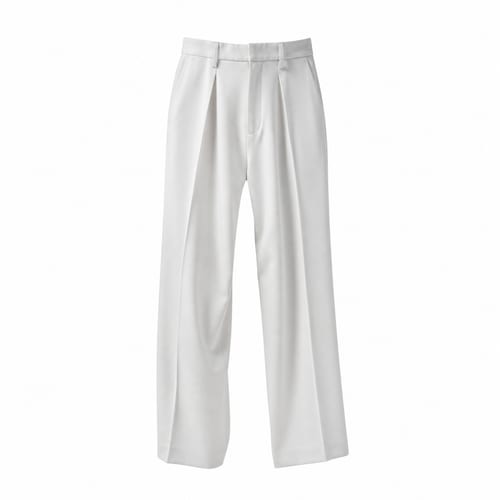 Pleated trousers
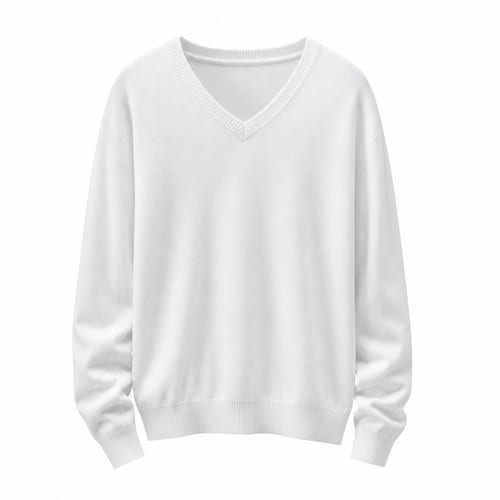 V-neck sweater
- Three to skip
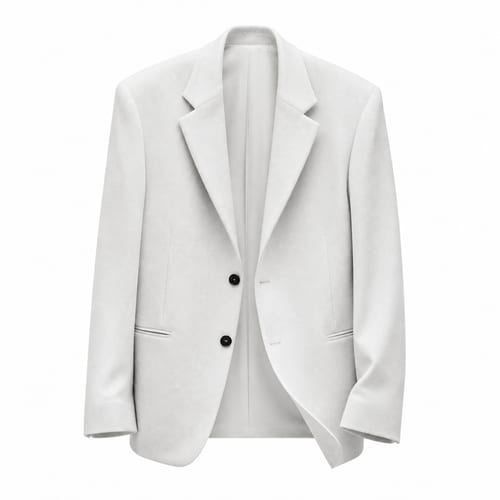 Padded-shoulder blazer
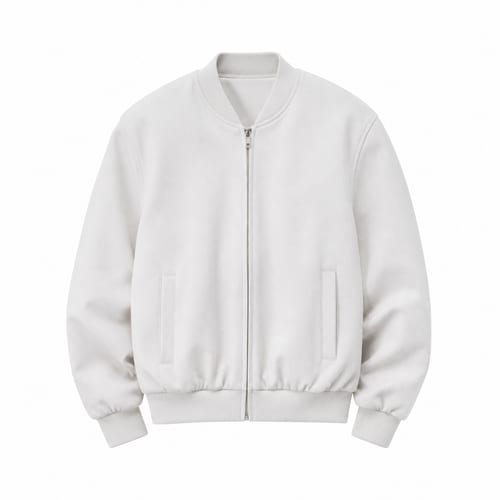 Bomber
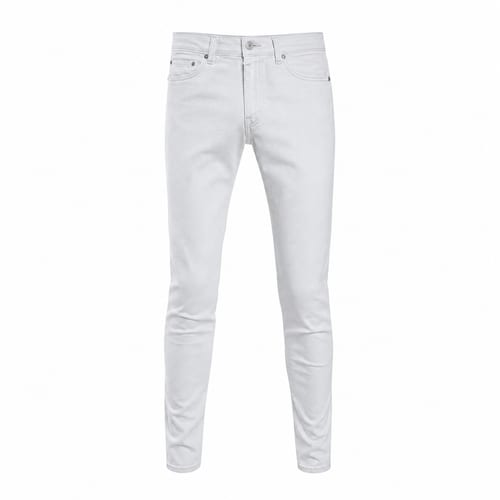 Skinny
Each list below gives the reason for every piece. Your line, read separately, decides how structured each of them may be.
Where it sits
The Inverted Triangle among the five men's shapes
Across: whether the shoulders or the hips are wider. Down: how the waist compares with both. The Inverted Triangle sits closest to the Trapezoid and Rectangle.
This page
Inverted Triangle
Shoulders much broader than the hips, narrowing sharply to the waist.
Widest at your shoulders
Placed by the relative widths that define each shape. Schematic, not a measurement.
Am I an inverted triangle?
You are an inverted triangle, the build often called a V-shape, if your shoulders are much broader than your hips and your body narrows steeply from the shoulder to the waist.
Clothes work on it when they add nothing across the top and give the seat and thigh enough room that the trousers keep a width of their own under a broad chest.
Three widths settle it: the shoulders at their widest, the waist at the narrowest part of the middle, the hips across the seat. On an inverted triangle the shoulder wins by a clear margin, and the waist and hip both sit well below it, close to each other. The word that separates this shape from a trapezoid is steep.
A tape puts a number on it. Measure your chest at its fullest, under the arms, and subtract your waist: off-the-rack suits are cut on a 6-inch (15 cm) gap between the two, called the drop, so a size 40 jacket comes with size 34 trousers (Oliver Wicks on suit sizes). A drop well past 6 inches is the steep narrowing in numbers.
The shop usually tells you first. Shirts pull across the upper back and balloon at the waist, a jacket that fits your shoulders swims through the body, and a suit sold as a set fits either the jacket or the trousers, rarely both.
The analysis reads it from your answers and two body photos, front and side, weighed by fixed rules, with your answers counting the most. In the men's wardrobe, shoulders wider than hips reads trapezoid until more of your answers confirm a steep taper: a waist that clearly curves in, weight that goes to your upper body first, a lean build for your height.
The sample analysis shows the line from the other side. Co-founder Filip Poláček answered shoulders wider than hips, a waist that curves in only slightly and weight that settles evenly. "That combination narrows gradually from the shoulder down," his page says, and it names the trapezoid.
One answer outranks the shoulders altogether. If weight goes to your middle first and your waist runs fairly straight, the rules name the oval, however broad the shoulders are. You land on one shape either way, and once the steep taper is confirmed, it gives every garment two jobs, one above the waist and one below it.
Check it with three questions.
A quick self-check with the questionnaire's own body questions and the rules that turn them into a shape. The analysis reads the same answers together with your two body photos, front and side.
Question 1 of 3
Shoulders or hips?
Look in the mirror straight on: which is wider? Pick the closest silhouette.
What the inverted triangle actually means for clothes
Off the rack, shirts and jackets are cut for a gentler taper than yours, so the cloth that fits your chest arrives with a waist meant for a man who narrows less.
That gap is behind most of what goes wrong for you in a fitting room.
The first job is to add nothing across the top. Shoulder pads, flapped chest pockets, a dropped shoulder: each one lands on the widest part of you, and the wider the top reads, the steeper the fall below it looks. What works up there takes its shape from you: a soft shoulder, a V at the neck, a front that opens.
The second job is the one men miss. The lower half needs presence: room through the seat and thigh and a leg that keeps that width to the shoe, so the trousers answer the chest instead of disappearing under it. What counts is ease where your seat and thigh are, more than width at the hem.
Where a hem lands decides the rest. A ribbed band at the hip, the finish of a bomber, cinches the hem where you are narrow and leaves the chest to billow above it. A hem that falls straight past the hip, on an open cardigan or a knee-length coat, carries the line of the shoulder on down the body instead. The list below is built on those two jobs.
Wear or skip?
Six cuts. Call each one, then see why.
Each of these is on the lists further down, with its reason. Decide whether the Inverted Triangle wears it before you read on.
- Unconstructed blazer
- Padded-shoulder blazer
- Pleated trousers
- Bomber
- V-neck sweater
- Skinny
Wear
The cuts that work
- Unconstructed blazerTakes its shape from your own shoulder instead of adding a second one on top, so it fits the chest without widening it.
- Pleated trousersThe pleats open over the seat and thigh, giving the trouser room exactly where this frame can use it, and the leg falls clean from there.
- V-neck sweaterThe V points down the chest toward the waist, the direction your frame narrows in anyway, and leaves the shoulder line alone.
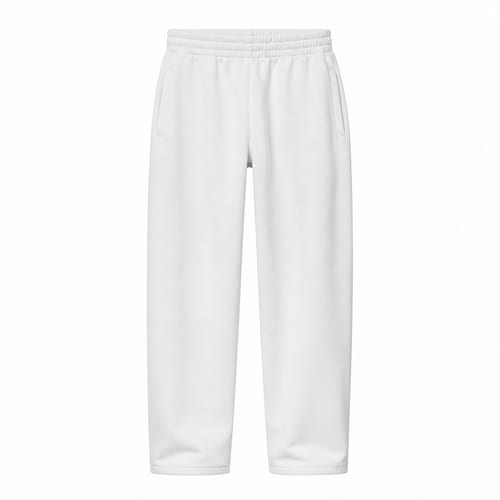 Straight trousers with roomEase through the thigh and a leg that drops straight to the shoe, so the lower half holds a measurement of its own.
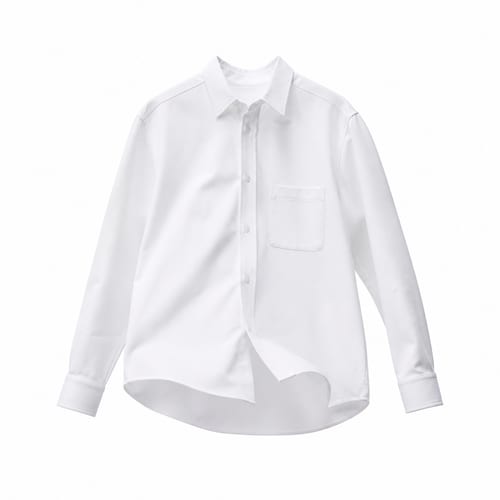 Regular shirt and oxford shirt in a regular cutEnough cloth across the back that the seam holds when you reach, with the spare at the waist left for a tailor to take in.
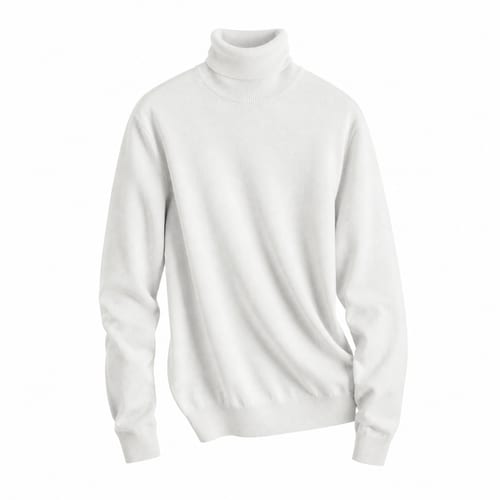 Thin roll-neck and mock-neckA fine knit that keeps the top of the column narrow and clean where a wide collar would spread it.
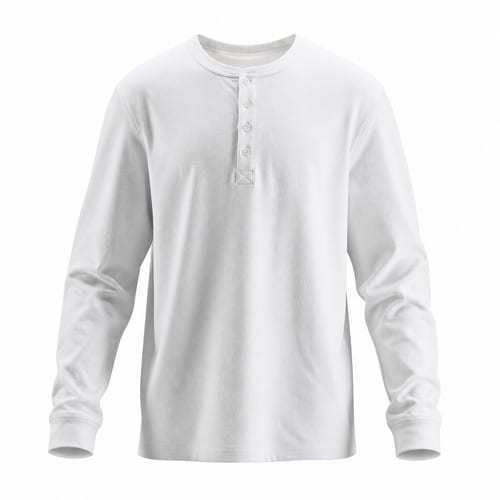 HenleyThe placket opens a short vertical at the neck, and the soft, set-in shoulder follows yours instead of squaring it.
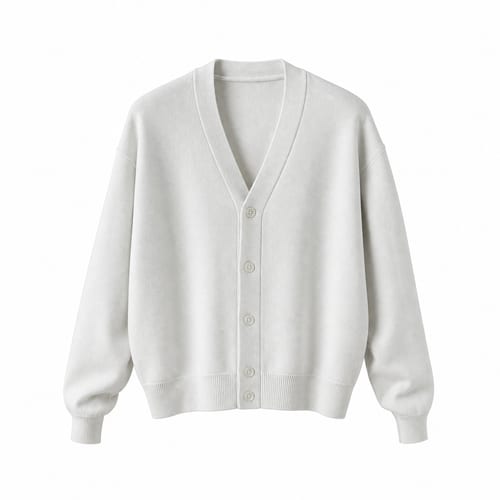 Cardigan worn openTwo verticals down the front and nothing structured landing on the shoulder.
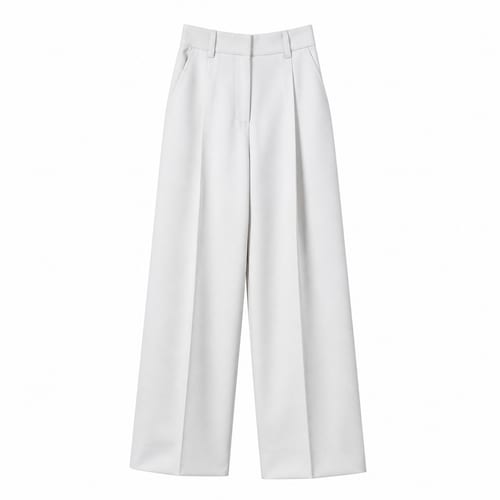 Wide-legWidth carried from a high waistband all the way to the hem, so the trousers can stand up to a broad chest on their own.
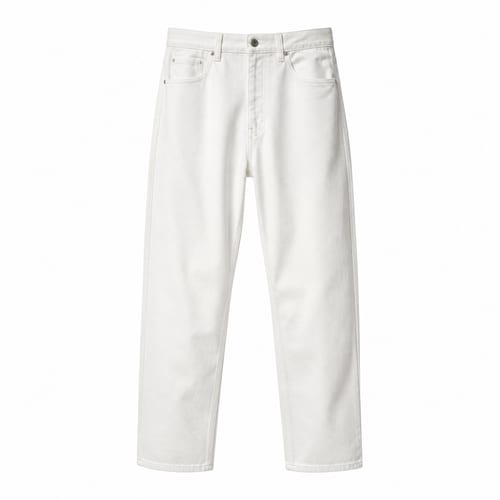 Straight denim and chinoCarries the leg straight, so the lower half keeps its width down to the shoe instead of tapering away under you.
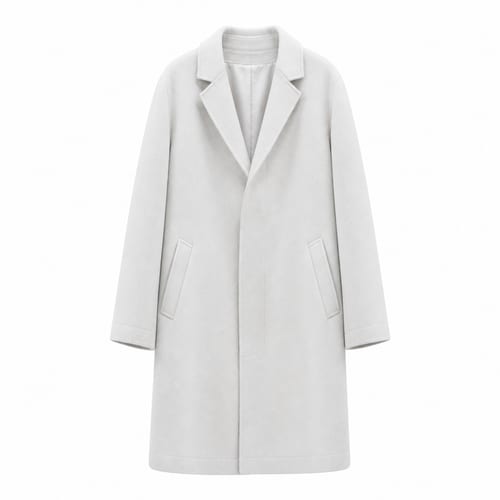 Straight knee-length coatOne straight line from the shoulder to the knee, which carries the width past the hip instead of stopping at it.
On a weekday, that is an oxford shirt under the unconstructed blazer, over pleated trousers or straight trousers with room, whichever matches your rise. On a weekend, a henley under an open cardigan with straight denim: verticals up top and a full-length leg below.
Those are the mechanics of the shape. Your page puts each of these cuts through your line and your body details before it marks it Wear, Depends or Skip, and on this list the rise alone splits the trousers in two.
Skip
The cuts that fight you
- Padded-shoulder blazerThe pad moves the seam past a shoulder point that is already the widest thing in the outfit.
- BomberChest volume gathered into a ribbed band at the hip: a wide top pulled in over the narrow end of the frame.
- SkinnyGrips the leg under a broad chest, so the V of your torso carries on down to a point at the ankle.
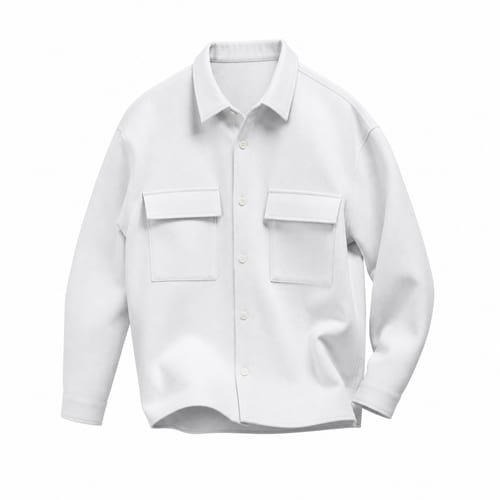 Boxy oversized overshirtThe dropped shoulder sits out on the arm and two flapped chest pockets lay a second width across the top.
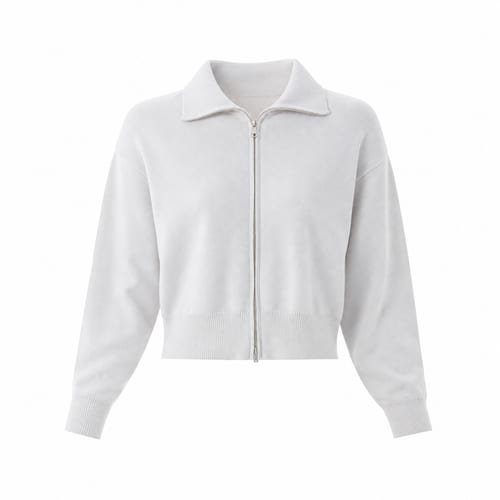 Short fitted jacketEnds on a ribbed band at the waist and is cut close through the body, so it strains across the chest and stops where the taper starts.
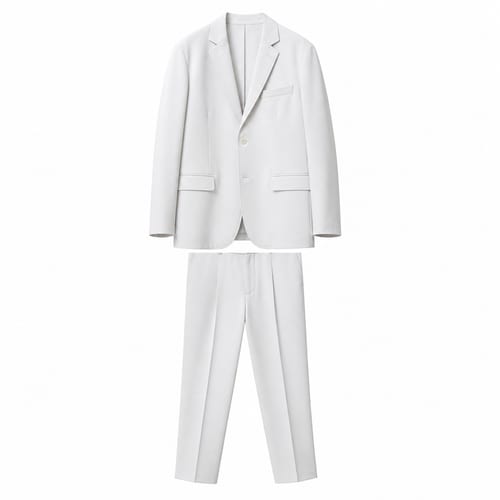 Slim-fit shiny suitA built-up shoulder over a jacket cut close at the waist, with a sheen that catches the light along your widest line.
In a fitting room, reach forward with both arms. If the back pulls tight across the shoulder blades while the front still stands away from your waist, the garment was cut for a smaller drop than yours, and no size up or down fixes both ends. The sample analysis shows what a close cut does even on a gentler shoulder-led frame: Filip Poláček's trapezoid gets Skip on the short fitted jacket, "Cropped and fitted, every seam sits under strain across your chest." A steeper taper puts more chest into the same jacket.
Tailoring
This is where an inverted triangle loses the most money, so buy slowly.
A suit sold as a set is cut on the standard 6-inch drop and yours is bigger, so the jacket that fits your chest comes with trousers too big in the waist. Buy jacket and trousers as separates where a maker sells them that way.
Go soft at the shoulder. An unconstructed blazer or a soft textured suit lets your own shoulder be the structure. A constructed classic suit at standard padding has the padded-shoulder blazer's problem, and the rules refuse it on this shape. Ask to see the shoulder: with the padding taken back to a layer of canvas, the seam stays where your shoulder ends, and that is a different jacket, one that works. Evening wear follows the same rule, and the catalog's tuxedo, built on a padded shoulder, comes back Skip here.
Single-breasted, with a notch lapel of ordinary width. A double-breasted suit runs its lapels wide across the chest and adds a second horizontal at the button stance, and a wide peak lapel points up and out toward the shoulder. Both give the top half help it does not need.
For trousers, pleated suit trousers or a straight leg with room through the thigh, cut at the one rise your page sets for you.
The buying rule saves the most grief. Buy for the shoulder, then have the waist and back taken in. Taking a jacket in is routine work, while the shoulders, in the words of one suit maker's alteration guide, are "nearly impossible to alter once constructed."
Shape and line
Your shape names it, your line decides it
Your shape reads width, and on this frame it comes down to two instructions: add nothing to the shoulder, give the lower half room. Your line reads edges, whether your bone structure, the line of your shoulders and your features come out sharp, medium or soft. A steep drop from shoulder to waist is a ratio, and a ratio says nothing about the bone it was measured over.
So two inverted triangles can need different jackets. Both need a shoulder that adds nothing. With a sharp line it is the knee-length straight coat, structure carried in the length and a clean edge rather than a pad. With a soft line it is the unstructured blazer, which takes its shape from you. Under them, the sharp line's top is a crisp piqué polo and the soft line's a henley, and the table below runs the same split through the rest of the wardrobe.
The sample analysis shows the two checks working apart. Filip Poláček, a trapezoid with a medium line, gets the structured classic suit as a Wear for his build, "Shoulder and body are cut the way you are built, so it closes without strain," and the soft textured suit as a Skip for his line, "The rounded, soft seams blur a frame that reads better with a clean edge." On an inverted triangle the build turns against the structured suit first, and the line rules on what is left.
Neither reading predicts the other: an inverted triangle is not automatically a sharp line, and no line belongs to a shape. Above both sit your body details.
Schematic, not a measurement.
Line
Your shape: where the width sits
Shoulders much broader than the hips, narrowing sharply to the waist.
Your line: how the edges read
A frame that commits to neither pole, with edges that are neither cut nor rounded.
What it asks of a cut
- Moderate construction. Structure that is there without announcing itself.
- A natural shoulder, neither built up nor dropped.
- Fabric with body that still moves. A mid-weight knit, a soft twill.
What works against it
- Both extremes, and this is the one level where that is the whole answer: a rigidly architectural piece reads as costume, a fully fluid one reads as unmade.
Built for this line, and not ruled out by this shape
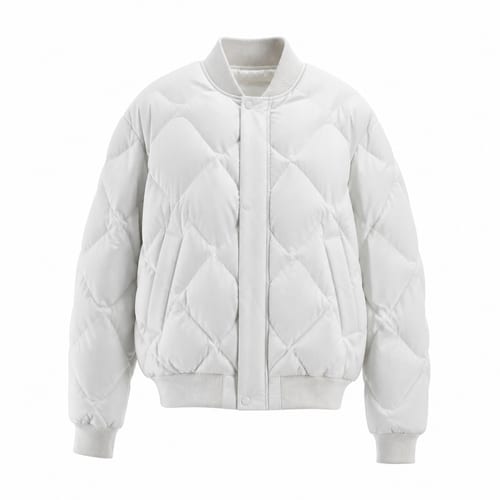 Jackets and layersQuilted puffer
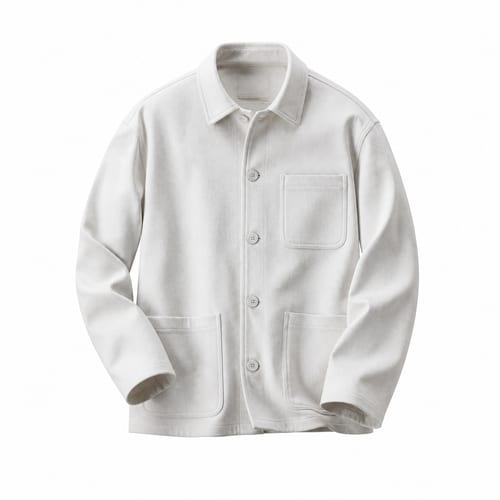 Jackets and layersChore jacket
- Shirts and topsRegular shirt
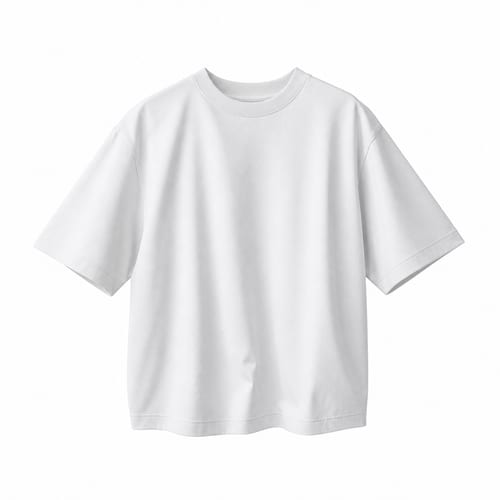 Shirts and topsHeavy tee
Your body details still outrank your shape
Body details are applied after the shape and win wherever the two disagree.
On this frame, three of them change the most verdicts.
- Your rise. Your page sets one rise for you, and any trouser cut at another height is a Skip, whatever its leg does. That splits this list in two: the pleated trousers and the wide-leg sit high, the straight trousers with room and the straight denim at mid rise. The sample analysis, at a mid rise, turns down the high-rise wide-leg, "The wide leg starts from a waistband set at the wrong rise for you," and keeps the straight trouser with room. A shorter leg or a longer torso points to the high pair.
- Narrow shoulders. A man can measure narrow at the shoulder in absolute terms and still drop steeply to a small waist. Then the rule turns around and narrow shoulders count in favor of a sharp shoulder, which brings the padded-shoulder blazer back into contention, judged by your line like any other jacket.
- Broader thighs. They refuse any trouser without room at the thigh, and every bottom that is skin-tight or bulky there. The four trousers on this page are all cut with thigh room and stay. The catalog's regular chino is not, so for you the straight denim and chino card narrows to the denim.
The rules also cover a fuller midsection, a stronger seat and a plus-size frame, and each one applies only when your answers say it should.
The other men’s shapes
More on the Inverted Triangle
- TriangleWaist and hips carrying more width than the shoulders.
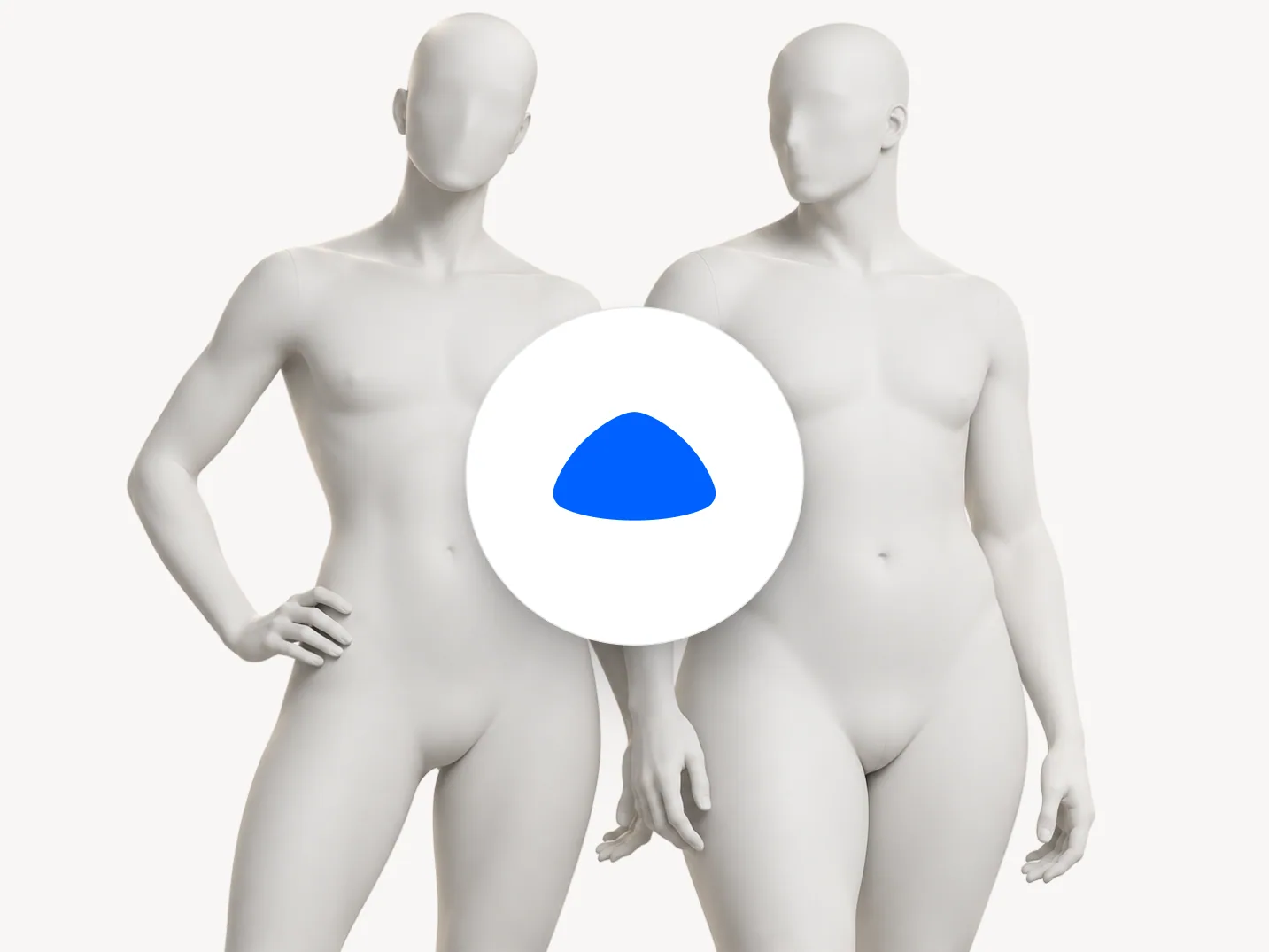
- TrapezoidShoulders a little broader than the hips, narrowing gradually.
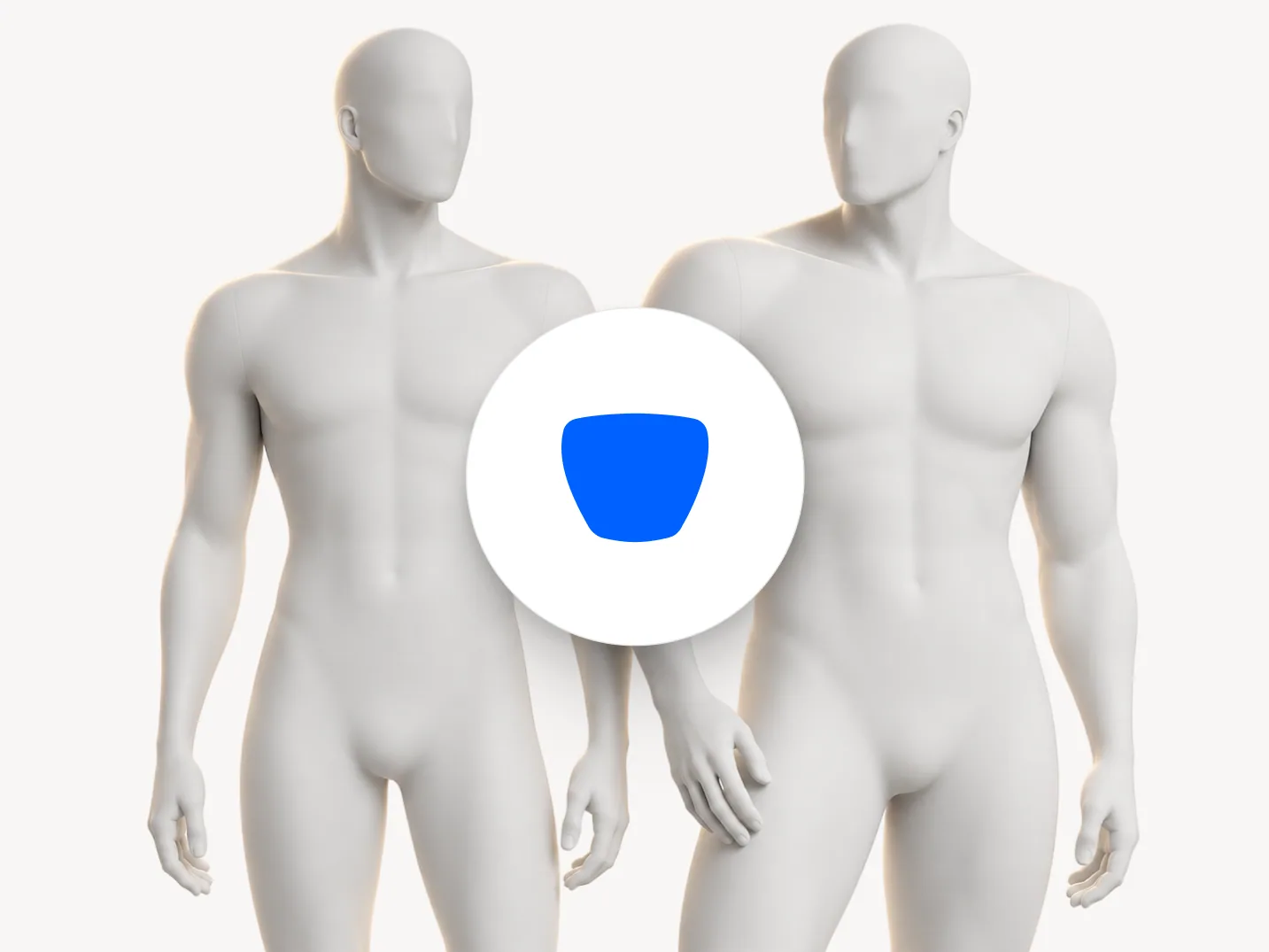
- RectangleShoulders, waist and hips running close to the same width, with no sharp narrowing at the waist.
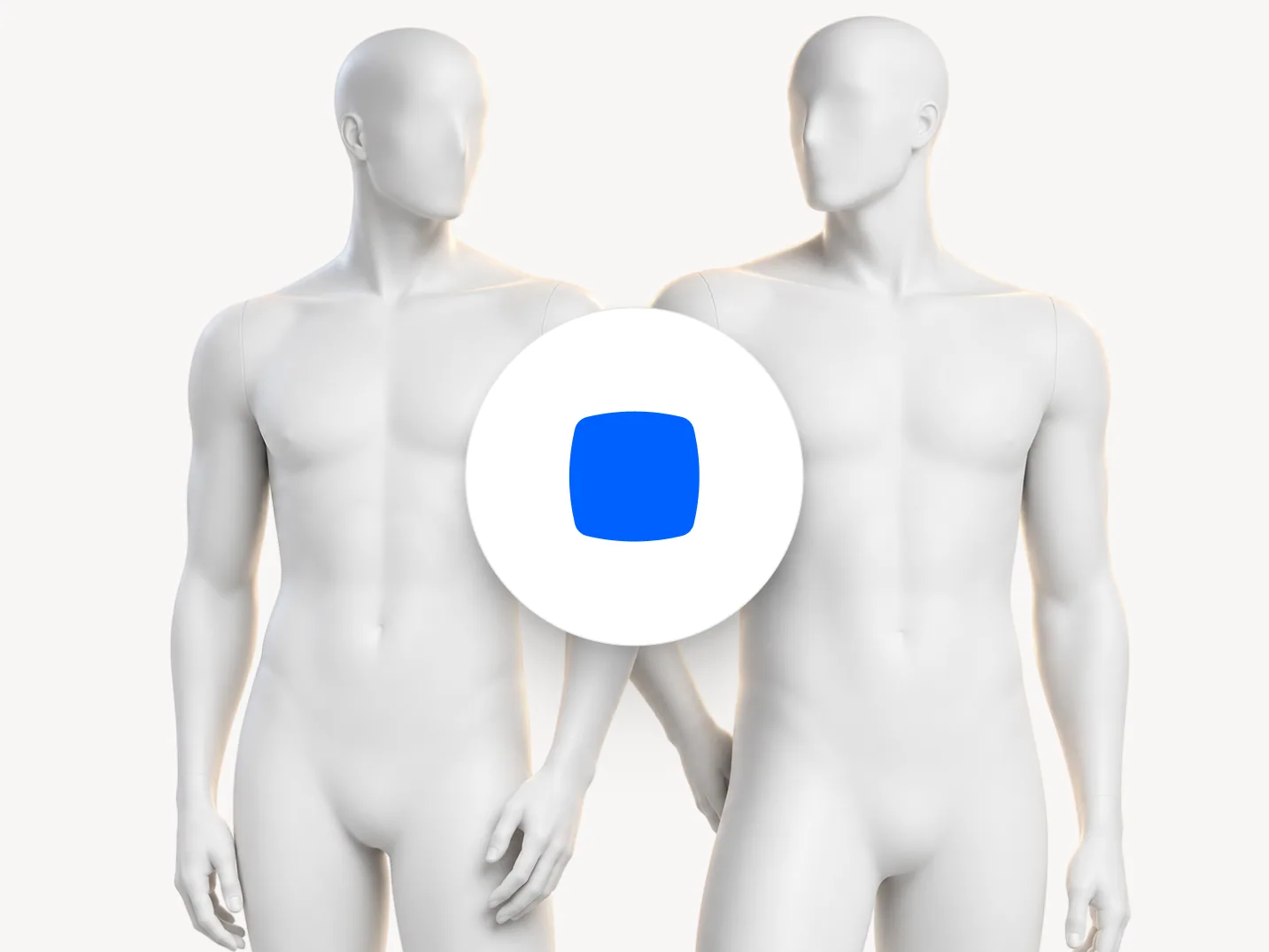
- OvalVolume gathered around the middle, with the waist the fullest part of the frame.
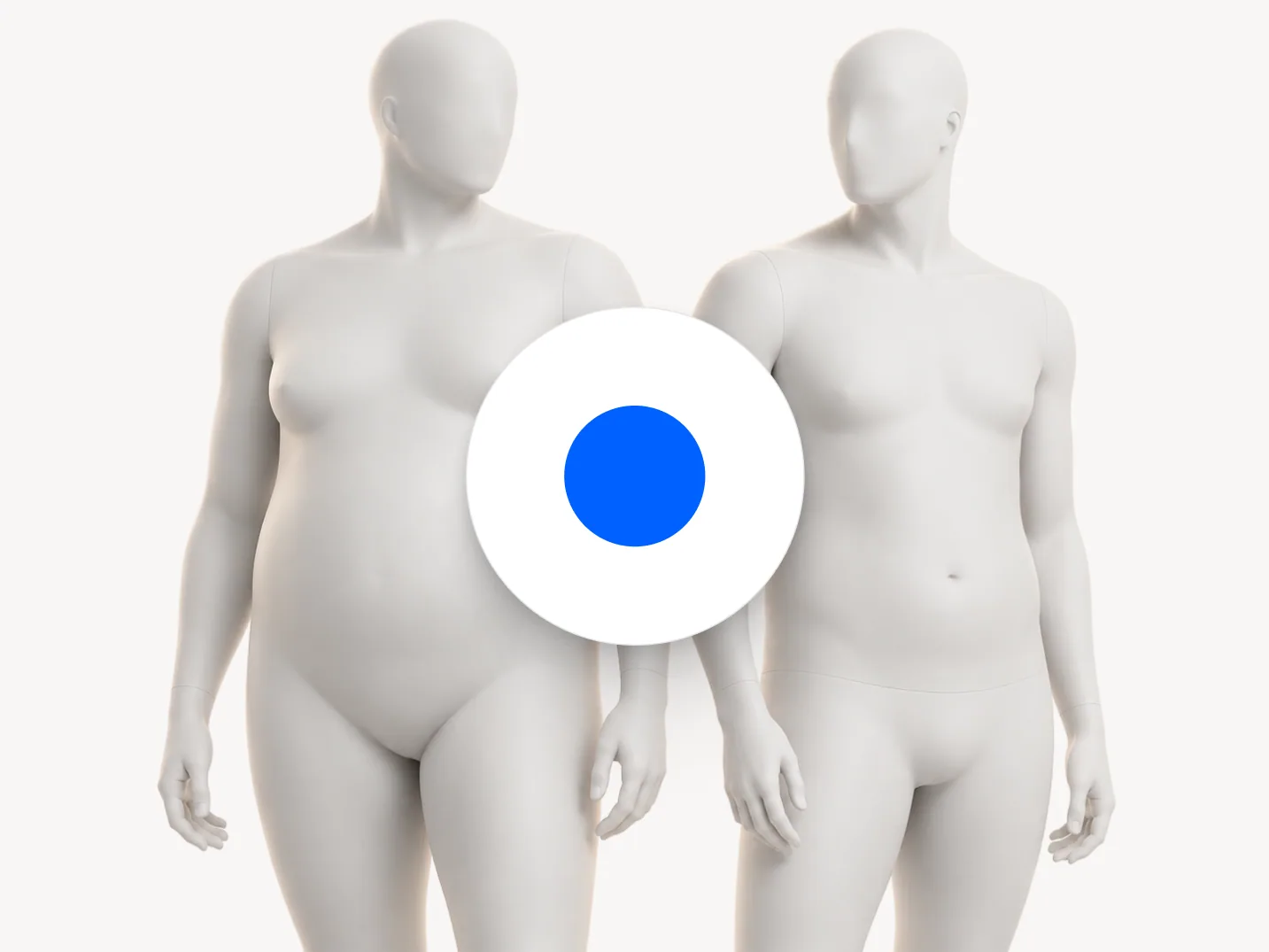
- All ten body shapesFive for women and five for men, side by side, with the free shape check.
FAQ
Inverted Triangle questions.
The Inverted Triangle is defined by shoulders much broader than the hips, narrowing sharply to the waist. Measured rather than eyeballed, that comes down to comparing your shoulder, waist and hip widths, which is hard to do honestly in a mirror because you already have an opinion about your own body. The analysis reads it from your answers and two body photos, with fixed rules weighing both.
This one is the men's wardrobe, yes. The shapes are read separately for men and women because the same measurements imply different cuts depending on which wardrobe you are dressing from, and a system that ignores that gives one of the two bad advice.
Usually not. Shape is about proportion, not size, and proportion is mostly skeletal, and where your shoulders sit relative to your hips does not move much. What changes is where softness gathers, which can shift you between two neighboring shapes over a few years.
Often, not always. Some men measure this way without ever training for it, and men who train hard can still measure as trapezoid because their narrowing stays gradual. The shape records a ratio, whatever produced it.
By how fast you narrow below the shoulder. Both shapes are widest there, but a trapezoid tapers gradually and an inverted triangle drops steeply, which shows on a tape as a chest-to-waist drop well past the 6 inches off-the-rack suits are cut on. The clothes follow: a gentle taper only needs keeping, a steep one needs answering from below. How the five men's shapes compare puts all of them side by side.
No. What the shape asks for is room through the seat and thigh, and a straight leg with room gives it as fully as a wide one. Your rise may settle the choice for you: the wide-leg on this page is cut high, the straight trousers with room sit at mid rise, and only one of the two rises is yours.
Because ready-to-wear shirts are cut for a smaller drop from chest to waist than yours. A shirt big enough for your back carries spare cloth at the waist, and one cut close at the waist binds across the shoulder blades. Buy for the back and shoulders and have the sides taken in: the sides of a shirt are easy to alter, the shoulders are not.
That is not a question the analysis answers. The shape reading describes the body you have now and returns the cuts that suit it. If your measurements change, a new analysis reads the new frame.
Another question about the method or your result? Write to us
Find out what suits you, and why.
A short questionnaire and five photos. Your key arrives by email, usually within 10 minutes.