women's body shape
The Inverted Triangle, and the cuts that follow from it.
Your shoulders carry more width than your hips, so the work is to keep width off the shoulders and let the lower half fill out. Here is what that means in practice, and why the shape on its own is only half of what decides a cut.
- Widest at your shoulders
- 125+ cuts scored
- 10 minutes to get yours
Last updated
Inverted Triangle at a glance
Shoulders carrying more width than the hips.
- Widest at
- Your shoulders.
- Closest shapes
- Hourglass and Rectangle
- Three to wear
 High-rise wide
 Pleated midi
 Baggy cargo
- Three to skip
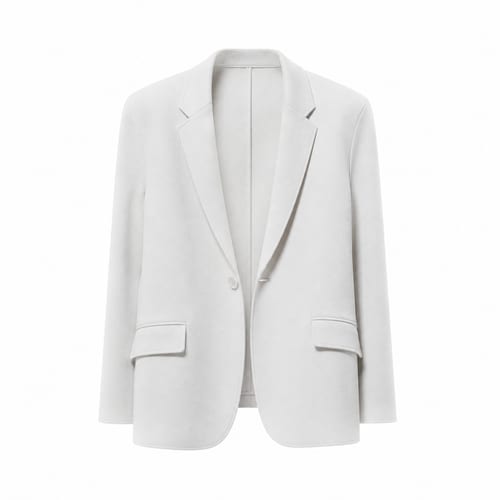 Padded-shoulder blazer
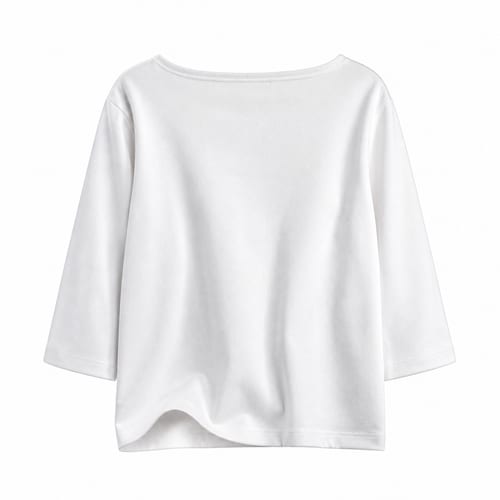 Boat neck
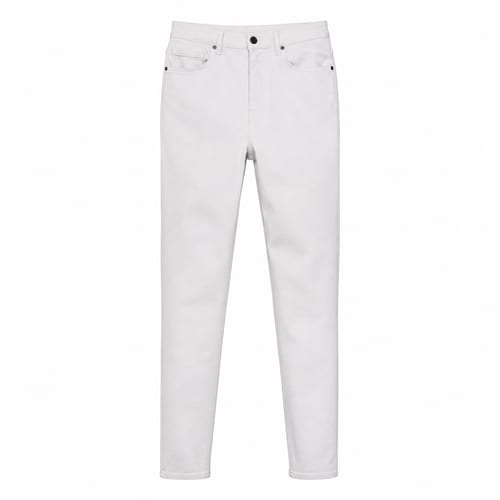 Skinny
Each list below gives the reason for every piece. Your line, read separately, decides how structured each of them may be.
Where it sits
The Inverted Triangle among the five women's shapes
Across: whether the shoulders or the hips are wider. Down: how the waist compares with both. The Inverted Triangle sits closest to the Hourglass and Rectangle.
This page
Inverted Triangle
Shoulders carrying more width than the hips.
Widest at your shoulders
Placed by the relative widths that define each shape. Schematic, not a measurement.
Am I an inverted triangle?
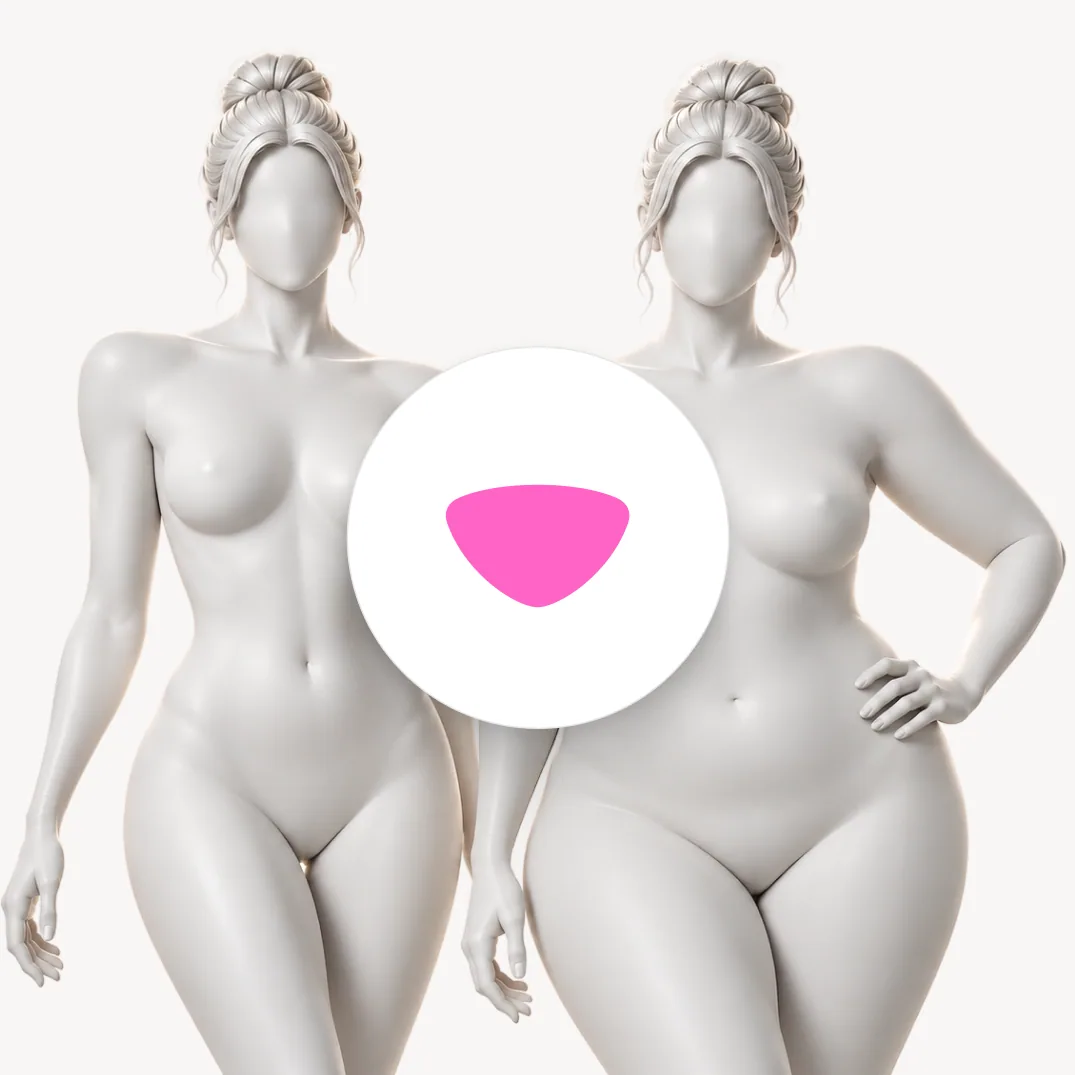
You are an inverted triangle if your shoulders measure wider than your hips, so the widest point of your frame sits above the waist, often with the bust and upper back adding to it.
Clothes balance that frame by leaving the shoulder at its own width and putting volume below the waist, where a full skirt or a wide trouser leg can reach back out toward the line of the shoulder.
Your waist, clearly marked or barely there, leaves the shape where it is, and so do size and height. A slight, athletic frame with a broad shoulder line is an inverted triangle, and so is a fuller frame that carries most of its width across the bust and back.
Three checks you can do today
- In a photo: Ask someone to take a full-length photo of you from the front, in fitted clothes, arms a little away from your body. Drop a vertical line from the outer edge of each shoulder. If both lines land outside your hips, your shoulders are the wider measurement.
- In the fitting room: Your sizes split. Tops and jackets are chosen by your shoulders and back, trousers and skirts often come a size smaller, and a jacket that closes comfortably across your back stands away from you at the waist and hip.
- With a tape measure: Apparel research measures around the body rather than across it. In FFIT, the Female Figure Identification Technique that Simmons, Istook and Devarajan published in 2004, a bust at least 3.6 inches (about 9 cm) larger than the hips is an inverted triangle, as long as it is less than 9 inches (about 23 cm) larger than the waist. The formulas have a blind spot: in a 2020 study of plus-size body scans, Sokolowski and Bettencourt found them filing frames as rectangles and inverted triangles whose waist was larger than both bust and hip.
The analysis reads the same thing from your answers and two body photos, front and side, weighed by fixed rules, with your answers counting the most. It checks the middle before anything else, which closes that blind spot: if weight goes to your middle first and your waist runs fairly straight, the rules name the apple, whatever your shoulders do.
A clearly curved waist does not make you an hourglass, because the shoulder answer is read before the waist. You get one shape, and your page shows which answers decided it.
With the width placed above the waist, every garment you put on either adds to the top or answers it from below, and three places on the body decide which.
Check it with three questions.
A quick self-check with the questionnaire's own body questions and the rules that turn them into a shape. The analysis reads the same answers together with your two body photos, front and side.
Question 1 of 3
Shoulders or hips?
Look in the mirror straight on: which is wider? Pick the closest silhouette.
What an inverted triangle actually means for clothes
Those three places are the shoulder seam, the neckline and everything below the waist.
Advice that stops at the first two comes down to wearing less on top, and it leaves you narrow from head to hem, with the shoulder as the only wide thing in the picture.
Start below the waist, because that is where the balance is won. Width added there answers the shoulder instead of competing with it, whether it comes from a skirt that flares from the hip or a trouser leg that falls wide. A waistband at the natural waist gives that width the whole leg to spread over. The cloth has to hold it, which is why your page judges more than 20 materials too: a wide trouser in a limp fabric collapses into a narrow line.
The neckline comes next. When the bust and upper back add to the shoulder, the chest reads as one wide horizontal field, and a high, straight neckline draws a ruler across the top of it. Open it with a V, a scoop or a wrap, and a vertical splits the field into two narrower halves.
The shoulder seam has a test you can run on any jacket. Standard jacket fit advice, written for men, puts the seam just past the shoulder bone. On this frame it belongs on the bone or a touch inside it.
A seam that sits further out, whether a pad or a dropped shoulder put it there, adds to the one measurement you already have most of. A raglan sleeve, whose seam runs on a diagonal from the underarm to the collar, has no seam at the shoulder point to mark the width at all.
The list below keeps that order: the lower half first, then the neckline, then the jacket.
Wear or skip?
Six cuts. Call each one, then see why.
Each of these is on the lists further down, with its reason. Decide whether the Inverted Triangle wears it before you read on.
- High-rise wide
- Padded-shoulder blazer
- Pleated midi
- Boat neck
- Baggy cargo
- Skinny
Wear
The cuts that work
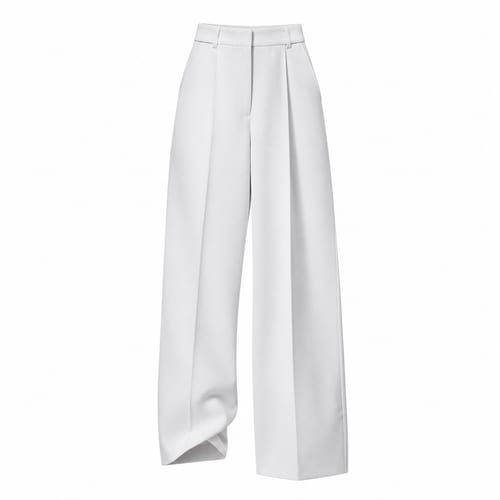
- Trousers and skirtsHigh-rise wideStarts at the natural waist and falls wide to the floor, so the lower half gets a width that can stand up to the shoulder.
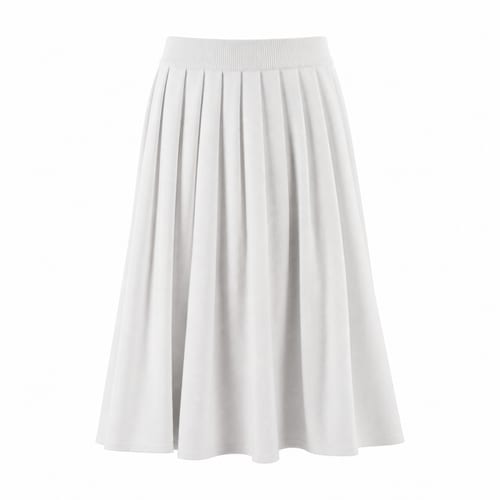
- Trousers and skirtsPleated midiThe pleats lie flat at the waist and open toward the hem, adding volume where your frame carries the least of it.
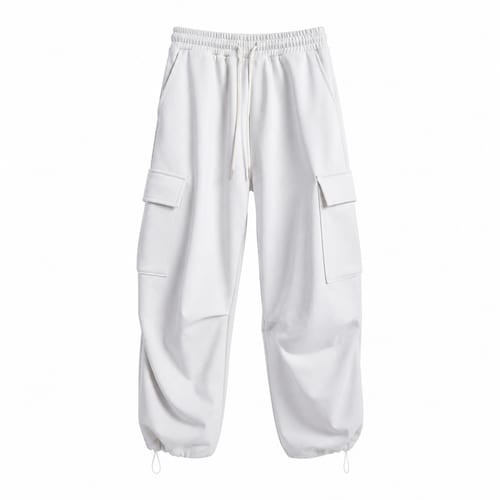
- Trousers and skirtsBaggy cargoThe pockets add bulk at the hip and thigh, the part of this frame that can carry more width.
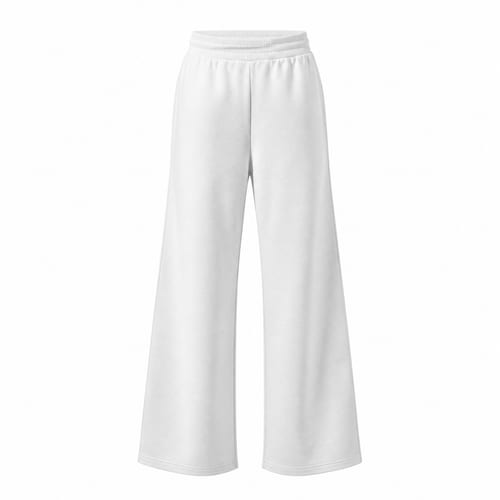 Trousers and skirtsLight flareWidens at the hem, the point of the outfit furthest from your shoulder, so the two ends of the outline start to mirror each other.
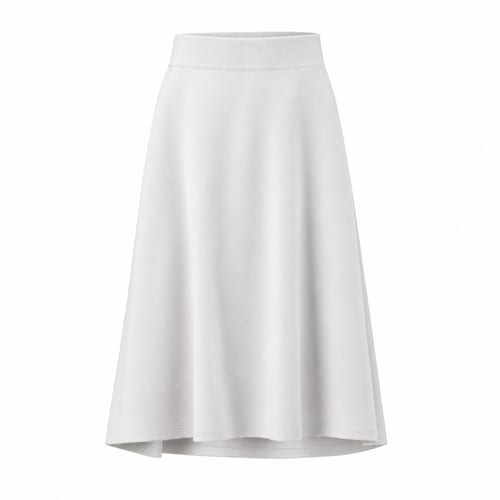 Trousers and skirtsA-line midiFitted at the waist and widening steadily to below the knee, a skirt that repeats some of the shoulder's width at its hem.
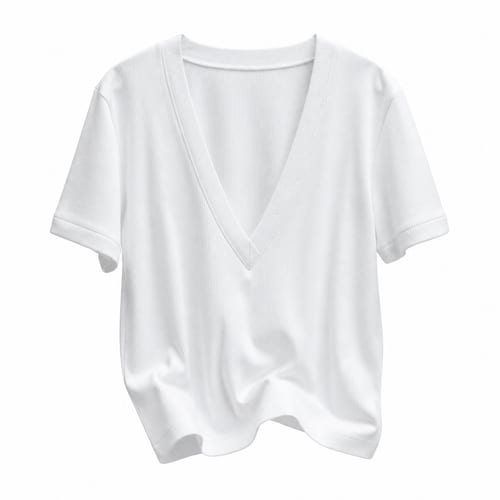 TopsDeep VA long vertical down the center of the chest, which breaks the run from one shoulder point to the other into two shorter lines.
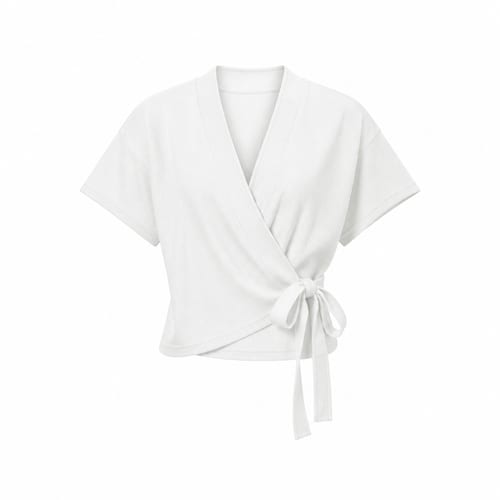 TopsWrap topCrosses the chest on a diagonal and ties at the waist, so the eye travels down and inward rather than across.
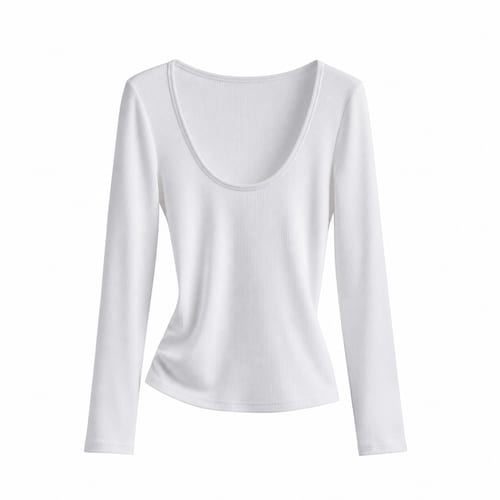 TopsScoop neckOpens the space between the shoulder points without running a line out to either of them.
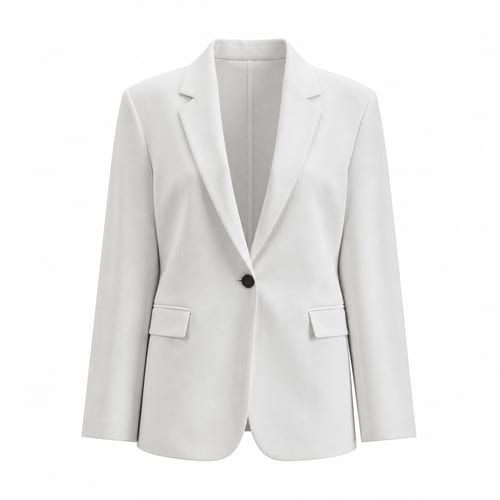 Jackets and coatsSoft-shoulder shaped blazerIts seam follows your own shoulder rather than building a new one, and the shaping below brings the jacket back in.
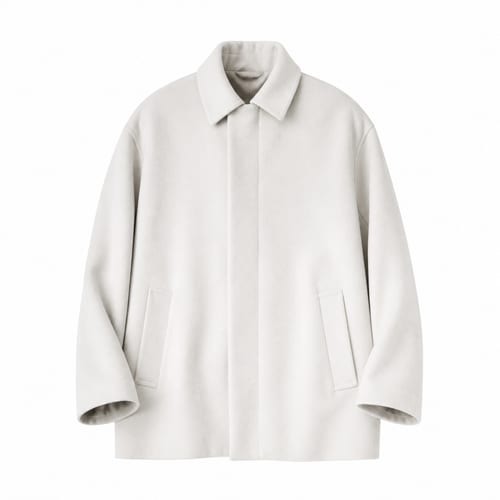 Jackets and coatsStraight coatDrops one clean vertical from the shoulder to the hem and carries the line past the hip, so the top is no longer the whole story.
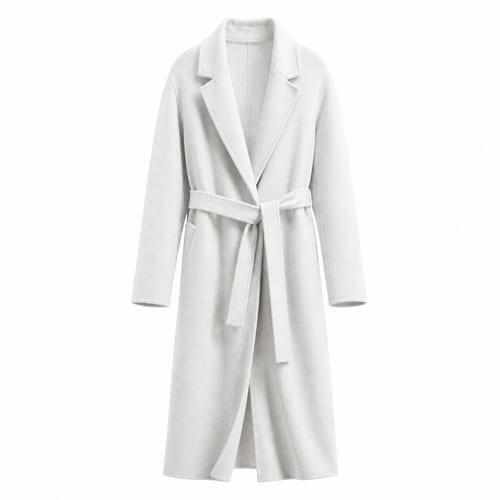 Jackets and coatsBelted coatThe belt marks a waist under the wide shoulder and the coat flares out again below it, two moves down the body for the eye to follow.
For a working day: a deep V in fine knit, tucked into the high-rise wide trousers, under the soft-shoulder blazer worn open. The V and the open fronts make three verticals, the seam sits on your shoulder bone, and the trousers carry width to the floor. For a weekend, the wrap top over a light flare does the same job without tailoring.
What these cards give you is the shape's side of each verdict. Your page runs every cut through your line and your body details as well before it marks it Wear, Depends or Skip, so two inverted triangles can part ways on the same blazer.
Skip
The cuts that fight you
- Padded-shoulder blazerThe pad carries the seam out past your shoulder point and adds to the measurement that is already your widest.
- Boat neckRuns a straight line from one shoulder point to the other and draws the full width of the frame across the top of the chest.
- SkinnyNarrows the leg under a wide top, so the gap between the two ends of the outline grows instead of closing.
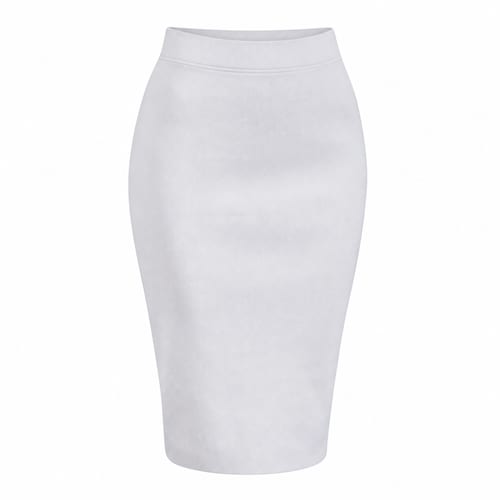 Rigid pencil skirtStiff cloth held close to the hip fixes the lower half at its narrowest outline, with nothing below to answer the shoulder.
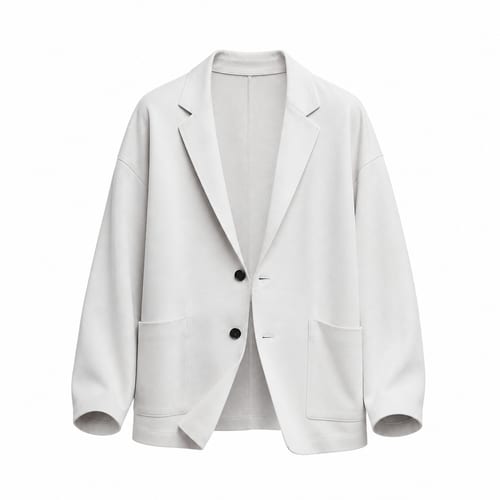 Boxy oversized blazerThe dropped seam sits out on your upper arm, and the boxy body hangs straight down from that new, wider line.
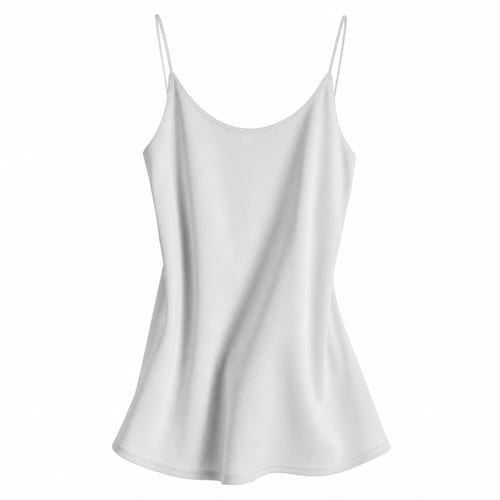 Bias camisoleA thin strap sits well inside the shoulder line and marks exactly how far the shoulder runs past it.
One test covers a whole outfit: the photo check from the top of this page, run again with your clothes on. When a hem or a trouser leg reaches out toward the two shoulder lines, the outfit is balanced. When everything below the waist sits well inside them, the shoulder carries the picture alone.
Prints draw lines too. In the sample analysis, the real result of co-founder Filip Poláček, the shoulders are the widest point as well: his shape is the men's trapezoid, the gentler of the two shoulder-led shapes in that wardrobe. His Breton stripe comes back Skip, "Bold horizontal stripes spread wide across the shoulders you already carry broad," and so does his chevron, while a Bengal stripe, a vertical, is a Wear. Your page reads each of your patterns by the direction of its lines and the size of its repeat.
Shape and line
Your shape names it, your line decides it
Your shape is a reading of width: where it sits, shoulder against hip. Your line is a reading of edges, whether your bone structure, the line of your shoulders and your features read sharp, medium or soft. The two are read separately, and a cut needs both before it gets a verdict.
Take the jacket. Every inverted triangle needs one whose shoulder adds nothing and whose length or shaping carries the eye down. With a sharp line, that is the straight coat from the list, structure that falls in a clean vertical from shoulder to hem. With a medium line, it is the belted coat. With a soft line, it is the soft-shoulder blazer, which takes its shape from you instead of holding its own. The table below shows the same split for tops and knits.
Neither reading predicts the other: a broad shoulder turns up on every line, and no line implies a hip measurement. Every verdict on your page is computed against both, with your body details on top.
Schematic, not a measurement.
Line
Your shape: where the width sits
Shoulders carrying more width than the hips.
Your line: how the edges read
A frame that commits to neither pole, with edges that are neither cut nor rounded.
What it asks of a cut
- Moderate construction. Structure that is there without announcing itself.
- A natural shoulder, neither built up nor dropped.
- Fabric with body that still moves. A mid-weight knit, a soft twill.
What works against it
- Both extremes, and this is the one level where that is the whole answer: a rigidly architectural piece reads as costume, a fully fluid one reads as unmade.
Built for this line, and not ruled out by this shape
- Jackets and layersBelted coat
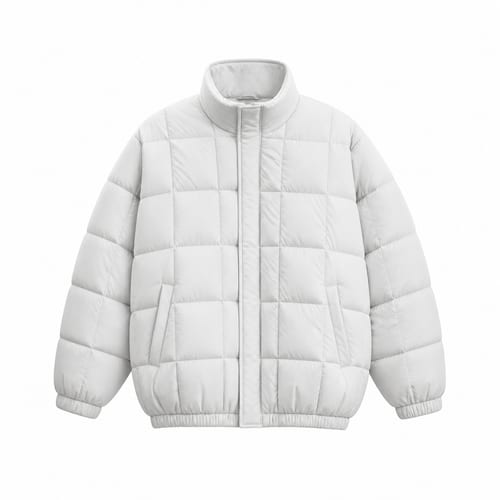 Jackets and layersQuilted puffer
- Shirts and topsScoop neck
- Shirts and topsDeep v
Your body details still outrank your shape
The rules apply your body details after the shape is read, and where the two disagree, the detail wins.
On an inverted triangle, three of them move the most verdicts.
- Your rise. Your page sets one rise for you, and every trouser cut at another rise is a Skip, whatever its leg does. A shorter leg or a longer torso calls for a high rise, which keeps the high-rise wide at the top of your list. If your rise comes out lower, the light flare and the baggy cargo carry no fixed rise and stay in play.
- Broader thighs. They refuse trousers with no room at the thigh, and any bottom that is skin-tight or adds bulk there. On this list that takes out the baggy cargo, whose pockets sit on the thigh, while the high-rise wide and the light flare are cut with room over the curve and stay.
- Narrow shoulders. A small frame can still measure wider at the shoulder than at the hip, and then this rule runs the other way: narrow shoulders make a sharp shoulder better. That is how the padded-shoulder blazer at the top of the Skip list can turn into a Wear, while broad shoulders hold it where it is.
A fuller bust, a rounded midsection and a plus-size frame have rules of their own, and your page applies each one that matches your answers.
The other women’s shapes
More on the Inverted Triangle
- HourglassShoulders and hips level with each other and a waist that clearly narrows between them.
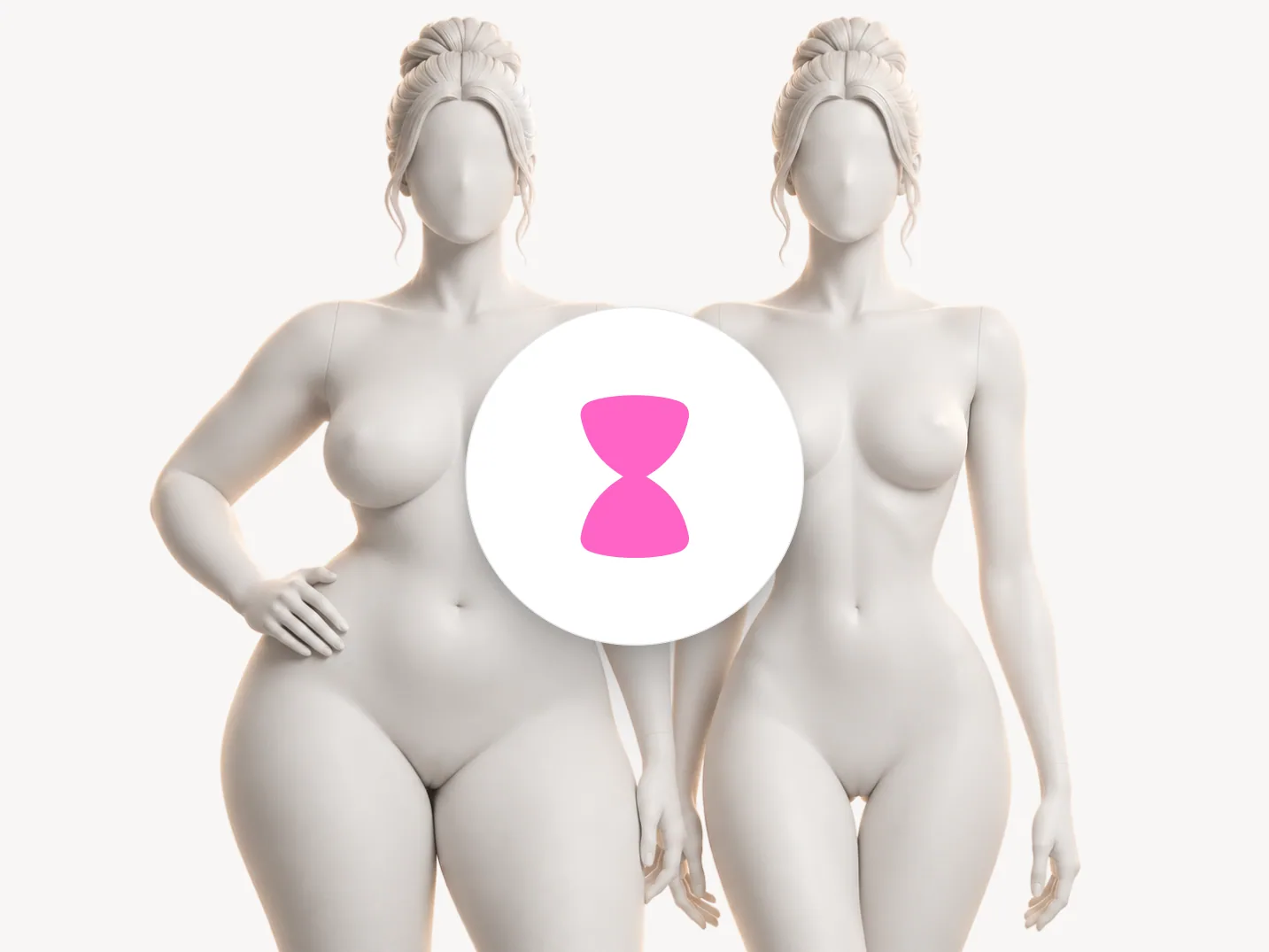
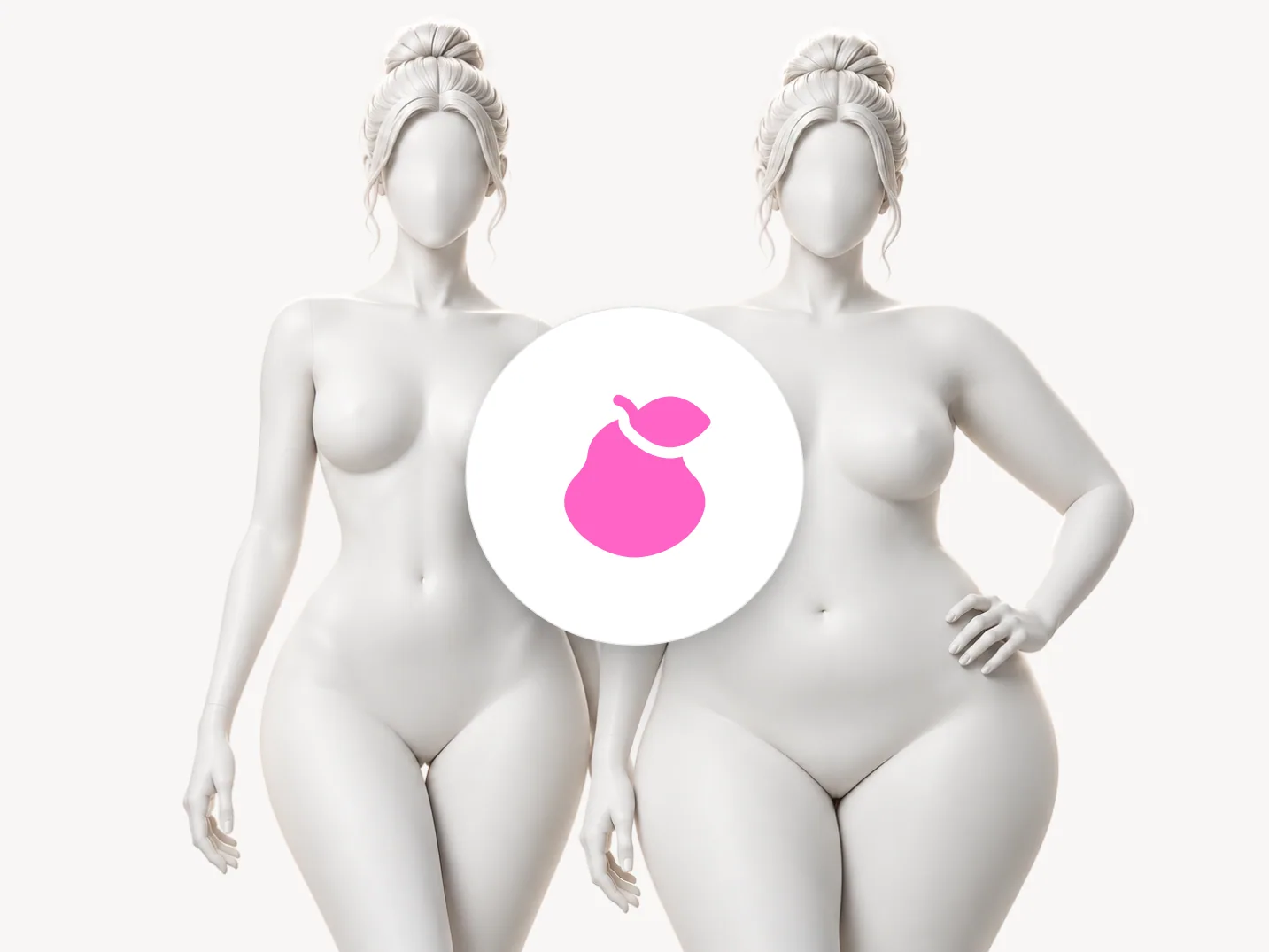
- PearHips carrying more width than the shoulders.
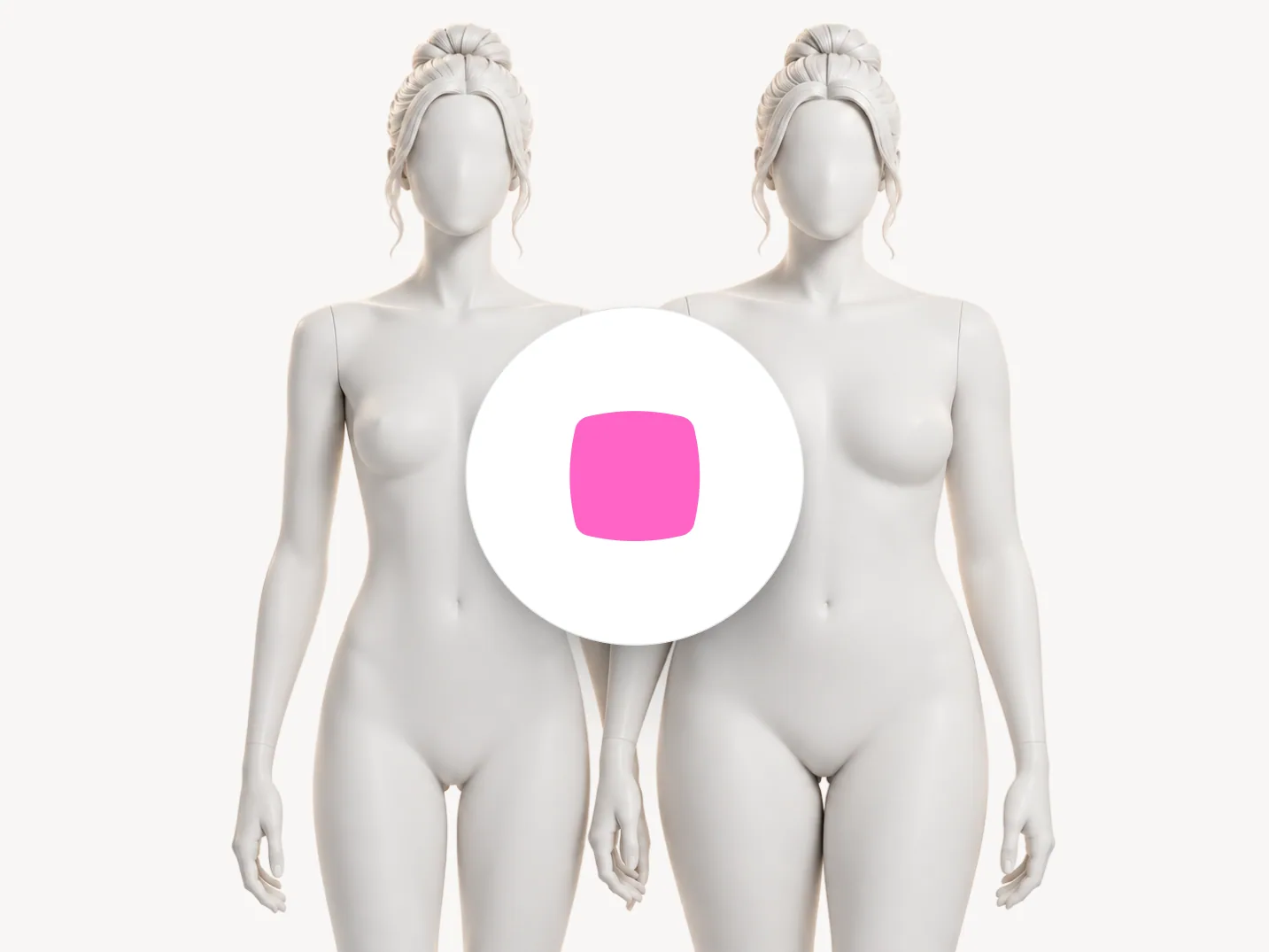
- RectangleShoulders, waist and hips running close to the same width, with no sharp narrowing at the waist.
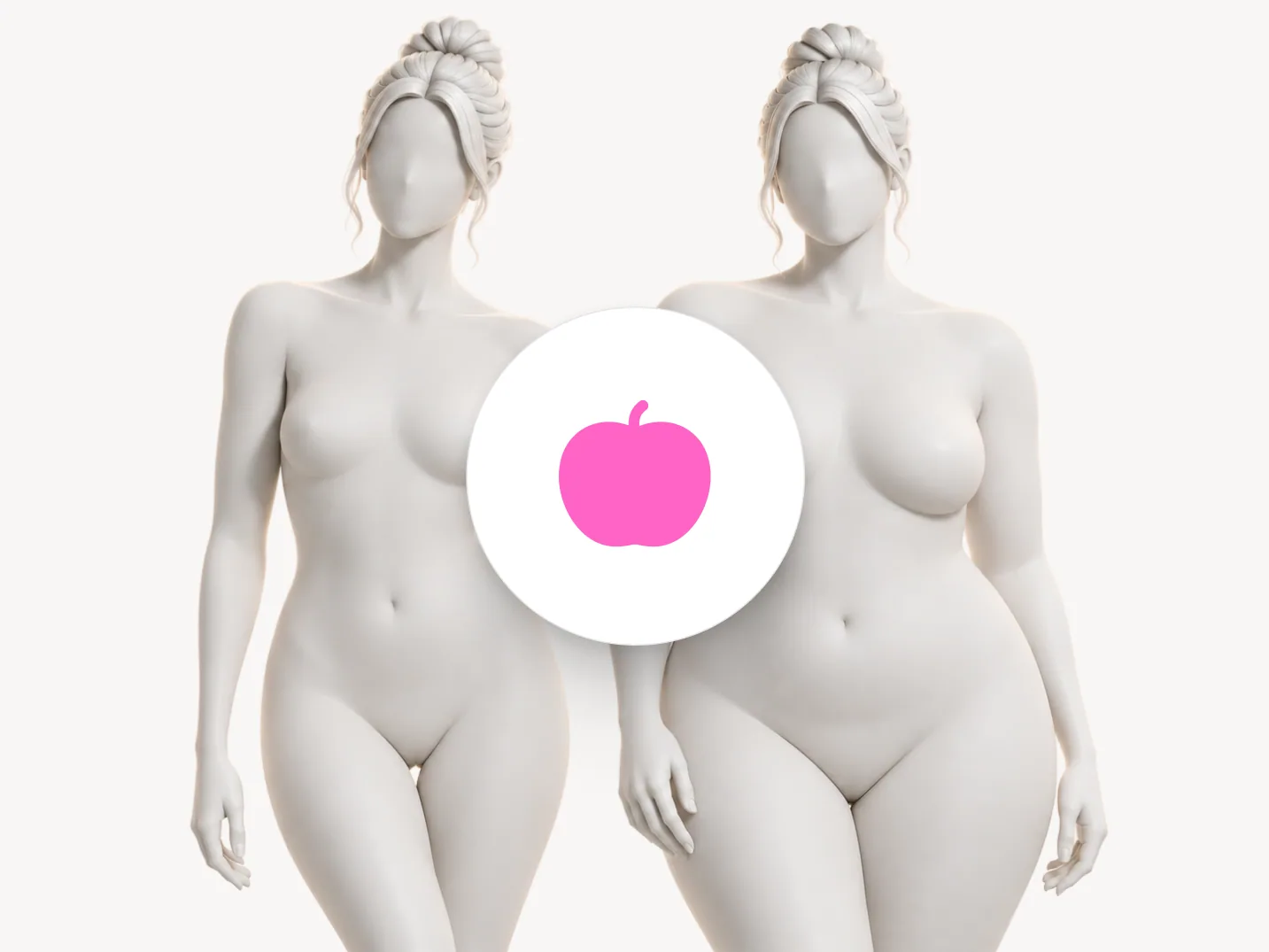
- AppleVolume gathered around the middle, with the waist the fullest part of the frame.
- All ten body shapesFive for women and five for men, side by side, with the free shape check.
FAQ
Inverted Triangle questions.
The Inverted Triangle is defined by shoulders carrying more width than the hips. Measured rather than eyeballed, that comes down to comparing your shoulder, waist and hip widths, which is hard to do honestly in a mirror because you already have an opinion about your own body. The analysis reads it from your answers and two body photos, with fixed rules weighing both.
This one is the women's wardrobe, yes. The shapes are read separately for men and women because the same measurements imply different cuts depending on which wardrobe you are dressing from, and a system that ignores that gives one of the two bad advice.
Usually not. Shape is about proportion, not size, and proportion is mostly skeletal, and where your shoulders sit relative to your hips does not move much. What changes is where softness gathers, which can shift you between two neighboring shapes over a few years.
Not necessarily. An athletic frame can just as well read as a rectangle, and an inverted triangle does not need a day of training to be one. The shape is a relationship between two measurements, shoulders wider than hips, with or without a gym behind it.
Not if your hips are narrower than your shoulders. Hourglass needs shoulders and hips close to one width with the waist clearly smaller than both, so a marked waist under a wide shoulder and a narrower hip stays an inverted triangle. The apparel-research system FFIT gives that frame a name of its own, top hourglass: a bust 9 inches (about 23 cm) or more larger than the waist and more than an inch larger than the hips. The five shapes here have no top hourglass, so it reads as inverted triangle, and your waist still counts wherever a verdict turns on a piece shaped at the waist.
A soft one, yes. A structured pad that carries the seam out past your own shoulder point adds to your widest measurement, so on this shape it is a Skip. A soft pad that only fills the hollow between the seam and the bone, leaving the seam where it was, is a different object and it works. Feel for the seam before you buy: if it ends past the bone with the jacket buttoned, the pad is the structured kind.
Because the jacket was cut for a different body. Ready-to-wear is graded from a size chart, and a size chart has a body in mind: all six US plus-size charts that Sokolowski and Bettencourt compared in 2020 put the hip above the bust, in every size. Yours runs the other way, so a jacket that fits your back carries cloth below it that you do not fill. Buy for the shoulders and have the rest taken in. Taking in the sides and waist is routine work for a tailor, while reshaping a shoulder is, in Gentleman's Gazette's guide to alterations, major surgery and not recommended.
Not quite. In the women's set, shoulders wider than hips is enough. In the men's set the same answer reads trapezoid by default, and inverted triangle is kept for the steeper version, where more answers confirm that the frame narrows quickly from shoulder to waist. The cut lists differ too: this one leans on volume below the waist, the men's on room through the seat and thigh.
Another question about the method or your result? Write to us
Find out what suits you, and why.
A short questionnaire and five photos. Your key arrives by email, usually within 10 minutes.