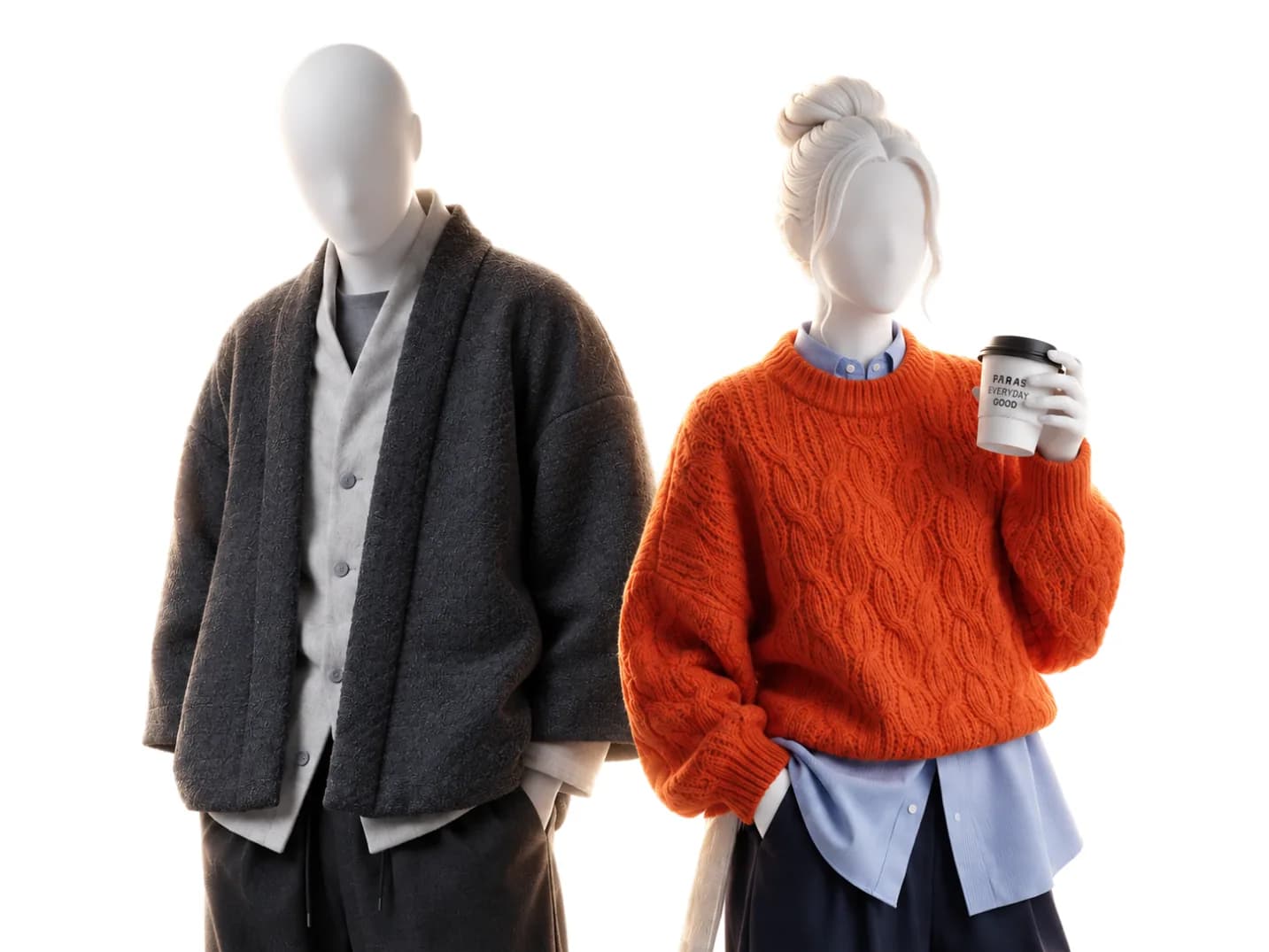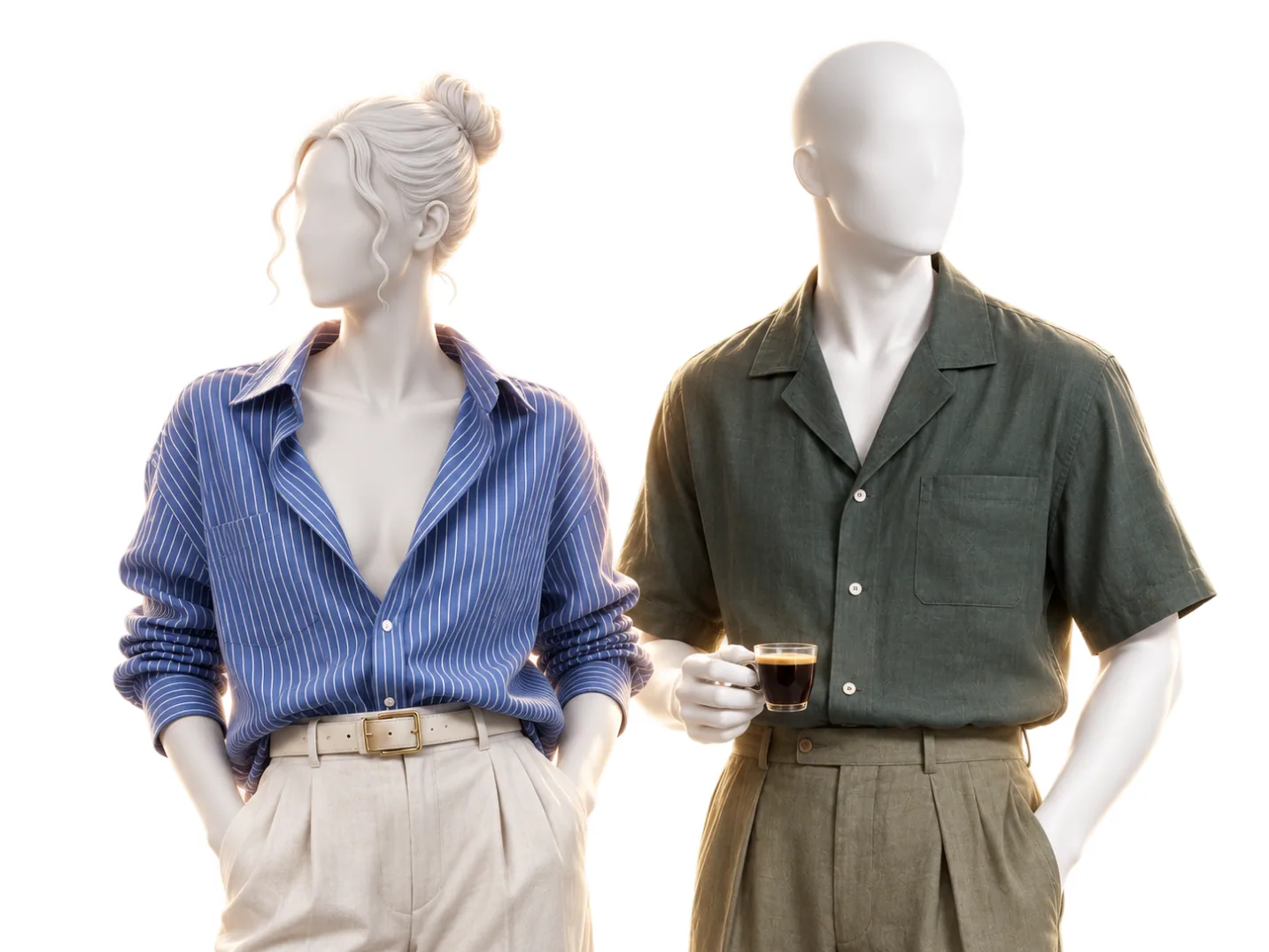
Sprezzatura is studied carelessness: you put real care into fit and color, then hide the care so the outfit looks as if you barely thought about it. Baldassare Castiglione gave the word that meaning in The Book of the Courtier, printed in Venice in 1528, as the habit of practicing "a certain nonchalance that shall conceal design and show that what is done and said is done without effort and almost without thought" (Opdycke translation, Book I).
On this page
The word is older than most countries, and it was never only about clothes. Castiglione meant manner: how a courtier talks, dances, rides and fights. Menswear writers took it up later and made it the name of the Italian way of dressing: dressed to the nines while looking like you barely thought about it.
The key word is looking. Enormous care goes in; the care is then hidden. Copy the carelessness without the care and you just look careless.
The three parts at a glance
| Part | What it is | The Italian example | Where it goes wrong |
|---|---|---|---|
| The care | Fit that follows the body | The Neapolitan jacket | Clothes that are simply too big or too loose |
| The color | Tone on tone, in colors that suit the wearer | Cream, tobacco, olive, terracotta | A palette copied onto coloring it does not match |
| The carelessness | One deliberate imperfection | A watch worn over the cuff | Several at once, which is a costume |
What Castiglione wrote about clothes
Castiglione introduces the word with a hedge: he is using "possibly a new word". A translator's note in the 1901 English edition adds that sprezzatura already meant contempt, and that he may have been among the first to use it for nonchalance.
His advice on clothes, in Book II, is plainer than the legend. A courtier should be "neat and dainty throughout his dress", and his clothes should lean "a little towards the grave and sober rather than the gay": black, or at least somewhat dark. He also objects to care that stops halfway. Men who take such pains with their hair or their boots that they forget the rest end up with "these few details of elegance" that "seem borrowed by them, while all the rest, being very tasteless, is recognized as their own."
And he is as hard on staged carelessness as on fuss. A dancer who lets his cloak slip to show he is not thinking about it is, in the Count's verdict, "striving with all his might to seem to be taking no thought, and this is taking too much thought." The rule of one undone detail, below, makes the same point in clothes. All quotes are from the Opdycke translation.
The care: fit above everything
Italian style rests on a tailoring culture where fit is non-negotiable. The Neapolitan jacket is the emblem, and it was built for heat: in the 1930s the tailor Rubinacci suggested to his cutter Attolini a jacket "even more drastically unstructured, unlined and unpadded" than the soft English drape cut, for a city "afflicted almost year-round by crushing heat and humidity" (The Rake). It follows the body instead of armoring it. The table shows how.
| Feature | What it is | What it does |
|---|---|---|
| Spalla camicia | "Shirt shoulder": the sleeve head is cut about 10 cm larger than the armhole and sewn in like a shirt sleeve, with small ripples left showing | Follows the shoulder instead of shaping it |
| No padding | Traditionally none; formal jackets may add a little roll of padding, the rollino | Frees the arm to move |
| High, snug armhole | The sleeve opening sits high on the body | You can lift your arm without the front of the jacket shifting |
| Short back | Neapolitan jackets tend to be shorter in the back | The jacket slides along the body |
| Short sleeve | The jacket sleeve stops early | A strip of shirt cuff shows at the wrist |
Sources: The Rake and The Styleforum Journal.
Nothing in the table is loose. The Rake says the soft, barely structured shoulder of a Neapolitan suit leaves "zero margin for error". With no padding to smooth the line, the cut has to be right. The ease is the result of the fit, not a replacement for it.
That philosophy scales down to everything: trousers hemmed to the millimeter, shirts that fit the neck, knitwear that skims instead of sags. The money goes into the cut, not the label, and it shows more.
Fit is also read fast. In a 2013 study, 274 people saw a faceless man for five seconds at most, once in a bespoke suit and once in an off-the-peg suit that differed only in minor details, and rated him more positively in the bespoke suit on every trait except trustworthiness. It was one man in two suits, so take it as a sign, not a law.
And it is not a menswear monopoly. Max Mara, founded in Reggio Emilia in 1951 to make women's ready-to-wear by industrial methods, has one coat that its own company history calls its absolute best seller: the 101801, a camel wool-and-cashmere overcoat designed by Anne Marie Beretta in 1981 (Max Mara Fashion Group, in Italian; Wikipedia). The idea is the same: a coat cut so well it needs nothing else.
The color: tone on tone, in your own tones
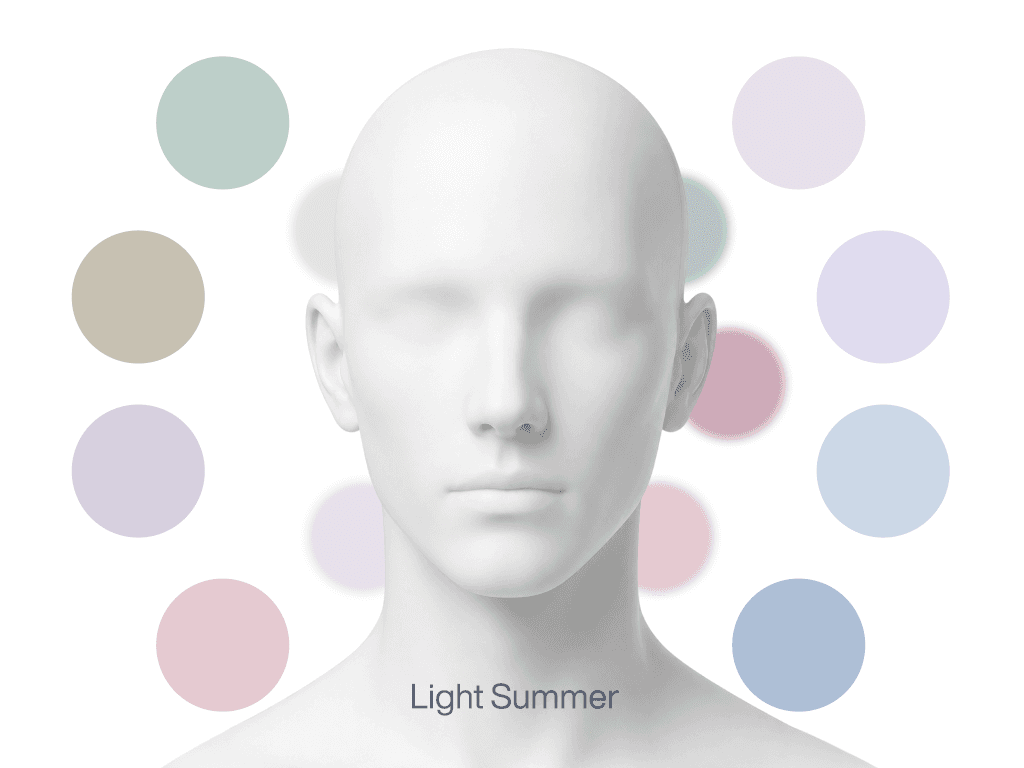
The look people copy runs warm: tobacco, olive, cream, terracotta, and every brown between cognac and espresso. Tonal dressing, three shades of one family in a single outfit, is how it is worn. It works when the family matches the wearer: warm colors beside warm coloring look rich, and the same browns can look muddy against cool coloring. Italian style is, in effect, a masterclass in dressing a warm undertone.
The sample analysis shows both sides. It is the real result of Wearly Labs co-founder Filip Poláček, published with his consent. His coloring is Deep Autumn, which Wearly Labs calls Dark Autumn: warm, dark and saturated. Every color in a Wearly Labs analysis gets one of three verdicts with a reason: Wear, Depends or Skip. Depends means the color works under a condition the analysis names, here below the waist. Below is how his analysis sorts the colors Italian style leans on, using the names on the 50-color list, plus three cool ones for contrast.
| Color | Verdict | Reason in the sample analysis |
|---|---|---|
| Olive | Wear | "Muted and warm, it never fights the depth in your skin." |
| Terracotta | Wear | "Warm and soft in equal measure, so it meets your undertone directly." |
| Camel | Wear | "A dependable neutral that sits easily against your depth and warmth." |
| Chocolate | Wear | "Its warm, understated depth sits comfortably alongside your own." |
| Espresso | Wear | "Warm, deep and soft, this shade mirrors your coloring closely." |
| Ivory | Wear | "A warm, soft neutral that gives your darker colors somewhere to rest." |
| Latte | Depends, below the waist | "A soft pale warmth without the weight your coloring needs up close." |
| Medium gray | Depends, below the waist | "A cool, faded gray that reads thin against your depth." |
| Black | Depends, below the waist | "Clear and deep, but its coolness sits wrong close to your skin." |
| Royal blue | Skip | "It cools your skin down." |
The browns, olive and terracotta are Wear because they match his warm depth. The cool neutrals are not banned: gray and black stay on his palette, for the trousers and the shoes. Someone with cool coloring would get a different sort. The color analysis page shows how every color gets its verdict, and the Dark Autumn palette lists his season in full.
The carelessness: one detail, undone
The finishing move is a single deliberate imperfection. The unbuttoned cuff. The tie left slightly askew. The watch worn over the shirt cuff, Agnelli-style. A silk scarf knotted like an afterthought over a precise coat. Suede loafers with tailoring, no socks in sight. Gianni Agnelli, president of Fiat from 1966 to 1996, wore classic bespoke suits and was known for the watch over the cuff (Wikipedia).
Note the count: one. One undone detail against an otherwise precise outfit reads as ease. Three read as a fancy-dress interpretation of Italy. The imperfection only works because everything around it is correct. Gentleman's Gazette puts it the same way: "Adopting one example of rule breaking while being well dressed is a good starting point." With too many, "those who are unaware of the concept may think you just look sloppy while those who do understand it know you are trying hard."
A liberty also has a venue. The same source is blunt about it: no sockless loafers at a royal garden party, in court or on the way up the corporate ladder, and unfastened cuffs look best in summer, when they seem practical rather than calculated.
How to wear it without the costume
1. Spend on alterations
A tailor can hem trousers, taper a leg, narrow sleeves and take in the sides and waist of a jacket, because the fabric is only taken away. A tailor cannot lengthen a jacket or widen its shoulders (Gentleman's Gazette). So buy the jacket for the shoulders, which cannot move, and alter the rest. The full list is in The 8 basics of dressing well.
Test: in daylight, raise your arms, then sit down. Nothing pulls at the button or the back, and the shoulder seam ends where your shoulder does.
2. Go soft in the shoulder, if your frame carries it
A soft shoulder carries the ease built in, and the fit has to do the work the padding would. Whether it suits you depends on your shape and line, not on being Italian. In the sample analysis, a Trapezoid shape with a medium line, the same soft idea gets three kinds of answer:
| Cut | Verdict | Reason in the sample analysis |
|---|---|---|
| Unstructured linen suit | Wear | "Soft shoulders cut to your build let the jacket hang open without straining." |
| Structured classic suit | Wear | "Shoulder and body are cut the way you are built, so it closes without strain." |
| Unstructured blazer | Depends, in a longer cut | "Natural shoulders match your own, so it holds its line open or closed." |
| Padded-shoulder blazer | Depends, in a longer cut | "Padded shoulders extend your own line without adding strain at the back." |
| Soft unstructured suit | Skip | "Tighter than this frame wants, so the cloth pulls instead of settling." |
| Soft textured suit | Skip | "The rounded, soft seams blur a frame that reads better with a clean edge." |
His line is medium, and his analysis says that where a piece sits between structured and relaxed, he should lean toward the structured side. The body type analysis shows how a shape and a line lead to cuts.
Test: put the jacket on in front of a mirror, lift both arms, then lower them. A soft shoulder follows yours and settles back. If it pulls at the back or slumps past your shoulder point, the size is wrong, not the style.
3. Try tonal dressing in your own colors
Cream shirt, tobacco trousers, brown suede shoes. If your coloring runs warm, this will be the easiest good outfit you ever assemble. The sample analysis hands Filip the same recipe, in colors that are all a Wear for him: "Ivory opens the chest, chocolate layers deep above it, and espresso trousers hold the whole outfit down." If your coloring runs cool, keep the recipe and change the family.
Test: by a window, with a bare face, hold each piece under your chin. If your skin looks clearer and your eyes brighter, it is a Wear for you. If your face looks grayer or more flushed, it belongs below the waist or back on the rack. Find your undertone at home has three tests for the undertone itself.
4. Pick your one liberty
Loafers without socks, a knit tie, a scarf knotted off-center, hair undone over a sharp blazer. One. A liberty is a Depends by definition: allowed in one place, in one dose. The sample analysis writes that rule into color and cloth:
| Liberty | Verdict | Reason in the sample analysis |
|---|---|---|
| Tomato red, as a scarf or belt | Depends, as an accent only | "A small dose carries real saturation, a whole garment would shout." |
| Suede | Depends, one piece per outfit | "A richly textured cloth, best kept to one piece per outfit." |
| Linen | Depends, one piece per outfit | "Heavier than it looks, holds its shape while staying textured and matte." |
| Double-breasted suit | Skip | "The double-breasted front is one loud detail that pulls your balanced frame off center." |
Test: stand three steps back from the mirror and name what is undone. One answer is ease. Two is a costume.
FAQ
Sprezzatura in fashion is studied carelessness: an outfit built on exact fit and colors that suit the wearer, with one deliberate undone detail, so the effort stays out of sight. The idea comes from Castiglione's The Book of the Courtier (1528), and the Italian way of dressing is its best-known example.
Say spret-tsah-TOO-rah, with the stress on the third syllable and the zz sounding like ts (Wiktionary).
Baldassare Castiglione used it in The Book of the Courtier, printed in Venice in April 1528. He calls it "possibly a new word", and a translator's note in the 1901 English edition says the word already meant contempt and that he may have been among the first to use it for nonchalance (Opdycke translation).
No. The word gets used mostly in menswear, but Castiglione applies the same rule to women in Book III: a court lady should dress to "enhance that which is the gift of nature" and, "while keeping herself dainty and neat, let her always seem to give no thought or heed to it." Precision first, then one visible exhale: a perfectly cut dress with undone hair is the same sentence.
Spalla camicia is Italian for "shirt shoulder": on informal Neapolitan jackets, a shoulder sewn like a shirt sleeve, with the sleeve head cut about 10 cm larger than the armhole and small ripples left showing. Traditionally it carries no padding (The Styleforum Journal).
You need alterations more than bespoke. Hemming trousers, tapering the leg, narrowing the sleeves and taking in a jacket waist are the jobs a tailor does easily, because fabric is only taken away. Find one good alterations shop and become a regular.
Then borrow the structure, not the palette: obsessive fit, tonal layering, one undone detail, executed in your own colors. A cool-toned sprezzatura in navy and gray is still sprezzatura. The undertone tests in Find your undertone at home tell you which side you are on, and a color analysis sorts 50 colors into Wear, Depends or Skip, each with a reason.