Autumn · color season
Deep Autumn: your palette, and what to leave on the rail.
Deep Autumn, also called Dark Autumn, is warm and deep with high contrast. Here is the palette that follows from that, the neutrals to build on, and how to wear them together.
- 8 core colors
- gold at the wrist
- 10 minutes to get yours
Last updated
At a glance
Where Deep Autumn sits, and what follows from it.
- Light Summer
- True Summer
- Soft Summer
- Soft Autumn
- True Autumn
- Deep Autumn
- Deep Winter
- True Winter
- Bright Winter
- Bright Spring
- True Spring
- Light Spring
Each season sits between the two it shades into. The two Light seasons meet at the top, the two Deep ones at the bottom, the two Bright ones on the clear side and the two Soft ones on the muted side. Spring and Autumn are warm, Summer and Winter are cool.
- Undertone
- warm
- Value
- dark
- Chroma
- saturated
- Buy first
- Wine
- Metal
- Gold
- Keep from the face
- Coral
- Peach
- Mint
- Raspberry
- Mistaken for
- True AutumnDeep WinterHow they differ
Am I a Deep Autumn?
Deep Autumn is coloring that is dark first and warm second: a deep value, meaning hair, eyes and skin read dark overall, a golden undertone, the cast under the skin, high contrast, and a chroma, or color strength, that is rich but slightly softened.
Deep warm colors such as wine, rust and forest green match that depth, so the face keeps its warmth and its definition, while pale or icy colors such as mint and ice blue sit far lighter than the face and leave the skin gray and tired.
The Concept Wardrobe calls this season Dark Autumn, and its guide puts the traits in that order, dark first and warm second, which makes Deep Autumn the deepest of the three Autumns, with Deep Winter as its cool neighbor. Deep here means value, which Albert Munsell's A Color Notation defines as "the quality by which we distinguish a light color from a dark one," and a Deep Autumn's hair and eyes sit low on that scale.
Check yourself in daylight, without makeup. The hair is dark brown, deep auburn or black-brown and shows red or gold rather than ash in the light. The eyes are dark brown, deep hazel or dark green, and the whites around them read clear against the iris, which is where much of the contrast comes from.
The skin carries a golden or bronze cast, anywhere from light to deep. If you dye your hair, the roots are what counts; the questionnaire asks for your natural color. Wrist veins come last, because green only says warm and cannot see depth, the trait you lead with (the undertone tests).
The shop test isolates depth. Hold a forest green knit under your chin, then a leaf green one. Both are warm greens, so only depth differs: forest green holds its own beside dark hair and eyes, while leaf green looks thin and the face behind it goes gray. A Wearly Labs analysis agrees, forest green a Wear and leaf green a Skip, "too light to hold its own." The sample analysis says it in its own words: "Pale and sharp, it fades against the depth you carry."
Every one of the 50 colors gets Wear, Depends or Skip with its reason, and Depends means below the waist or as an accent. For Deep Autumn that comes to 11 Wear, 22 Depends and 17 Skip, the shortest Wear list of the three Autumns, because depth narrows what can sit at the face.
The sample analysis is itself a Deep Autumn, the real result of co-founder Filip Poláček, and his page says "Your dark brown hair and eyes carry the same depth these colors carry." The eight below carry that depth at the collar.
Check the direction first.
Four questions from the questionnaire, scored by the rules the analysis uses. They show a direction, not a season: the analysis also reads your photos.
Question 1 of 4
Your natural hair color?
Pick the closest match. If you dye it, go by your roots.
The palette
The eight colors Deep Autumn is built on.
- Anywhere, the face included
The easiest first buy. The sample analysis calls it "Warm, dark and softened just like your own natural coloring," which is why a rust knit or a suede jacket can carry a whole outfit.
- Anywhere, the face included
Deep enough to behave like a neutral, so a forest green overshirt or coat can sit under everything else. It is yellow at its base, where emerald, a Skip for you, is blue.
- Anywhere, the face included
Your power color, the burgundy, best on its warm edge. "Lead with it: knit or coat," says the sample page, and the dinner outfit it puts together starts from a wine shirt.
- Anywhere, the face included
The one bright note in a deep palette, and it works because brown dulls its yellow. Keep it to one piece per outfit, a knit under a dark jacket or a scarf.
- Anywhere, the face included
Your black, the darkest neutral in the palette and still warm. An espresso roll-neck, suit or leather jacket holds the collar without pulling the color out of your face.
- Anywhere, the face included
The workhorse for mornings with no time to decide: olive chinos, an olive field jacket, an olive knit, each easy against every other color on this list.
- Anywhere, the face included
Lighter than rust and still deep enough for your face. A terracotta tee or open shirt is for the days when rust feels like too much color.
- Anywhere, the face included
The leather and outerwear brown: a coat, boots, a belt, a bag. One step lighter than espresso, it grounds an outfit with the warmth left in.
Neutrals and metal
Your neutrals, your white, your metal
Deep Autumn neutrals are espresso, chocolate, camel, ivory and midnight blue, and all five are a Wear at the face. Three are warm browns and one a warm cream; midnight blue is the odd one out and the useful one, a navy deep enough to match your depth, so a midnight blue suit or coat works for you where it fails a True Autumn. The sample page gives the reason: "Its weight and quiet tone match the depth you carry."
What is missing is everything pale or gray. Latte, warm greige, khaki, light gray, medium gray, charcoal and black are all a Depends below the waist, and so are both denims: jeans yes, a denim shirt no. The collar takes only the five neutrals above, which keeps a Deep Autumn outfit dark at the top by design.
Your white is ivory. Pure white pushes the light end of an outfit further than your coloring goes, so it pulls gray into the face and sharpens the shadows under the eyes. The sample analysis puts it plainly: "Ivory is your best white: it carries enough warmth to sit at the collar, while pure white and soft white are lighter loads better kept to trousers and shoes." White jeans and white sneakers stay; the white shirt becomes an ivory one.
Your metal is gold, with the deeper warm metals beside it. In the sample analysis's words, "Gold is your metal, and its warmer cousins, bronze, copper, brass and burnished gold, work just as well; keep mirror-bright silver away from your face, though an antiqued silver or dark gunmetal piece is fine on its own." The watch, the buckle and the frames are where that shows.
Your power color is wine. It has the depth of your darkest neutrals and the warmth of rust, so one wine knit at the collar can carry an outfit of plain dark neutrals, and forest green is the close second. The colors that fight you fail on exactly those two counts, depth and warmth.
At the face
Wear this, skip that
- TerracottaCoral
Too light to hold its own.
- CamelPeach
Too light to hold its own.
- IvoryMint
Too light to hold its own.
- WineRaspberry
Too cool beside your warmth.
The colors that fight you
Seventeen of the 50 colors are a Skip for Deep Autumn, the longest Skip list of the three Autumns, and your page gives them two reasons between them: too light, or too cool. Nine fail on depth and eight on undertone, and the pairs above show both kinds. Another 22 colors are a Depends, below the waist or as an accent.
Too light to hold its own. Coral, peach, warm pink, soft pink, leaf green, mint, warm aquamarine, light forget-me-not and lavender. Warmth does not rescue a pale color here: coral, peach and warm pink are as warm as your own palette and still a Skip, because next to dark hair and eyes they look thin. The sample page says it of warm pink: "Even with warmth in it, it hasn't the depth your face needs."
Too cool beside your warmth. Emerald, royal blue, fuchsia, raspberry, sharp red and deep purple, then lemon and ice blue. The first six are jewel tones, as deep and strong as your own colors, so they pass for yours on the rail until the undertone gives them away at the face; all six are a Wear for Deep Winter. On the sample page royal blue gets one short sentence: "It cools your skin down."
Muted mid tones at the collar. Sage, warm greige, dusty blue and mauve are not a Skip, and they are still the colors most often worn too high. Each is a Depends, sage as an accent and the other three below the waist, because they are soft colors without the depth to back them up. On the sample page warm greige is "too washed out for a face this deep."
The neutrals people buy by accident. Black, charcoal and pure white. Your coloring is deep enough for black, which is why it tempts. The sample page still keeps it below the waist: "Clear and deep, but its coolness sits wrong close to your skin." All three go to trousers and shoes, and espresso, chocolate and ivory take the collar.
On the rail, hold a candidate next to anything espresso or wine. If it looks chalky or thin beside them, it is too light for your face; if it looks blue beside them, it is too cool.
Every color
All 50 colors, judged for Deep Autumn.
Choose a color to see where it goes, the reason, and what the two seasons Deep Autumn is mistaken for do with it. 17 of the 50 are a Skip.
Use the arrow keys to move from color to color.
Anywhere, the face included
A shirt, a coat, anywhere.
The same color in the seasons Deep Autumn is mistaken for
- True AutumnNot worn
- Deep WinterAnywhere, the face included
Anywhere, the face included
A shirt, a coat, anywhere.
The same color in the seasons Deep Autumn is mistaken for
- True AutumnNot worn
- Deep WinterAnywhere, the face included
How to combine Deep Autumn colors
Your rule is a dark base plus a rich accent, kept deep, with no pale cool pastels.
It copies your own coloring, dark hair and eyes with warmth in the skin, so an outfit built the same way reads as yours: most of it in espresso, chocolate, olive or midnight blue, with one color of real warmth on top. Ivory is the light in the outfit, never a pastel, and two rich colors together beat one rich color beside a pale one.
- Dinner, men's: a wine shirt with charcoal trousers and chocolate boots, the outfit the sample analysis puts together "for dinner out."
- Office, women's: an espresso trouser suit over an ivory silk shirt, with a mustard scarf and gold hoops.
- Weekend: an olive field jacket over a terracotta tee, medium denim jeans and chocolate boots.
- Evening, women's: a forest green velvet dress under a camel coat, with a plum silk scarf and burnished gold earrings.
Deep Winter builds its dark base in black and charcoal right up to the collar, which is the quickest place to see the two seasons part.
Mistaken for
Seasons Deep Autumn gets confused with
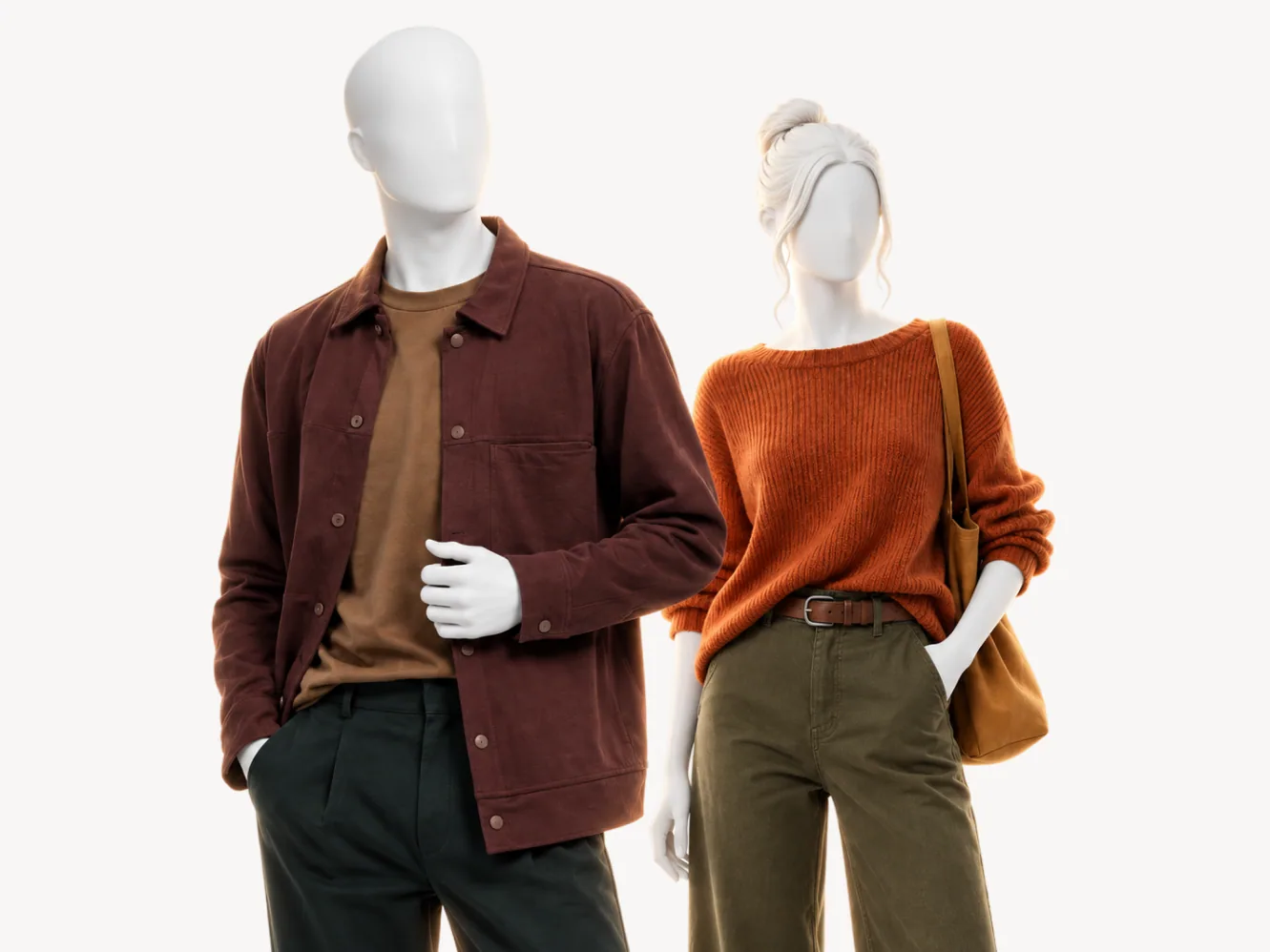 This pageDeep Autumnwarm and deep with high contrast | 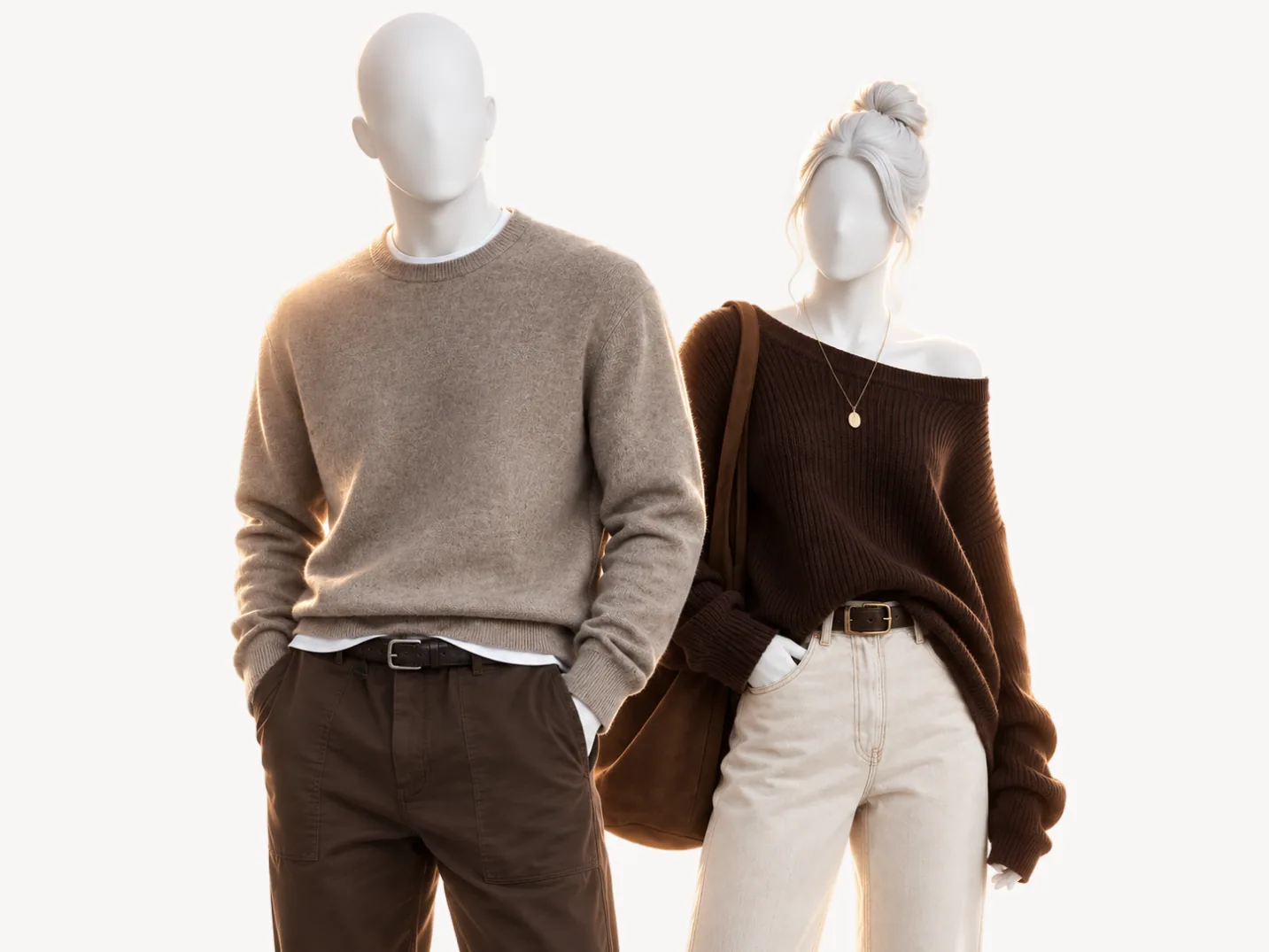 Mistaken forTrue Autumnfully warm and rich | 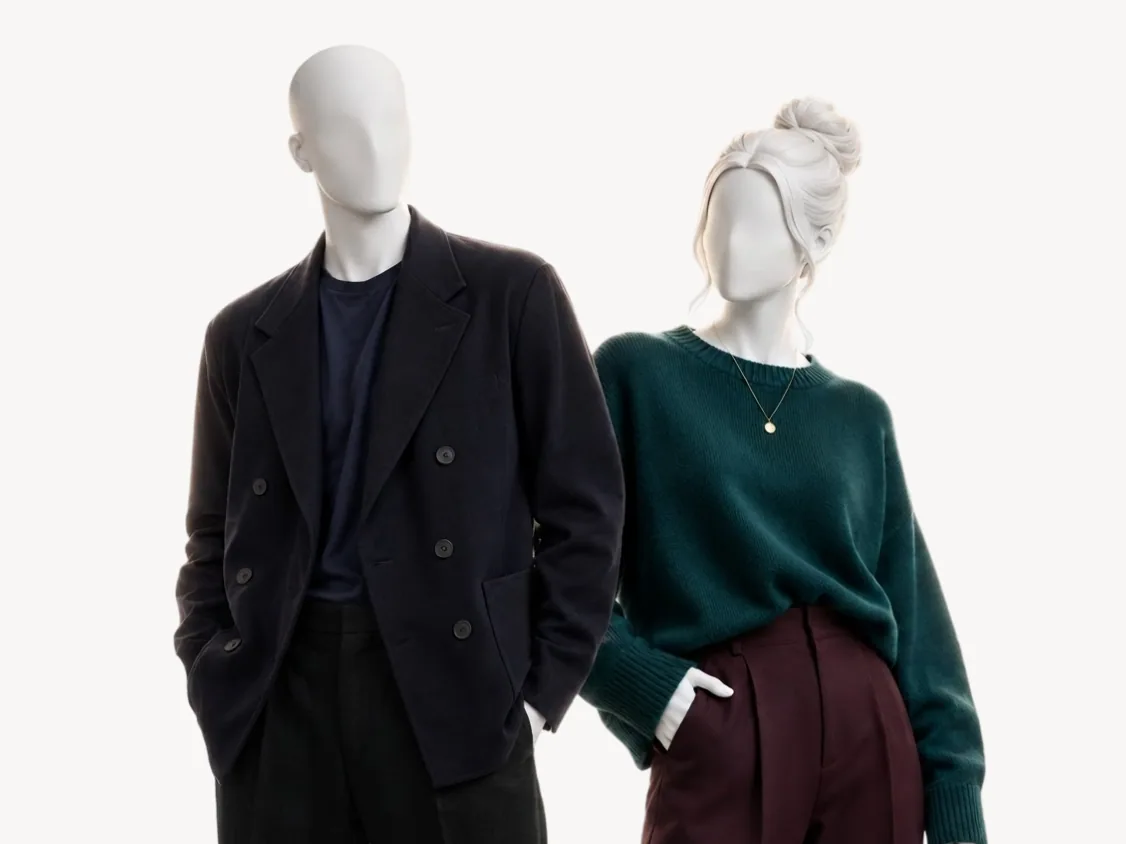 Mistaken forDeep Wintercool and deep with high contrast | |
|---|---|---|---|
| Undertone | warm | warm | cool |
| Value | dark | medium | dark |
| Chroma | saturated | saturated | saturated |
| Metal | gold | gold | silver |
| Wine | |||
| Rust | |||
| Golden yellow | |||
| Midnight blue | |||
| Ivory | |||
| Pure white |
True Autumn. The same warm family with less depth: if mid-depth warm colors look slightly weak on you and the darkest ones look best, you are on the Deep side. The two give the same verdict on 31 of the 50 colors, and three of the rest are the tells. Wine and midnight blue are a Wear for you and a Skip for True Autumn, while golden yellow is a Wear for True Autumn and an accent for you.
The sample page gives that accent its reason: "Bright and clear, it lifts a detail but overwhelms a garment." The two sit close enough to split photos from answers: in the sample analysis the photos on their own suggested True Autumn, the answers decided Deep Autumn, and True Autumn stays on the page as the closest season.
Deep Winter. Both seasons are deep with high contrast, so depth settles nothing: wine, forest green and midnight blue are a Wear for both. The split is undertone, and the two give the same verdict on only 16 of the 50 colors. Rust shows it fastest, a core color for you and a Skip for Deep Winter.
The whites swap too: ivory is a Wear for you and a Depends below the waist for Deep Winter, and pure white is the reverse. Hold ivory and pure white under your chin by a window. The one that leaves the shadow under your jaw clean and your eyes clear is your season's white.
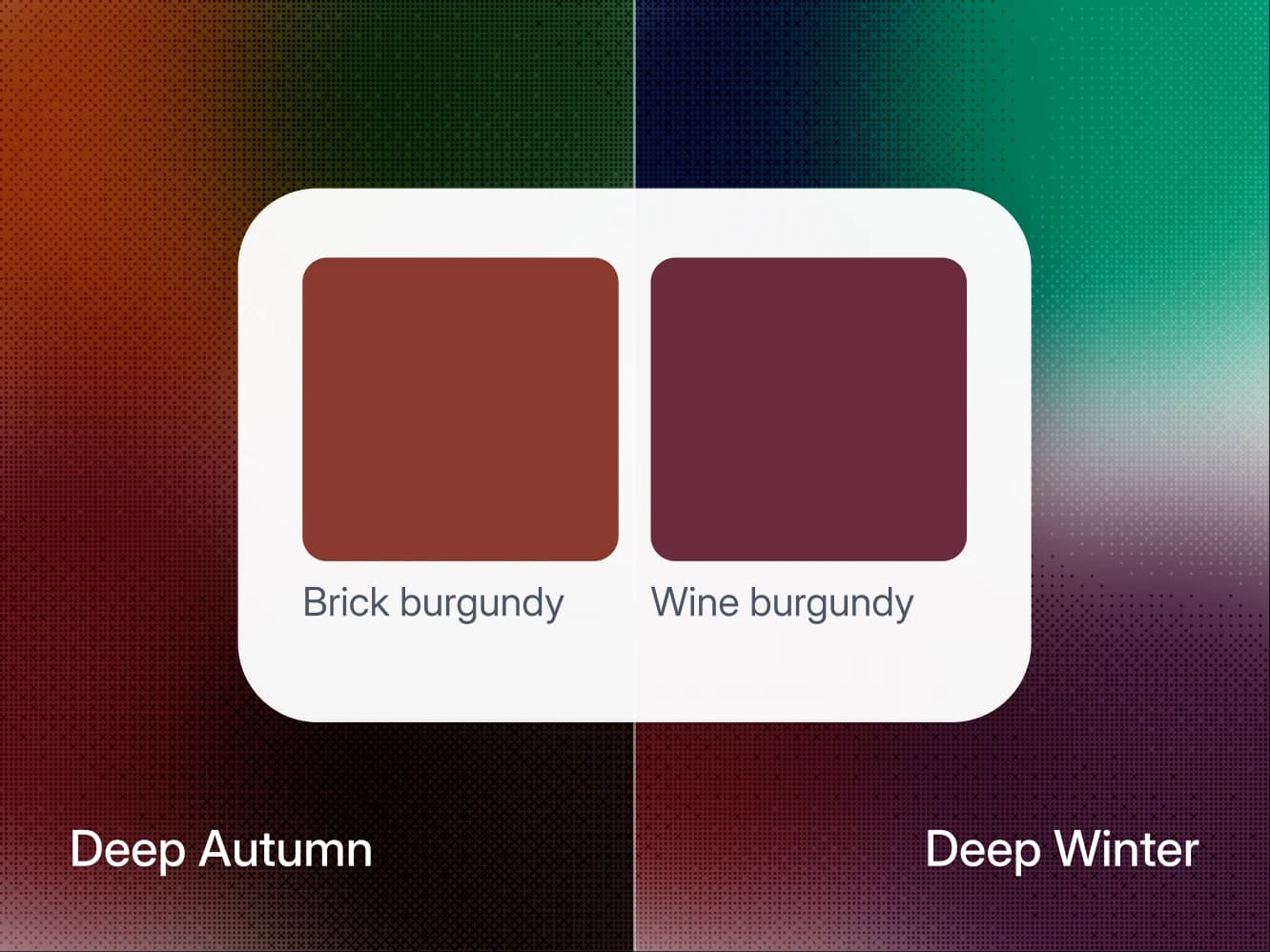
If you are still between two, Deep Autumn vs Deep Winter runs the test with two burgundy knits, one leaning brick and one leaning blue, and gives a tiebreaker for when they disagree. For the True Autumn question, open the sample analysis: a Deep Autumn page that names True Autumn as its closest season and says what the two share.
A color analysis settles it from five photos and your answers: AI reads the photos, with a white sheet of paper in frame to correct the light, fixed rules make the call, and your answers weigh the most.
Where to go from Deep Autumn
How the color analysis works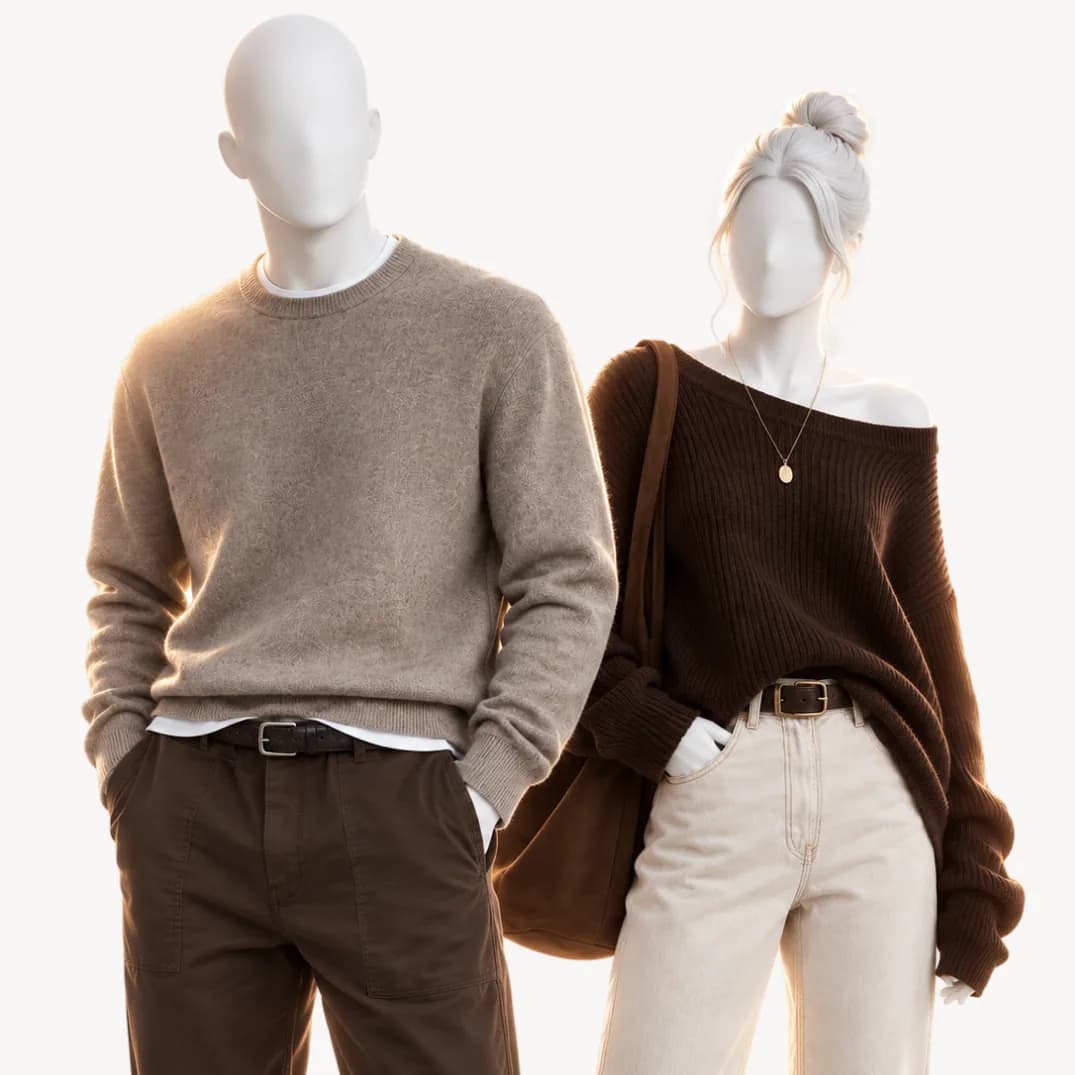 Color seasonTrue Autumnfully warm and rich
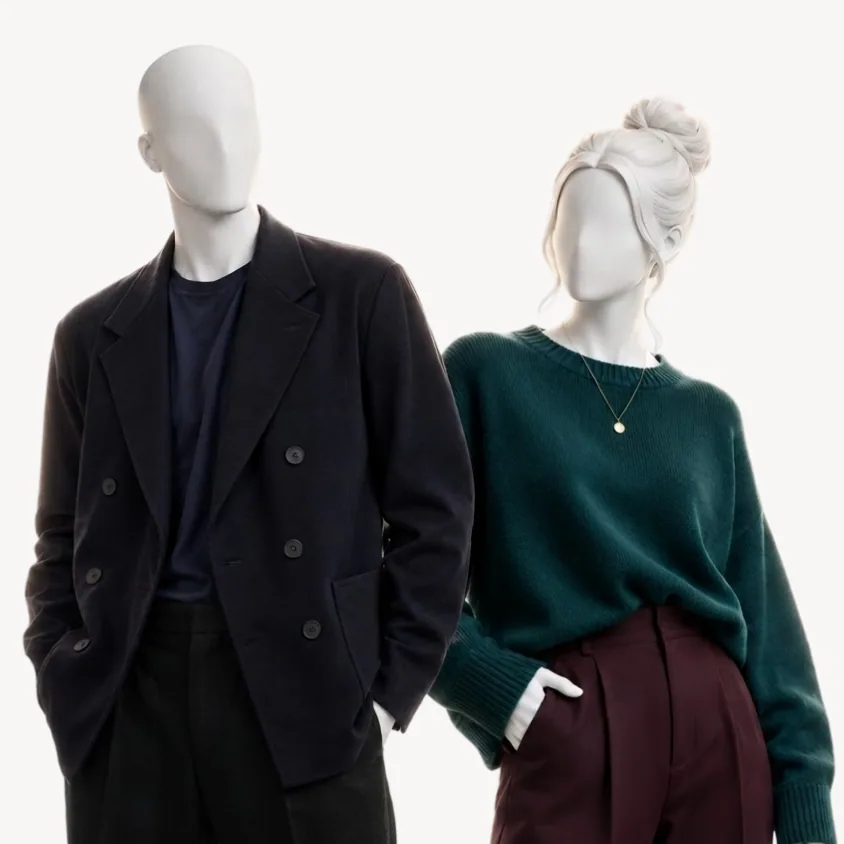 Color seasonDeep Wintercool and deep with high contrast
Seasons · 11 min
Deep Autumn vs Deep Winter: how to tell which one you are
Same depth, same high contrast. Undertone splits Deep Autumn, warm-neutral, from Deep Winter, fully cool, and one burgundy test settles it.
Seasons · 9 min
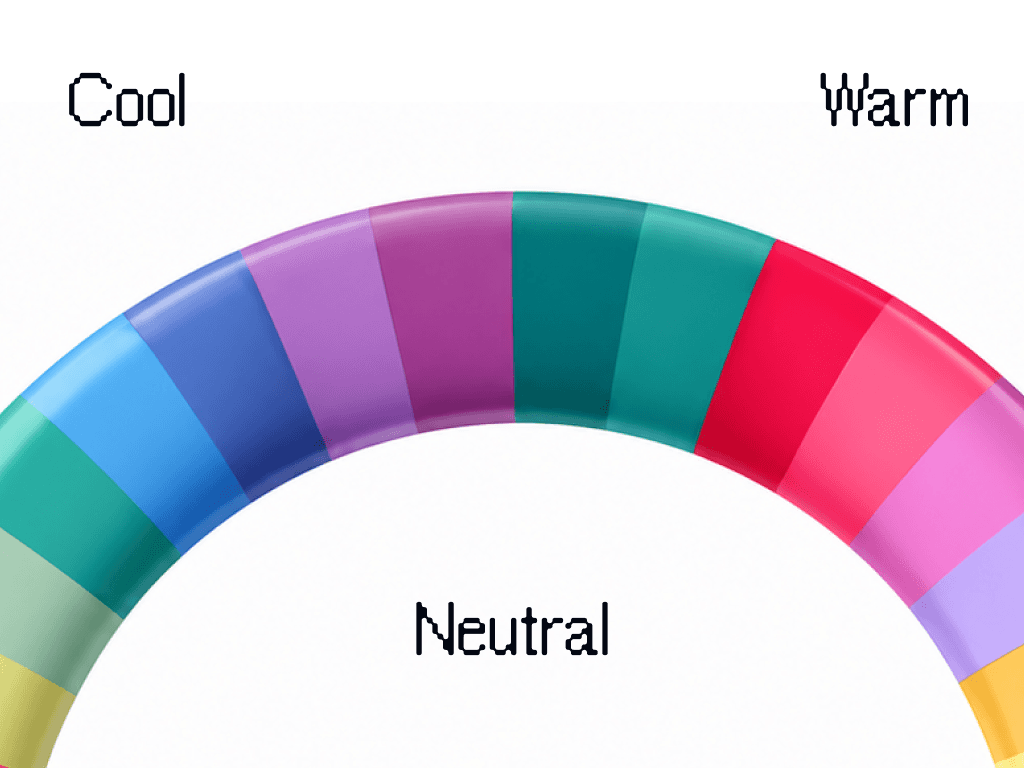
Find your undertone at home (warm, cool, or neutral)
Three daylight tests to find your undertone at home: wrist veins, gold vs silver, white paper. Plus how to read a neutral or olive result.
Method · 8 min
How to take photos for an accurate color analysis
The light, the angles, and the white paper trick. How to take five photos that give a color analysis something real to work with.
- All 12 color seasons
FAQ
Deep Autumn questions.
Deep Autumn is warm and deep with high contrast. The quick check is whether warm colors at a dark value look better on you than their opposite, and whether gold suits you better than the other metal. That gets you close. The reason people land between two seasons is that the eye compares badly under mixed light, which is what a measured analysis is for.
Nothing dramatic. The colors furthest from your palette pull attention to shadows and to any unevenness in your skin, so you look tired rather than the color looking wrong. It shows most in the piece nearest your face and barely at all below the waist, which is why the palette matters more for a shirt than for trousers.
Below the waist. Your coloring is dark enough for black, but black carries none of your warmth, so keep it to trousers and shoes, and put espresso or chocolate at the collar.
No. Deep Autumn is warm at its root, and that is the axis the whole system turns on. Two seasons can share a value and a chroma and still want opposite colors, because the undertone decides which version of a color suits you.
That is what the analysis does, but not from one photo and not from the photo alone. It reads five photos against your own answers about how you burn, what your veins look like and which metal suits you, and your answers outrank the photos where the two disagree. Your photos are used for your analysis and nothing else. They are never used to train AI models.
Yes, and it is the power color. Wine, the burgundy, is a Wear anywhere for Deep Autumn, best in the version with brown in it rather than a cool berry, styled the way the palette is built, with espresso, camel and gold. Deep Winter wears wine too, in its cooler version, so which burgundy flatters you says more about your season than whether burgundy does.
Ivory. A shirt sits at the collar, where pure white pulls gray into your face and ivory does not. Pure white and soft white are a Depends for you, below the waist: keep them for trousers and shoes.
Gold, with bronze, copper and brass beside it, because the undertone, the brown neutrals and the camel all point the same way. Silver is not ruled out entirely: mirror-bright silver reads cold beside your depth, while antiqued silver or dark gunmetal works on its own.
Yes, the deep one. Midnight blue is one of your five neutrals and a Wear at the face, so a navy suit or coat works if it is dark enough. Soft navy, the grayer version, is an accent only. It is one of the clearest differences from True Autumn, where midnight blue is a Skip.
Below the waist. Light and medium denim are both a Depends for you, so jeans work and a denim shirt or jacket does not. The sample page calls medium denim "A faded cool blue that reads too light beside your depth."
Another question about the method or your result? Write to us
Find out what suits you, and why.
A short questionnaire and five photos. Your key arrives by email, usually within 10 minutes.