women's body shape
The Hourglass, and the cuts that follow from it.
Your shoulders and hips are level and your waist is clearly narrower, so nothing needs correcting: the work is to keep that line visible. Here is what that means in practice, and why the shape on its own is only half of what decides a cut.
- Widest at no single point; the frame reads level
- 125+ cuts scored
- 10 minutes to get yours
Last updated
Hourglass at a glance
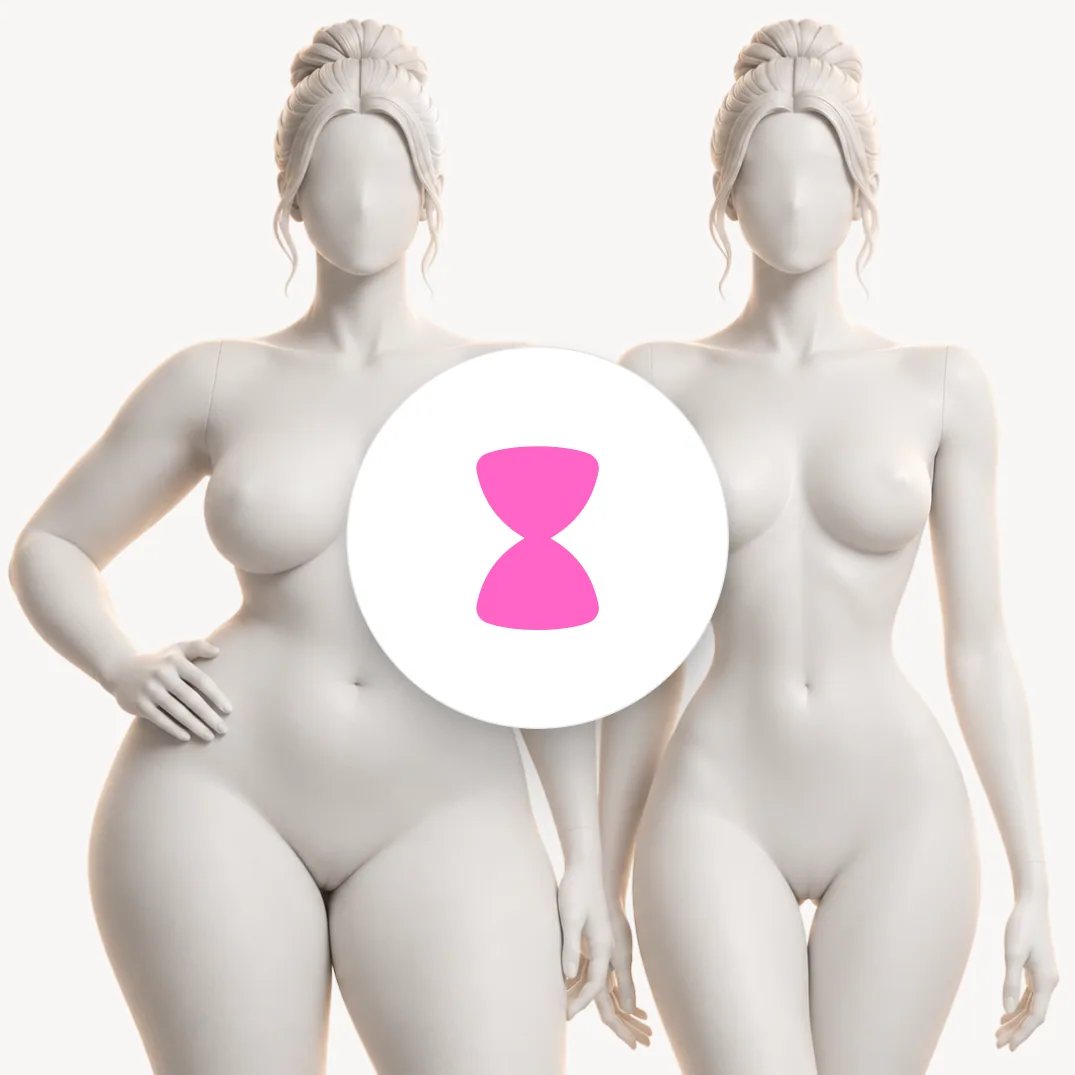
Shoulders and hips level with each other and a waist that clearly narrows between them.
- Widest at
- No single point; the frame reads level.
- Closest shapes
- Rectangle and Inverted Triangle
- Three to wear
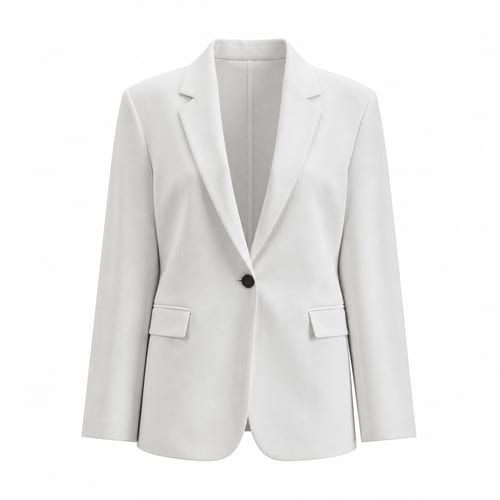 Soft-shoulder shaped blazer
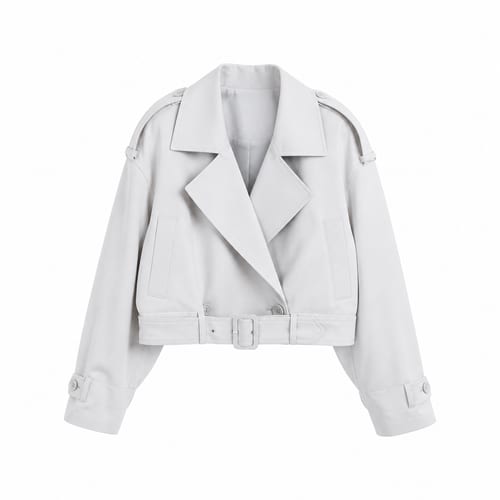 Cropped belted trench jacket
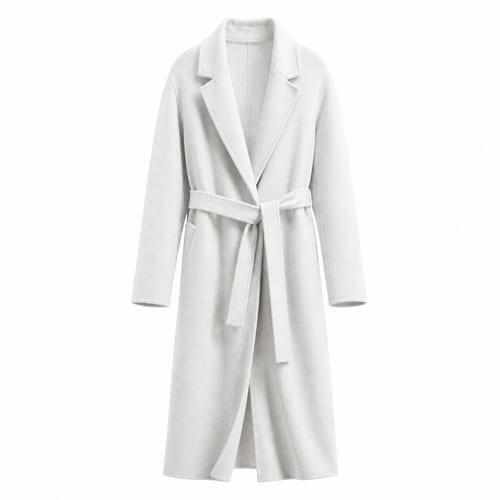 Belted coat
- Three to skip
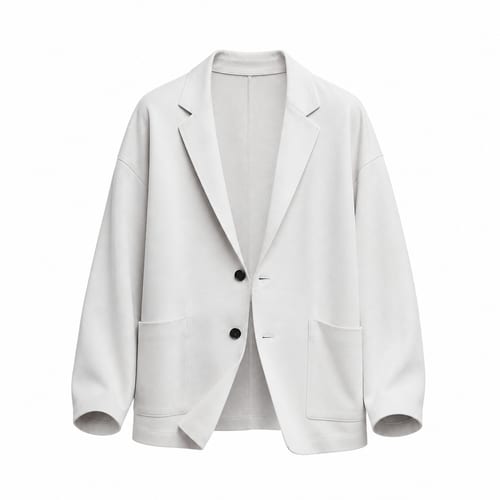 Boxy oversized blazer
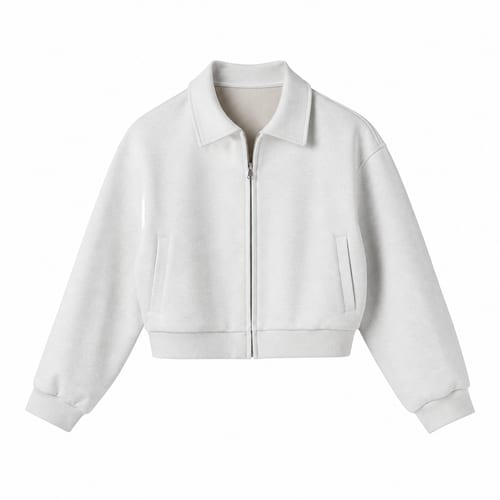 Cropped jacket
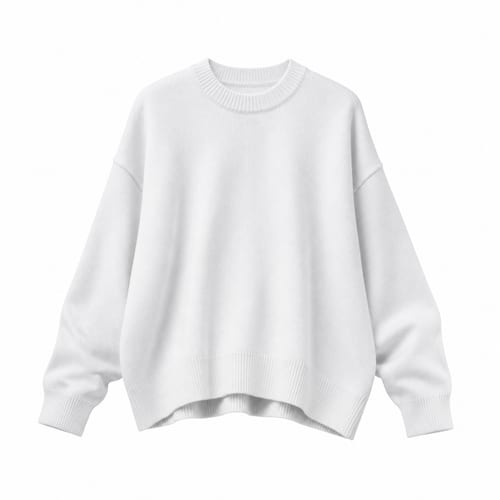 Oversized sweater
Each list below gives the reason for every piece. Your line, read separately, decides how structured each of them may be.
Where it sits
The Hourglass among the five women's shapes
Across: whether the shoulders or the hips are wider. Down: how the waist compares with both. The Hourglass sits closest to the Rectangle and Inverted Triangle.
This page
Hourglass
Shoulders and hips level with each other and a waist that clearly narrows between them.
Widest at no single point; the frame reads level
Placed by the relative widths that define each shape. Schematic, not a measurement.
Am I an hourglass?
An hourglass is a frame whose shoulders and hips measure about the same width, with a waist that clearly narrows between them, so the width sits at both ends and the narrowest point in the middle.
Clothes work on an hourglass when they follow that step in at the waist, by closing at it, shaping toward it or ending above it, instead of hanging straight from bust to hip.
Size plays no part. The hourglass is a relationship between three measurements and holds at any scale, as long as the waist sits at the narrowest point of the torso, neither high under the bust nor low on the hip.
Measured with a tape
Apparel research puts numbers on the step. The Female Figure Identification Technique (FFIT), developed at North Carolina State University to sort women's body scans into shapes and written as formulas by Lee, Istook, Nam and Park in 2007, calls a body an hourglass when the bust is no more than 1 inch larger than the hips, the hips are less than 3.6 inches larger than the bust, and the waist is at least 9 inches smaller than the bust or 10 inches smaller than the hips.
The formulas work in inches (1 inch is 2.54 cm). Measure the bust at its fullest point in a fitted bra, the waist at its narrowest, just above the navel, and the hips around the fullest part of the seat.
Tape and mirror can disagree, and the mirror is the one your clothes see. The tape reads circumference, so a deep ribcage or a full seat adds inches that never show from the front. A bust measurement says nothing about your shoulders either: a full bust over narrow shoulders can measure level with the hips while the mirror shows the hips as the wider end, and the analysis calls that frame a pear, however small the waist.
In a fitting room
Two things point to an hourglass before any tape comes out. Trousers that fit your hips gap at the back of the waistband, and a dress that closes over your bust hangs loose at the waist. Each means the step from your waist out to the rest of you is deeper than the garment was cut for. Both together point to a step at each end, which is the hourglass; the waistband gap on its own points to width carried low, which is the pear's sign.
What the analysis asks
The analysis asks the mirror's version: seen straight on, are your shoulders or your hips wider, and does your waist clearly curve in, curve in slightly or run fairly straight? Level shoulders and hips with a waist that clearly curves in make the hourglass; the same frame with a waist that curves in only slightly is a rectangle. AI reads your proportions from the two full-length photos, front and side, fixed rules weigh them with your answers, and the answers count the most.
The waist answer settles one more thing. A waist that clearly curves in keeps you an hourglass even when weight goes to your middle first, because a frame with that step is not carrying its volume at the waist. It is also the step every cut on this page is judged against.
Check it with three questions.
A quick self-check with the questionnaire's own body questions and the rules that turn them into a shape. The analysis reads the same answers together with your two body photos, front and side.
Question 1 of 3
Shoulders or hips?
Look in the mirror straight on: which is wider? Pick the closest silhouette.
What this shape actually means for clothes
An hourglass carries its width evenly, so nothing has to move from one end of the frame to the other.
What clothes have to handle is depth: the waist steps in and the bust and hip step out again. A garment cut straight through the torso has to be sized for the widest of those, then hangs from it all the way down, so the cloth shows its own width instead of yours.
That is why an oversized sweater that keeps a clean architectural line on a rectangle loses it on you: it rests on the bust and the hip and touches nothing between, and a smaller size of it fails the same way.
So the rule is short. Every cut has to acknowledge the waist in one of three ways: close at it, with a wrap or a belt; shape toward it, with a curved seam or a cloth that drapes; or end before it, with a jacket or a knit cut to the waist. A garment that does none of the three fights you however well it is made, and a belt is only the loudest of the three.
Below the waist the same step runs in reverse. A skirt or trouser has to hold at your waist and pass over the hip, so it needs room over the seat or give in the cloth; with neither, it fits one end and pulls or gapes at the other. Each card below uses one of those ways, and each card on the Skip list misses the waist or the room under it.
Wear or skip?
Six cuts. Call each one, then see why.
Each of these is on the lists further down, with its reason. Decide whether the Hourglass wears it before you read on.
- Soft-shoulder shaped blazer
- Boxy oversized blazer
- Cropped belted trench jacket
- Cropped jacket
- Belted coat
- Oversized sweater
Wear
The cuts that work
- Jackets and coatsSoft-shoulder shaped blazerIts side seams curve in where you do, so it shapes to the waist without needing a belt.
- Jackets and coatsCropped belted trench jacketBelted at the waist and ending there, so it never has to span the step to the hip.
- Jackets and coatsBelted coatCloses at your waist on the longest layer you own, so the coat borrows your outline instead of drawing its own.
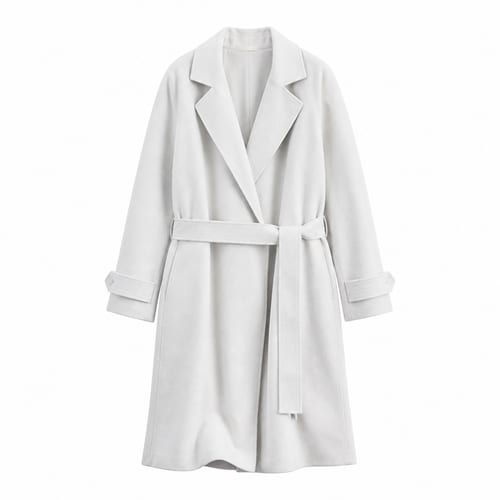 Jackets and coatsTrenchA belt at the natural waist on a structured coat, the crispest way to close a long layer.
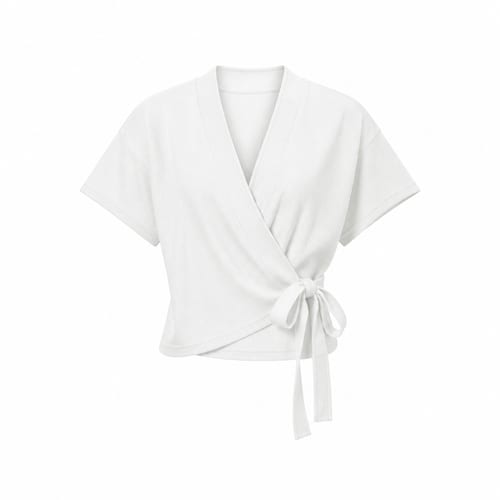 TopsWrap topThe diagonal closes at the waist, so the shaping comes from the overlap rather than from tension in the cloth.
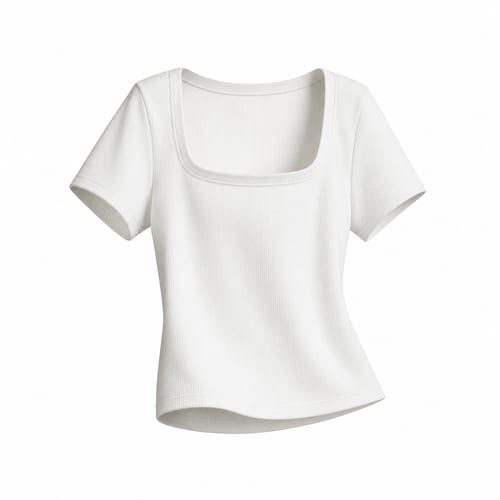 TopsSquare-neck topFitted through the body so it follows the step in, with a neckline that sits above the bust instead of across it.
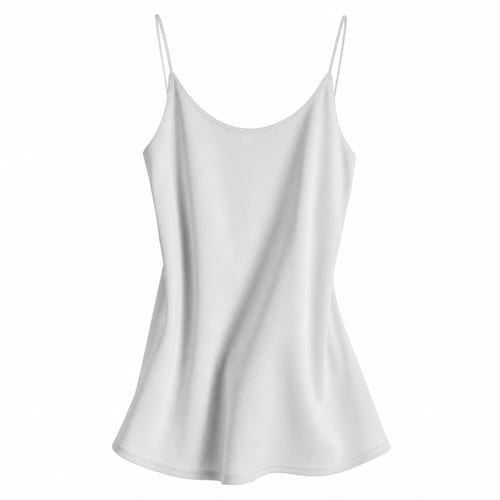 TopsBias camisoleCut on the diagonal, so it gives over the bust and settles into the waist below it.
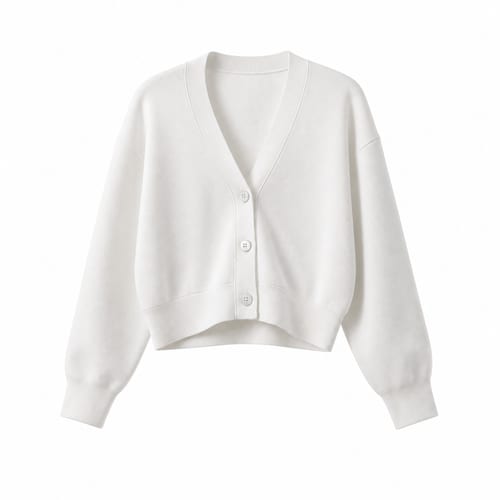 TopsCropped cardiganEnds at the waist, so it stops at your narrowest point and hands the line below to the skirt or trousers.
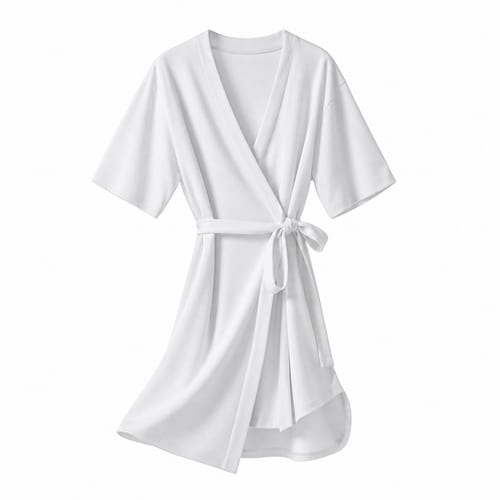 Dresses and skirtsWrap dressTies at the waist and releases below, so nothing has to stretch across the hip.
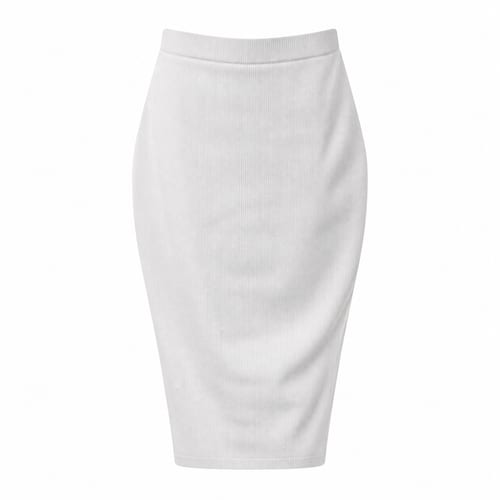 Dresses and skirtsStretch pencil skirtThe give in the cloth takes up the step from waist to hip, so it holds the curve of the seat and stays flat.
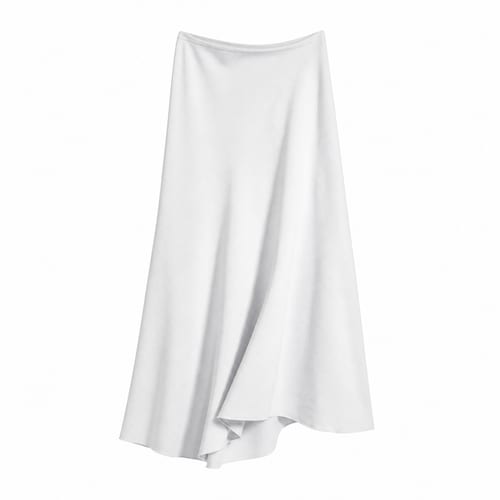 Dresses and skirtsBias midiFalls on the diagonal from the waist and keeps moving over the seat instead of catching on it.
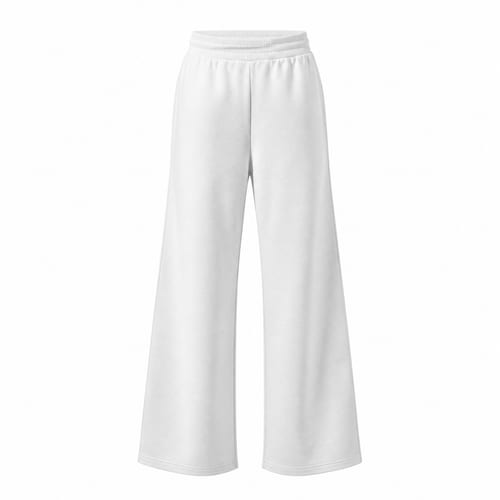 TrousersLight flareCut with room over the seat, so the waistband can be sized for your waist instead of standing away at the back.
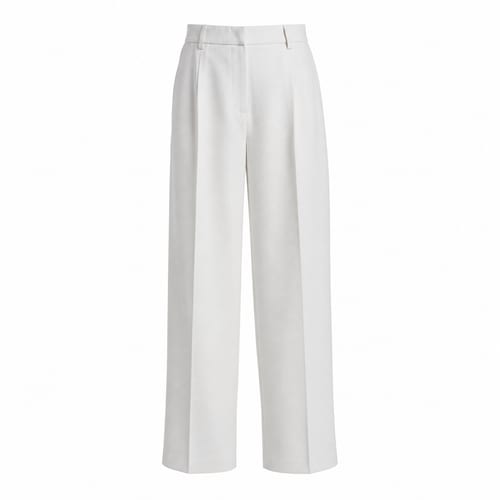 TrousersHigh-rise straightHolds at the natural waist, your narrowest measurement, and drops clean from the hip; it needs a high rise on your page.
From the list, an office day is the soft-shoulder blazer over a square-neck top and the stretch pencil skirt. A weekend is the wrap top with the light flare, and the belted coat over both.
On your page each card becomes a verdict, Wear, Depends or Skip with a reason, and a Depends carries its condition. The one that belongs to this shape is "Shaped at the waist": it needs a waist to work on, so where the waist curves in only slightly the rules swap it for "With a hip-length top" or turn the piece down. In the sample analysis, a men's trapezoid whose page reads "your waist curves in only slightly", not one cut carries it.
Skip
The cuts that fight you
- Boxy oversized blazerCut straight from the shoulder and ending at the hip, so it bridges bust to hip and shows your widest measurement from collar to hem.
- Cropped jacketShort but boxy, and it stops on the high hip rather than at the waist, so it covers the very step it was short enough to show.
- Oversized sweaterThe same failure in soft fabric: it rests on the bust and the hip and cancels the step between them.
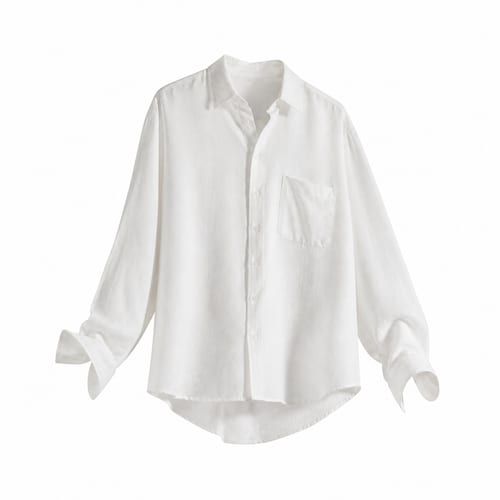 Oversized shirtA long, loose body that falls straight from the bust, so worn open or untucked it covers the waist the outfit could use.
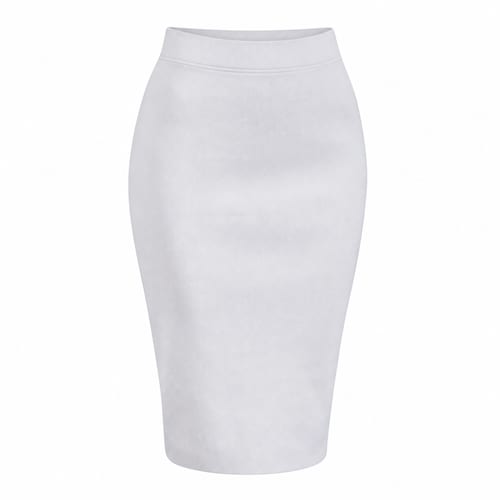 Rigid pencil skirtNo give across the seat, so it fits your waist or your hip but never both, and rides up into a crease at the hip.
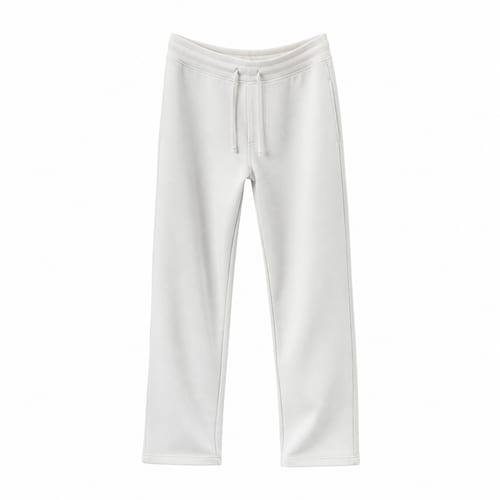 Low riseLands on your widest measurement and skips your narrowest, so the waistband sits where the step out has already begun.
In the fitting room, look side-on as well as straight on. A piece that suits this shape shows a curve at the back of the waist in profile; one that hangs straight from the shoulder blades to the seat has bridged the step, however it looks from the front.
Shape and line
Your shape names it, your line decides it
Hourglass names the job your clothes have to do, acknowledging the waist, and that is enough to sort a rack by eye. How your frame is drawn is a separate reading, your line: sharp, medium or soft, from your bone structure, the line of your shoulders and your facial features in the photos, checked against your answers. It decides whether a garment should hold its own shape or take yours.
So two hourglasses can want opposite jackets. Both need the waist acknowledged. A sharp line does it with an edge: the cropped belted trench jacket, or a trench belted shut. A medium line takes the belted coat over a square-neck top. A soft line does it with a curve, the soft-shoulder fitted blazer over a wrap top, because a crisp seam would sit on that frame like scaffolding.
Neither reading predicts the other, so read the table below through the waist rule: a sharp line's poplin shirt still goes tucked in, and a soft line's long cardigan still goes over something that closes at the waist.
Schematic, not a measurement.
Line
Your shape: where the width sits
Shoulders and hips level with each other and a waist that clearly narrows between them.
Your line: how the edges read
A frame that commits to neither pole, with edges that are neither cut nor rounded.
What it asks of a cut
- Moderate construction. Structure that is there without announcing itself.
- A natural shoulder, neither built up nor dropped.
- Fabric with body that still moves. A mid-weight knit, a soft twill.
What works against it
- Both extremes, and this is the one level where that is the whole answer: a rigidly architectural piece reads as costume, a fully fluid one reads as unmade.
Built for this line, and not ruled out by this shape
- Jackets and layersBelted coat
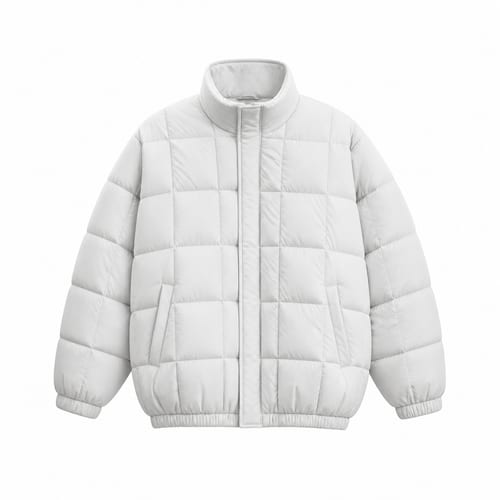 Jackets and layersQuilted puffer
- Shirts and topsSquare-neck top
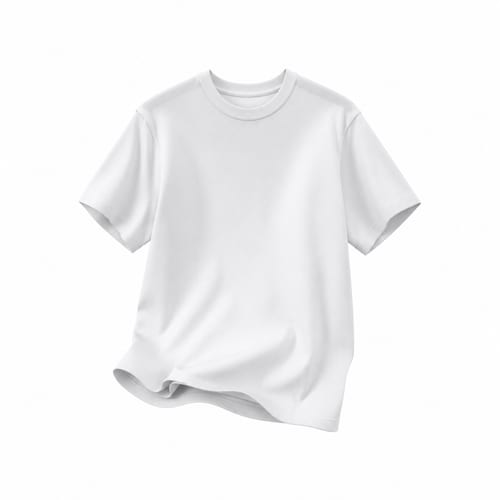 Shirts and topsFitted tee
Your body details still outrank your shape
The hourglass brings no body rules of its own, so everything that changes this page comes from you: your answer about torso and legs, and what you write under "Anything else about your body?".
Three details change it the most.
- A fuller bust. It rules out two things: a crop, because its hem would stop at the fullest part of the chest, and a stiff fitted top, whose rigid front stands away from the ribs below. Here that takes out the cropped cardigan and leaves the wrap top, which closes at the waist with no hem near the bust.
- Your rise. Trousers on your page follow one rise, set by your torso and legs: a longer torso or shorter legs make it high, anything else leaves it at mid, and every trouser at the other rise is turned down. The high-rise straight needs the high one. The light flare is not tied to a rise and stays on the list at both.
- A stronger seat or wider hips. These bring in the rules a pear lives by: no bottom without room over the curve, no stiff skin-tight bottom, no low rise, no top that ends at the hip. Every bottom on the Wear list already has the room, so the list holds; what goes are pieces like the slip dress and the pleated midi, which do not.
Narrow shoulders, a rounded midsection and a plus-size frame each have a rule as well, and every cut on your page carries its own reason.
The other women’s shapes
More on the Hourglass
- PearHips carrying more width than the shoulders.
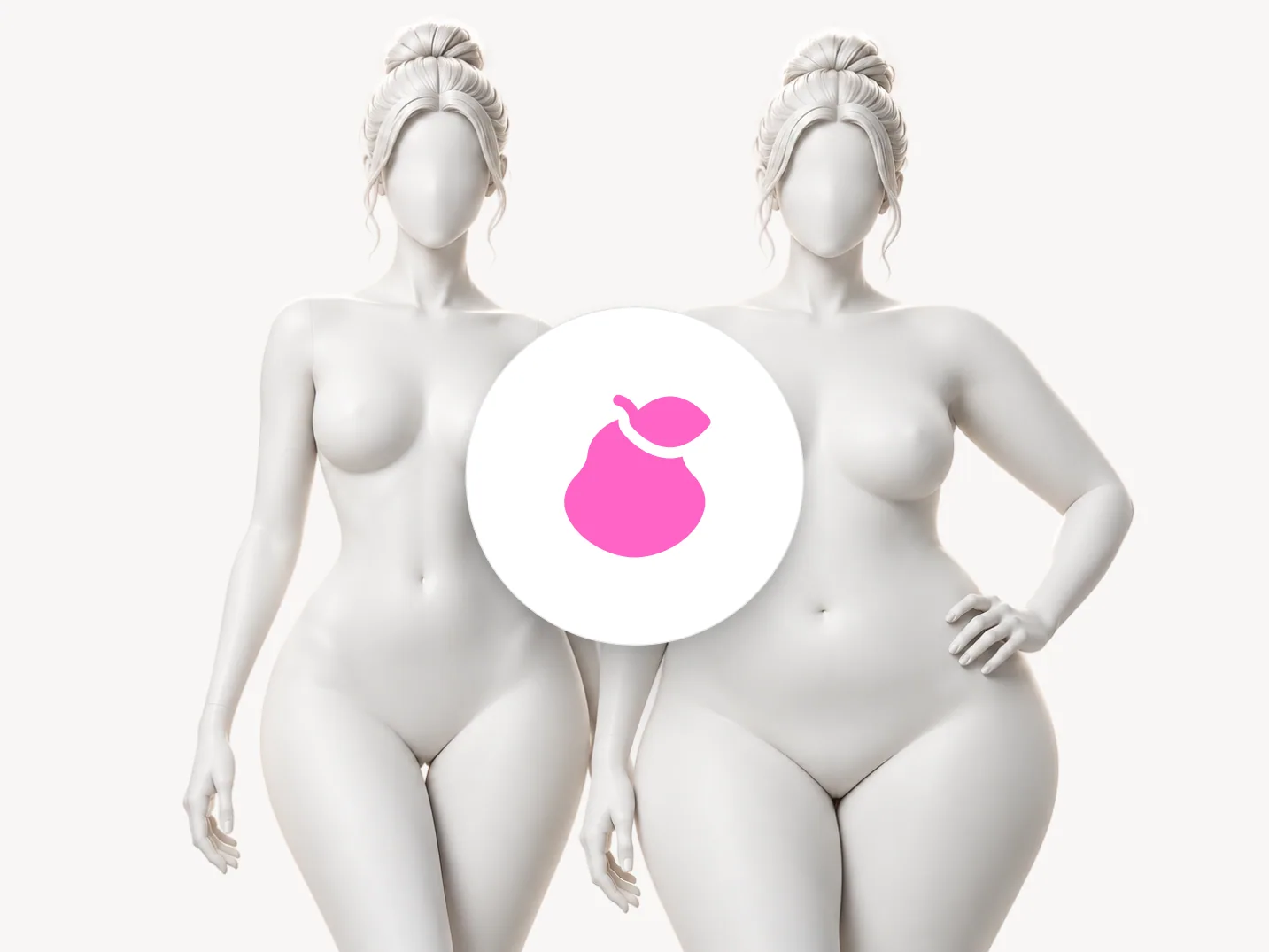
- RectangleShoulders, waist and hips running close to the same width, with no sharp narrowing at the waist.
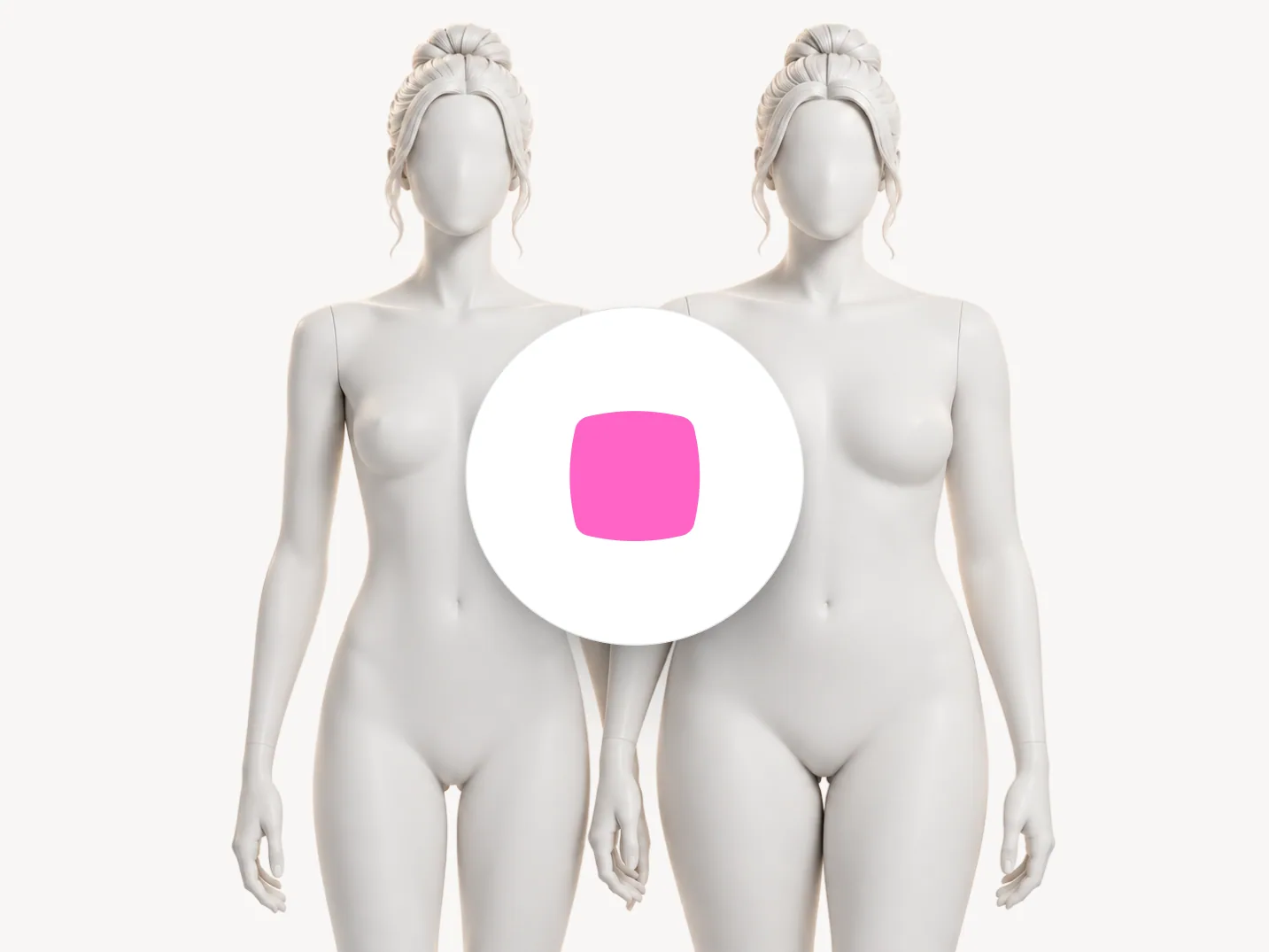
- Inverted TriangleShoulders carrying more width than the hips.
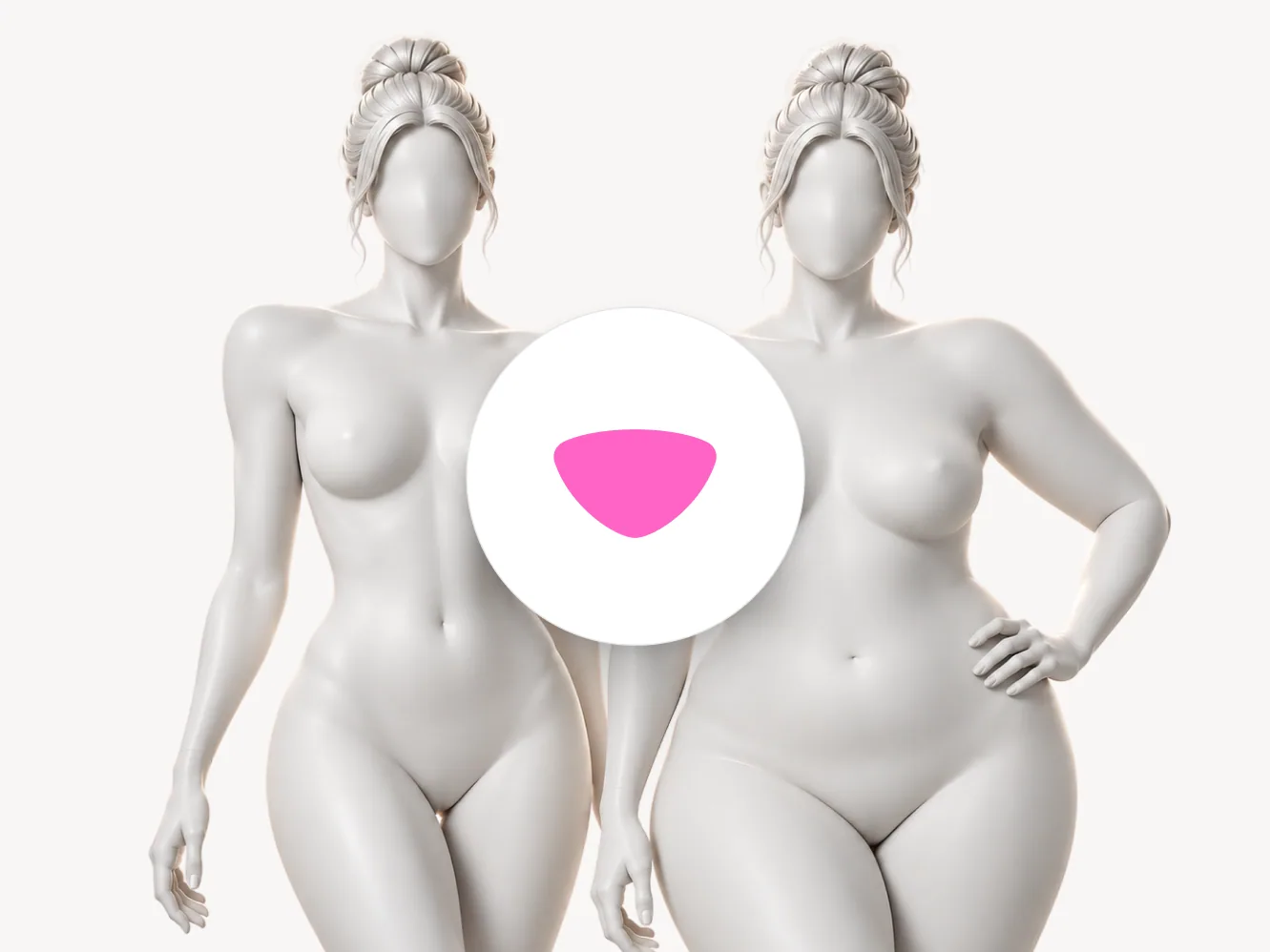
- AppleVolume gathered around the middle, with the waist the fullest part of the frame.
- All ten body shapesFive for women and five for men, side by side, with the free shape check.
FAQ
Hourglass questions.
The Hourglass is defined by shoulders and hips level with each other and a waist that clearly narrows between them. Measured rather than eyeballed, that comes down to comparing your shoulder, waist and hip widths, which is hard to do honestly in a mirror because you already have an opinion about your own body. The analysis reads it from your answers and two body photos, with fixed rules weighing both.
This one is the women's wardrobe, yes. The shapes are read separately for men and women because the same measurements imply different cuts depending on which wardrobe you are dressing from, and a system that ignores that gives one of the two bad advice.
Usually not. Shape is about proportion, not size, and proportion is mostly skeletal, and where your shoulders sit relative to your hips does not move much. What changes is where softness gathers, which can shift you between two neighboring shapes over a few years.
The waist decides it. Both shapes have shoulders and hips close to the same width. On an hourglass the waist clearly curves in; on a rectangle it curves in slightly or runs fairly straight. With a tape, the FFIT line sits at a waist 9 inches smaller than the bust or 10 inches smaller than the hips, so a waist 7 inches smaller than both, on a level frame, sorts as a rectangle. In the analysis the same split is your answer about the waist, checked against your photos.
They are the two neighbors of the hourglass in the FFIT system. A top hourglass has a bust more than 1 inch and less than 10 inches larger than the hips, with a waist at least 9 inches smaller than the bust. A bottom hourglass has hips at least 3.6 and less than 10 inches larger than the bust, with a waist at least 9 inches smaller than the hips, plus a check on the high hip that separates it from the spoon shape. Wearly Labs keeps one hourglass. A fuller bust you note in the questionnaire gets its own rule, and hips that read wider than your shoulders in the mirror make the shape a pear.
Yes. The test is proportion, not size. If your shoulders and hips land close to each other and your waist measures clearly less than both, you are an hourglass at any scale. The bust measurement goes around the ribcage and back as well as the cup, so a small cup on a broad back can still measure level with the hips.
Less common than the rectangle. When Lee, Istook, Nam and Park sorted more than 6,300 US women measured for the SizeUSA survey with the FFIT formulas in 2007, the rectangle was the largest shape group. The hourglass asks for two things at once, level width and a deep step at the waist, and the analysis asks for both as well.
Because the step from your hips to your waist is deeper than the jeans were cut for. A pair that fits your seat has a waistband sized for a wider waist than yours, and the spare width collects at the back. A cut with more room through the seat lets you buy the size that fits your waist, because the seat no longer sets the size. A tailor can also take in a gaping back waistband.
Another question about the method or your result? Write to us
Find out what suits you, and why.
A short questionnaire and five photos. Your key arrives by email, usually within 10 minutes.