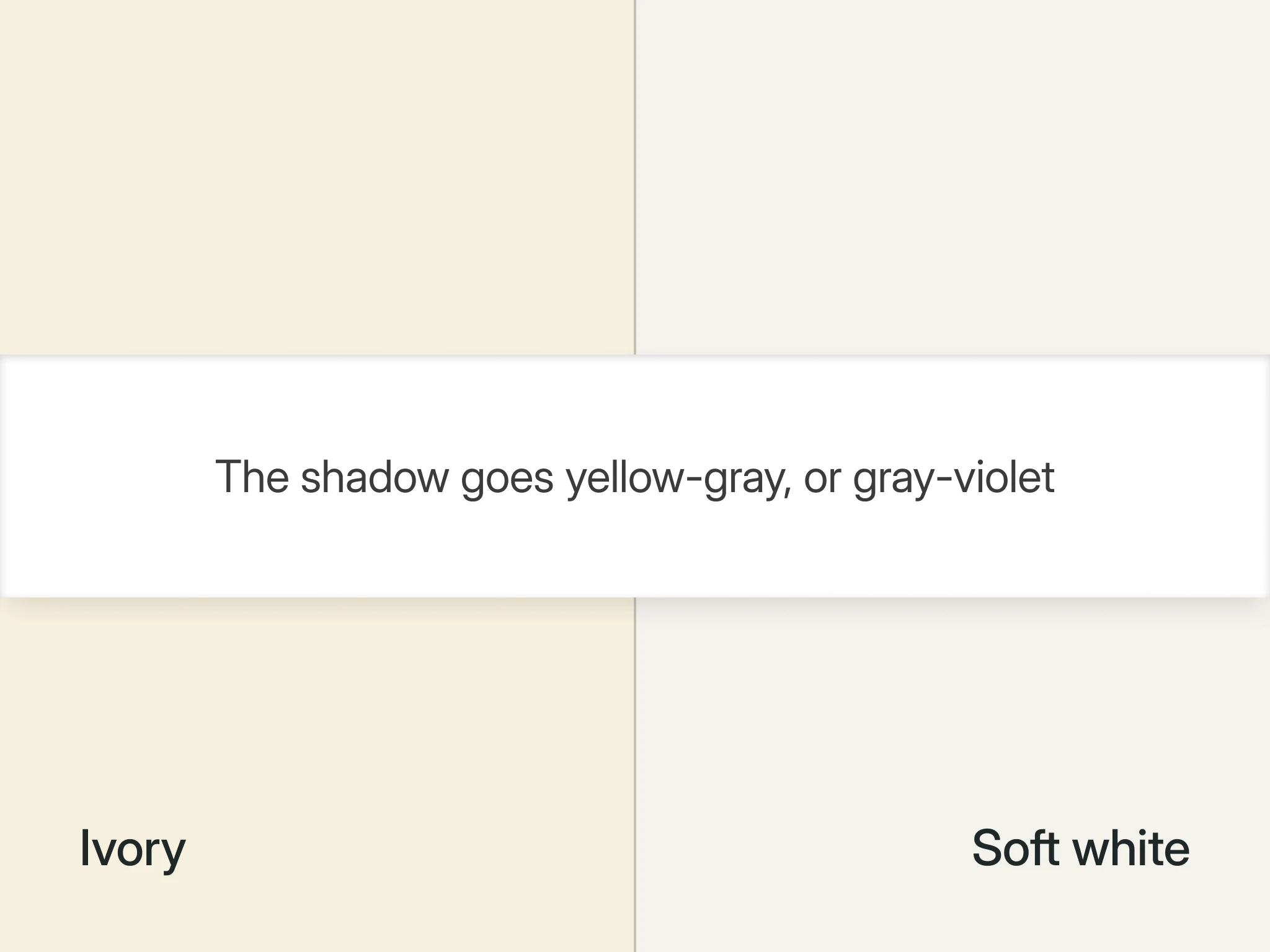
Soft Autumn and Soft Summer differ in one thing, undertone: Soft Autumn is warm-neutral and Soft Summer is cool-neutral, while both are medium in depth, muted, and low in contrast. To tell which you are, hold an ivory shirt and then a soft white one under your chin in daylight: ivory clears a Soft Autumn face, and soft white clears a Soft Summer one.
On this page
Soft Autumn vs Soft Summer at a glance
- The one difference: undertone. Soft Autumn is warm-neutral, Soft Summer is cool-neutral.
- What they share: medium value, muted chroma, low contrast, and a matte metal rather than a polished one.
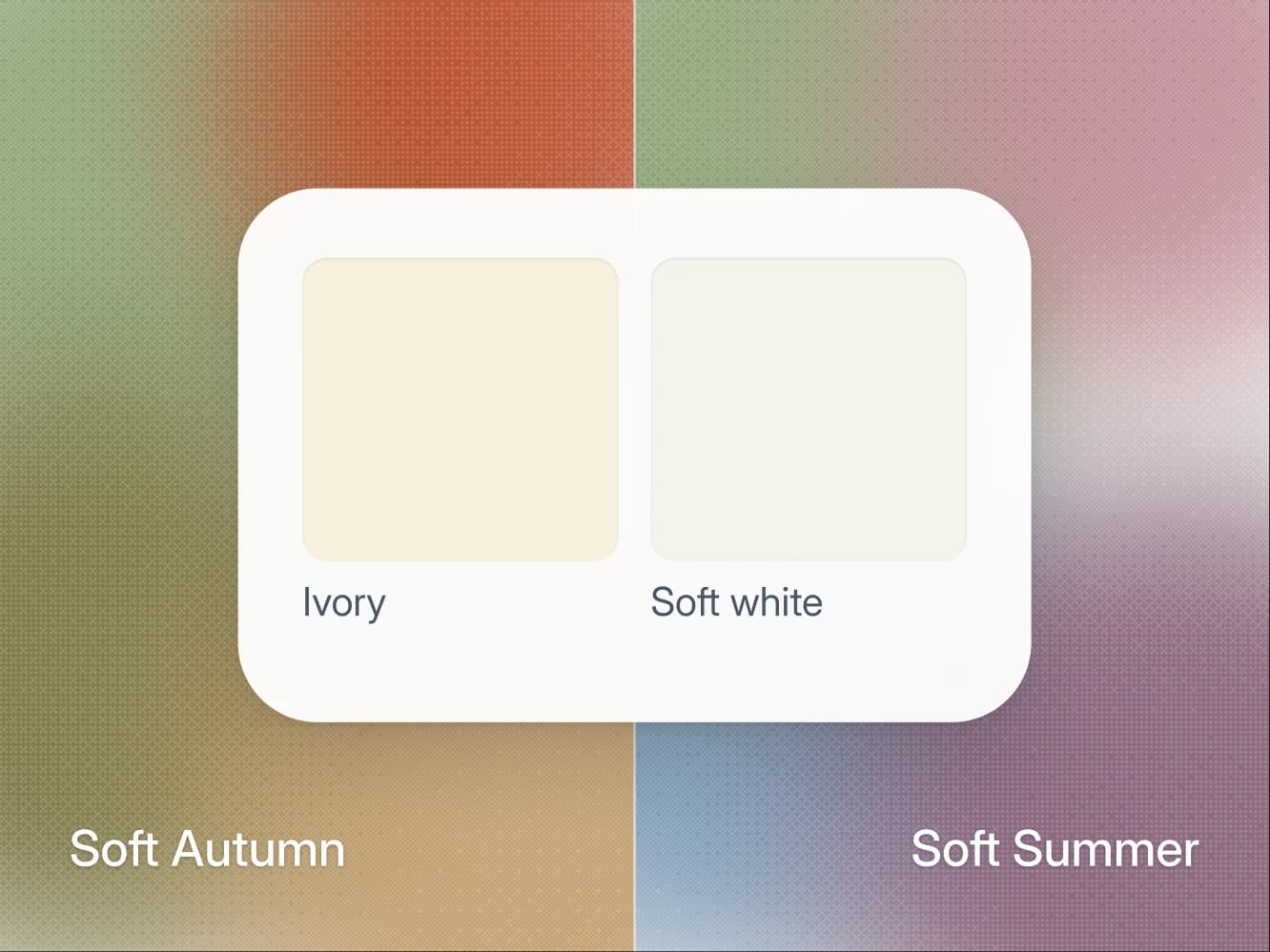
- The tell: ivory against soft white under your chin. The whites of your eyes clear on the right one.
- The palettes: 23 of the 50 colors get the same verdict in both, and 27 change.
- Metal and power color: matte gold and muted terracotta for Soft Autumn, matte silver and muted raspberry for Soft Summer.
Which one am I? The short answer
Both seasons are muted, so muted colors will not separate them. Gold or silver will: if gold looks more at home on your hand, you are almost certainly Soft Autumn, and if silver wins, you are Soft Summer.
Then check your white: Soft Autumn takes ivory, Soft Summer takes soft white. In a Wearly Labs analysis each white is a Wear for its own season and a Depends, below the waist only, for the other.
Where the two seasons agree
Three of the four axes match.
- Value: medium on both, neither light nor deep.
- Contrast: low on both. Hair, skin, and eyes sit close together in depth, with no hard jump between them.
- Chroma: muted on both, so a saturated color reads as loud on either one.
Muted is a word about chroma, the strength of a color against gray. Albert Munsell, who built his color system on hue, value, and chroma in A Color Notation, first published in 1905, defined it as "the quality by which we distinguish a strong color from a weak one."
They even share colors at the collar. Sage, warm greige, and medium denim are a Wear in both palettes, the face included, which is why the sage sweater in your closet has never told you anything. In the Wearly Labs palettes for the two seasons, 23 of the 50 colors get the same verdict: those three, nine that both keep below the waist, from wine and plum to charcoal and black, and eleven that both skip, most of them clear, strong colors such as fuchsia, royal blue, and emerald.
Both also want a matte metal rather than a polished one, so the finish question is settled before you start and only the color of the metal is in play.
Where Soft Autumn and Soft Summer split
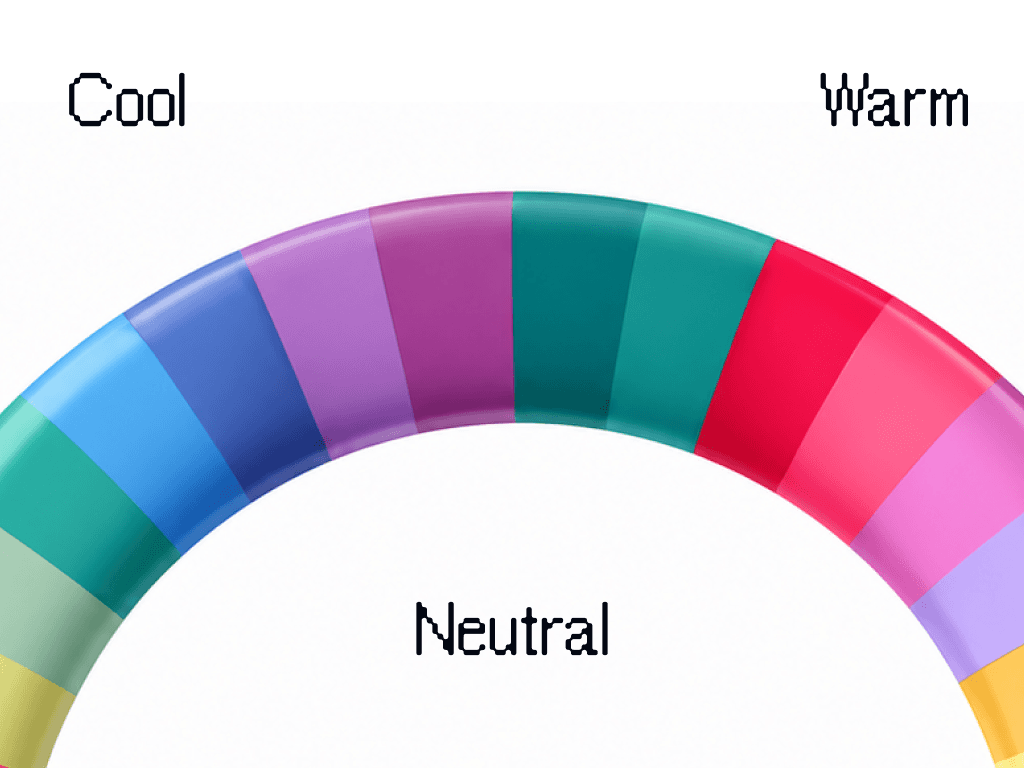
In 12-season terms each season is named for the trait that leads. Both of these lead with softness, which is low chroma, and part on the trait that comes second: warm for Soft Autumn, cool for Soft Summer, as The Concept Wardrobe sets out in its Soft Autumn and Soft Summer guides. On the wheel they are next-door neighbors: Soft Summer is the Summer that sits beside the Autumns, and Soft Autumn the Autumn that sits beside the Summers.
Everything that actually decides your wardrobe sits in this table.
| Axis | Soft Autumn | Soft Summer |
|---|---|---|
| Leads with | Softness (low chroma) | Softness (low chroma) |
| Undertone | Warm-neutral | Cool-neutral |
| Value | Medium | Medium |
| Chroma | Muted | Muted |
| Contrast | Low | Low |
| Best white | Ivory | Soft white |
| Black | Below the waist only | Below the waist only |
| Metal | Matte gold | Matte silver |
| Power color | Muted terracotta | Muted raspberry |
Read down the two season columns: only undertone, best white, metal, and power color differ, and every other row is the same.
The 27 colors where the verdicts part
A Wearly Labs analysis gives each of its 50 colors a verdict, Wear, Depends or Skip, with the reason. Depends means below the waist or as an accent only, and the last column below says which. Between these two season palettes, 27 colors change verdict:
| Colors | Soft Autumn | Soft Summer | Depends means |
|---|---|---|---|
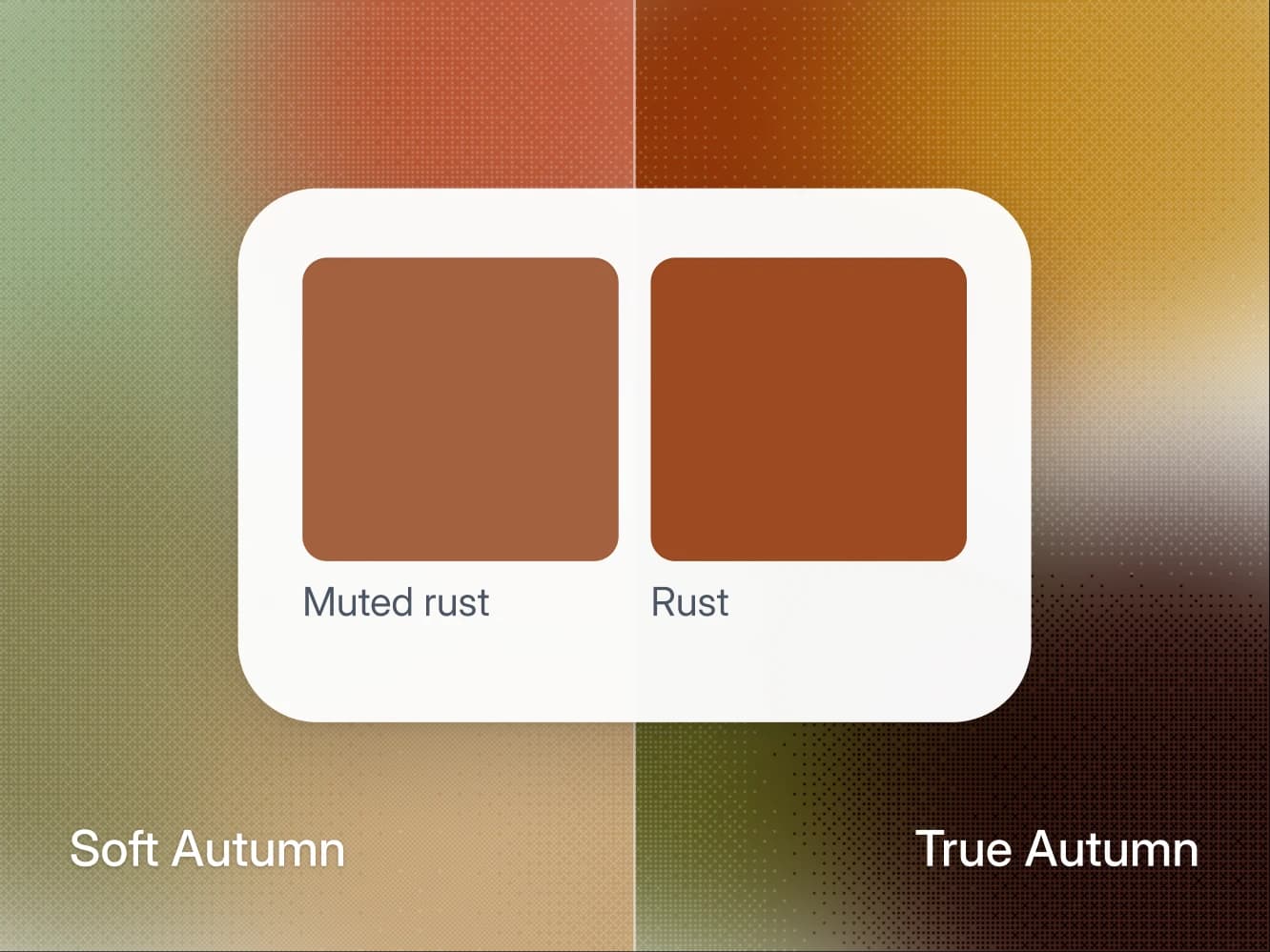
| Rust, terracotta, mustard | Wear | Skip | None |
| Olive, leaf green, peach | Wear | Skip | None |
| Ivory, camel, latte, khaki, chocolate | Wear | Depends | Below the waist |
| Coral, warm pink, warm aquamarine | Depends | Skip | Accent only |
| Light gold | Depends | Skip | Below the waist |
| Dusty pink, mauve, mint, dusty blue | Depends | Wear | Accent only |
| Light forget-me-not, soft navy | Depends | Wear | Accent only |
| Soft white, light gray | Depends | Wear | Below the waist |
| Medium gray, lavender | Depends | Wear | Below the waist |
| Lemon, ice blue | Skip | Depends | Accent only |
Read each row across: the verdict changes from one season column to the other, and the last column says what Depends means in that row. Light forget-me-not is the analysis's name for periwinkle. Row after row the split is undertone: the warm earth tones and beiges belong to Soft Autumn, the dusty cool colors and the grays to Soft Summer.
The table is also lopsided. Six colors that Soft Autumn wears at the face are a Skip for Soft Summer, and four more drop from an accent or the trousers to a Skip. Nothing Soft Summer wears at the face is a Skip for Soft Autumn: at worst it drops to an accent or to the trousers, and only two Soft Summer accents, lemon and ice blue, are a Skip for Soft Autumn. That is why the Soft Summer avoid list runs to 21 colors and the Soft Autumn one to 13.
Both full palettes are on the Soft Autumn and Soft Summer pages.
The white test: ivory against soft white
Two plain shirts, held one after the other, show the undertone directly. Three steps do it.
- Set up the light and the shirts. Find two plain shirts in the same fabric and weight, one ivory and one soft white, because a difference in sheen will fool you before the color does. Stand at a north-facing window (south-facing below the equator) around midday, with every lamp off, no makeup, and your hair pulled back.
- Hold them in turn. Ivory under your chin, then soft white, then ivory again. Do not look at the shirt. Look at the whites of your eyes.
- Read the result. On the correct white they clear: you see more white, it reads clean rather than faintly beige, and the iris sits sharply against it. On the wrong one the whites go dull and slightly yellow, the eye looks smaller than it did a second earlier, and the lower lid picks up a shadow that was not there before. A clear eye on ivory means Soft Autumn, and a clear eye on soft white means Soft Summer.
Ivory does the dulling to a Soft Summer. Soft white does it to a Soft Autumn, and the skin looks slightly bloodless along with it. Swap back and forth three or four times. The shirt you keep wanting to look away from is the wrong one.
The sample analysis shows how a white verdict reads once it carries its reason. It is the real result of co-founder Filip Poláček, whose season is Deep Autumn: warm like Soft Autumn, but much deeper. Ivory is a Wear for him, "a warm, soft neutral that gives your darker colors somewhere to rest," and soft white is below the waist only: "Soft and pale, it has no depth to meet your coloring."
On a Deep Autumn the reason is depth as much as warmth. Between the two soft seasons, where depth is the same, warmth alone decides.
What happens if you pick the wrong one
Nothing dramatic happens, which is precisely why this mistake survives for years. Muted colors are forgiving in both directions.
What you get instead is smaller and more irritating. A Soft Summer in Soft Autumn's mustard and camel picks up a yellow cast that photographs as tired rather than warm. A Soft Autumn in Soft Summer's mauve and lavender loses color altogether: the face flattens, the eyes go dimmer, and people start asking whether you are feeling all right.
The two mistakes are not the same size. A Soft Summer dressed as a Soft Autumn keeps reaching for ten colors that have no place in the palette: rust, terracotta, mustard, olive, leaf green, and peach are a Skip, and so are coral, warm pink, warm aquamarine, and light gold. A Soft Autumn dressed as a Soft Summer mostly wears colors that are only in the wrong place, fine as a scarf or as trousers and wrong as the shirt. The exceptions are lemon and ice blue, which are a Skip for Soft Autumn.
One useful check is black. It is a Depends in both seasons, below the waist only, so if black has been your default at the collar for years, it is the first thing to change whichever of the two you turn out to be. Soft navy or medium gray takes its place for a Soft Summer, and khaki, camel, or warm greige for a Soft Autumn.
If the white test does not decide it
If you have run the white test twice and still cannot see a difference, that usually means you sit close to genuinely neutral, which is common at this end of the palette. Stop repeating it and change the color. Three checks, in this order:
- Hold a plain mid gray at your face in the same daylight and watch your eyes rather than your skin. The test The Concept Wardrobe gives for this border: if your eyes turn grayish beside it, even ones that are greenish or flecked with brown, you are likely Soft Summer, and if they stay green, hazel, or olive, you lean Soft Autumn.
- Hold an olive or terracotta top at your jaw. Both are a Wear for Soft Autumn and a Skip for Soft Summer, so they fail in plain view if you are the cool one: the skin turns sallow and the shadow under the eyes deepens. If the olive simply sits there and looks like yours, you are on the Soft Autumn side.
- Check the other border. If ivory wins but every muted color still looks dull on you, look at Soft Autumn vs True Autumn. If soft white wins with the same doubt, look at Soft Summer vs True Summer.
The verdicts point the same way as the gray test: light gray and medium gray are a Wear for Soft Summer and below the waist only for Soft Autumn.
In a Wearly Labs analysis, AI reads undertone, value, chroma, and contrast together from five photos, with a white sheet of paper in frame to correct the light. Your answers about your hair, your eyes, your wrist veins, and how your skin takes the sun sit beside the photos. When a photo contradicts a clear answer, the answer decides. Photos fill in what the questionnaire doesn't ask. That is where a borderline case actually gets decided.
Soft Autumn vs Soft Summer: common questions
No, but you can sit close to the border. Neutral-leaning coloring is real: your wearable range is wider than average and your mistakes are quieter. You still get one palette, and the white test above is how a borderline case gets decided. Until then, the 23 colors with the same verdict in both seasons are safe ground.
Sage, warm greige, and medium denim, the collar included: those three are a Wear in both palettes. Nine more get the same Depends in both, below the waist only: wine, soft pink, midnight blue, plum, espresso, pure white, charcoal, black, and light denim. A wardrobe built on those twelve holds up whichever season you turn out to be.
No: hair contributes, but on its own it settles nothing. Undertone lives in the skin and does not move when you color your hair, though dyeing changes the picture near your face, so analyze in the hair you actually wear. As a lean rather than a verdict, The Concept Wardrobe describes Soft Summer hair as ash blonde to ash brown, and Soft Autumn hair as strawberry blonde to golden brown, slightly ashy because it is muted, with golden highlights that come up in the sun.
Olive skin alone does not decide it. Its green cast is easy to read as warm, yet The Concept Wardrobe lists olive among the Soft Summer skin tones. Let the two whites decide, in daylight, and use the undertone tests as a second opinion.
No, sage is the least useful test color you could pick, because it is a Wear in both palettes. Use ivory against soft white instead, since those two differ in warmth. Soft white against pure white is a weaker test: what separates those two is mostly how bright the white is, not how warm. Pure white itself is a Depends in both seasons, kept below the waist.
Below the waist, in both cases. Light gray and medium gray are a Wear for Soft Summer and a Depends for Soft Autumn, kept to trousers and shoes. Camel, latte, and khaki are the same in reverse: a Wear for Soft Autumn, below the waist only for Soft Summer. Charcoal is the gray both keep below the waist.
No, most of it stays. Of the 50 colors, 23 keep the same verdict in both seasons, and 15 of the 27 that change only move between the collar and the trousers or an accent, so those pieces stay in a smaller role. The real replacements are the colors that become a Skip: ten for a Soft Summer who has been dressing as a Soft Autumn (rust, terracotta, mustard, olive, leaf green, peach, coral, warm pink, warm aquamarine, light gold), and two, lemon and ice blue, for a Soft Autumn who has been dressing as a Soft Summer.