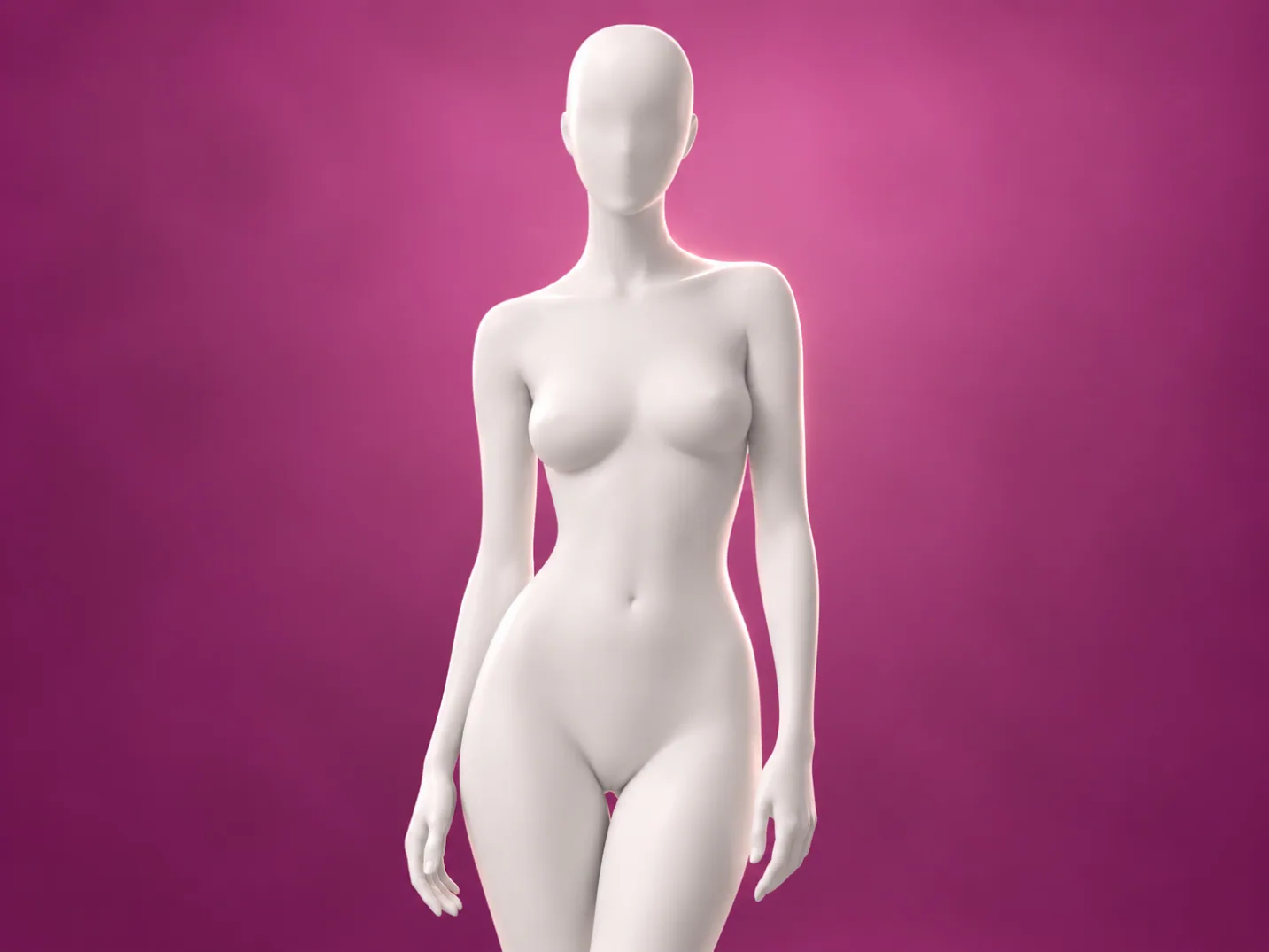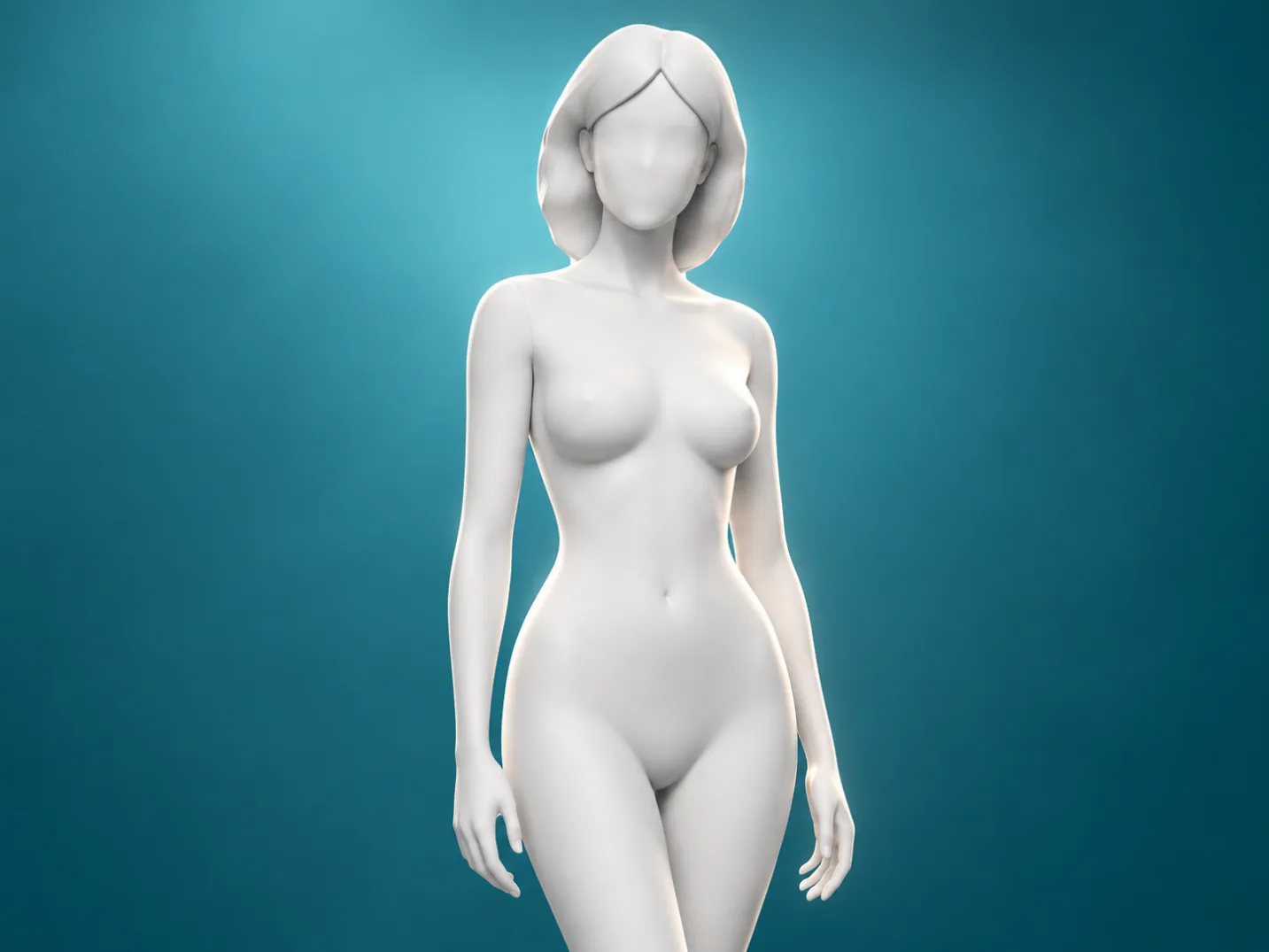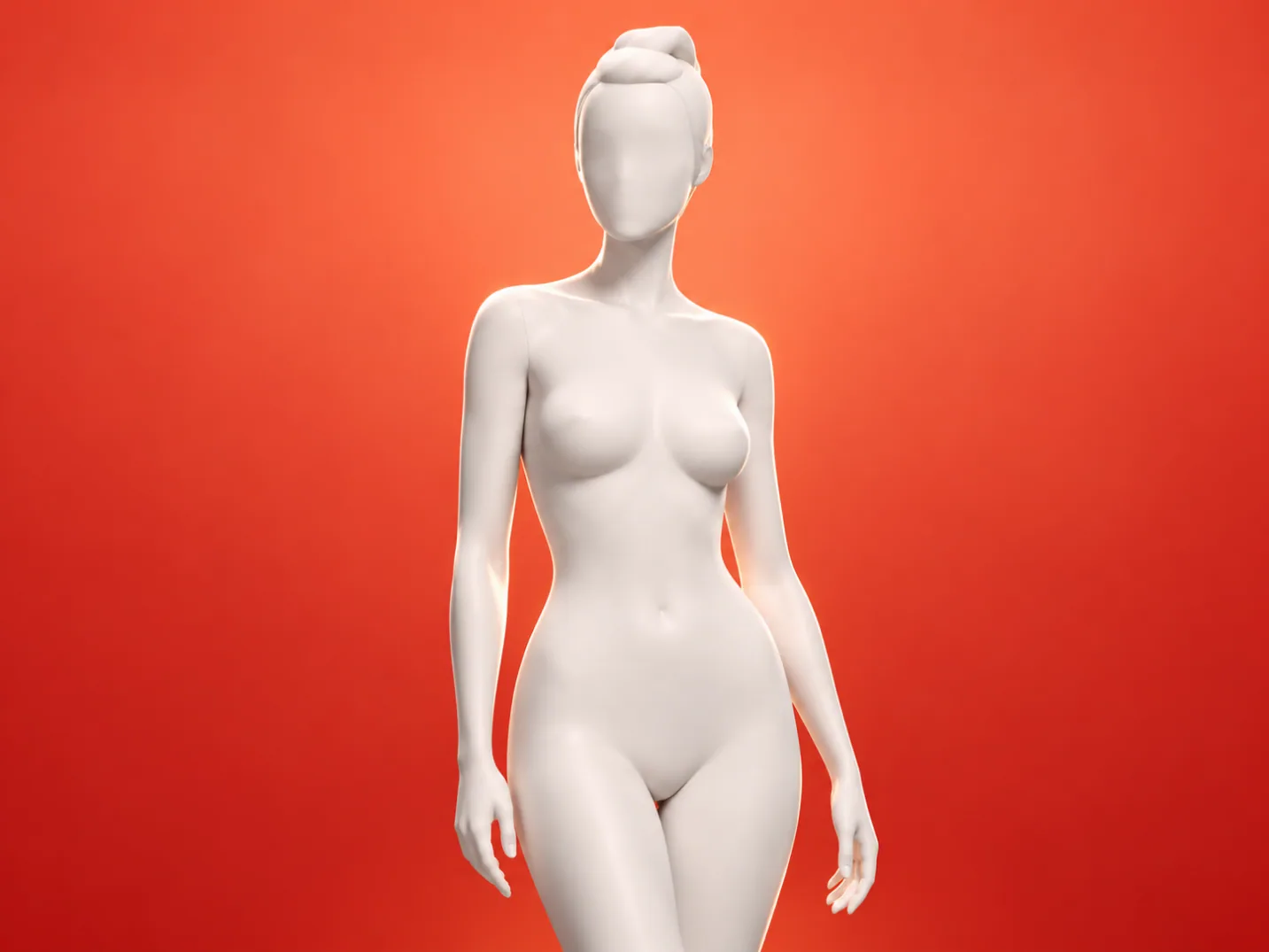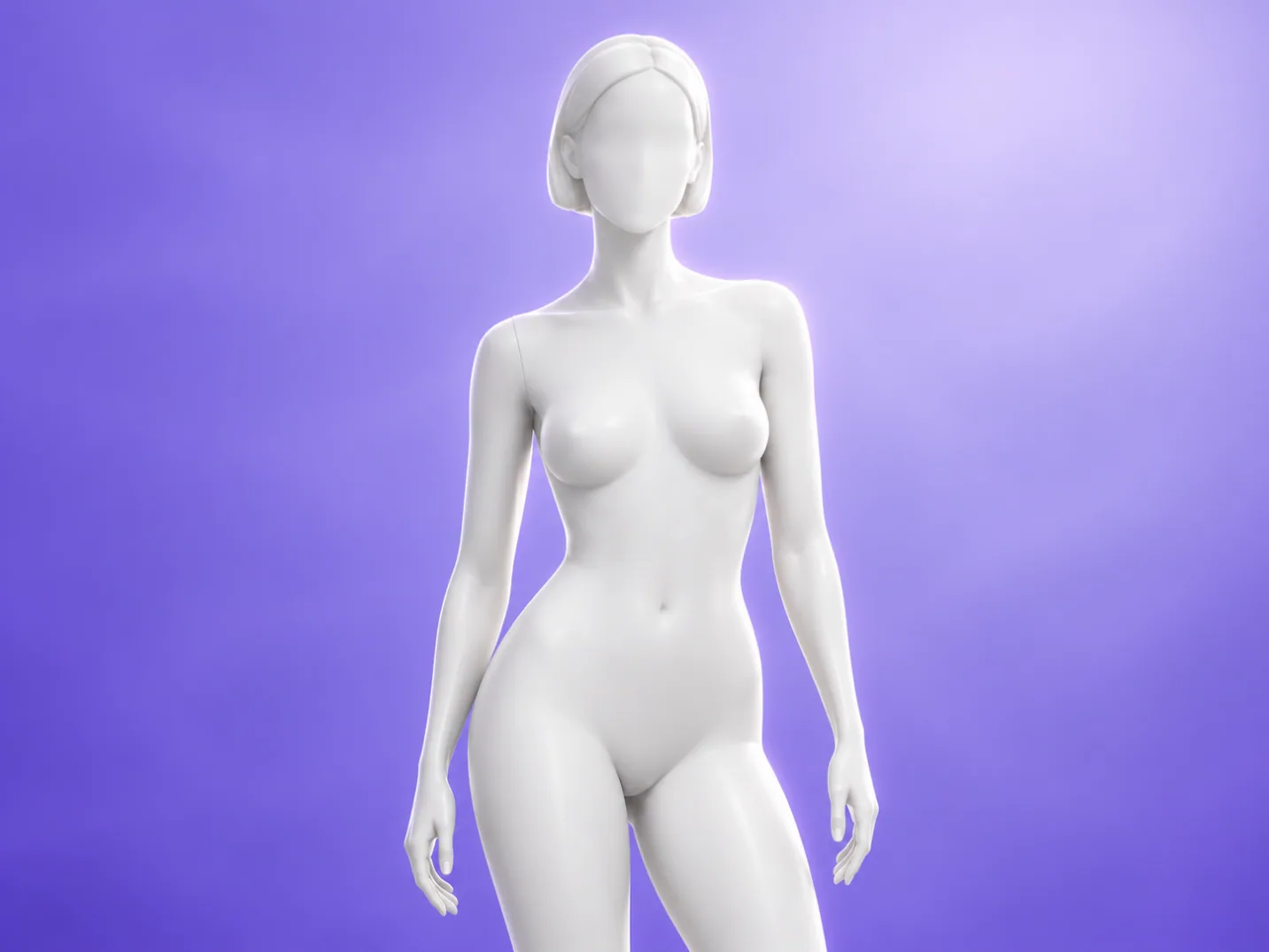
If your frame reads balanced and softly rounded, and a wrap dress looks composed on you while an oversized shirt looks like it swallowed you, you are probably a Soft Classic, the Kibbe type organized around the waist. Kibbe himself calls his types Image Identities. In Metamorphosis (1987) David Kibbe sets it at moderate height, with symmetrical bones and an evenly proportioned bust, waist and hips, and it dresses best in soft tailoring, wrap lines and cloth that gives. The whole system is laid out in Kibbe body types, explained.
On this page
Kibbe Soft Classic at a glance
- Frame in Kibbe's 1987 outline: moderate height, up to 5 feet 6 inches, symmetrical bones with soft edges, evenly proportioned bust, waist and hips.
- What the clothes ask for, in our reading: soft construction, fitted to regular volume, a rounded and draped line, a neutral vertical.
- Pieces that work: a soft-shoulder shaped blazer, wrap dress, belted coat, fine merino knit, soft-pleated trousers with a slight taper.
- Pieces that fight: padded shoulders, stiff cloth, oversized volume with no waist, crisp crops that end at the hip, straight structured trousers.
- Most often mistaken for: Dramatic Classic, which takes the sharp shoulder and stiff cloth that Soft Classic refuses.
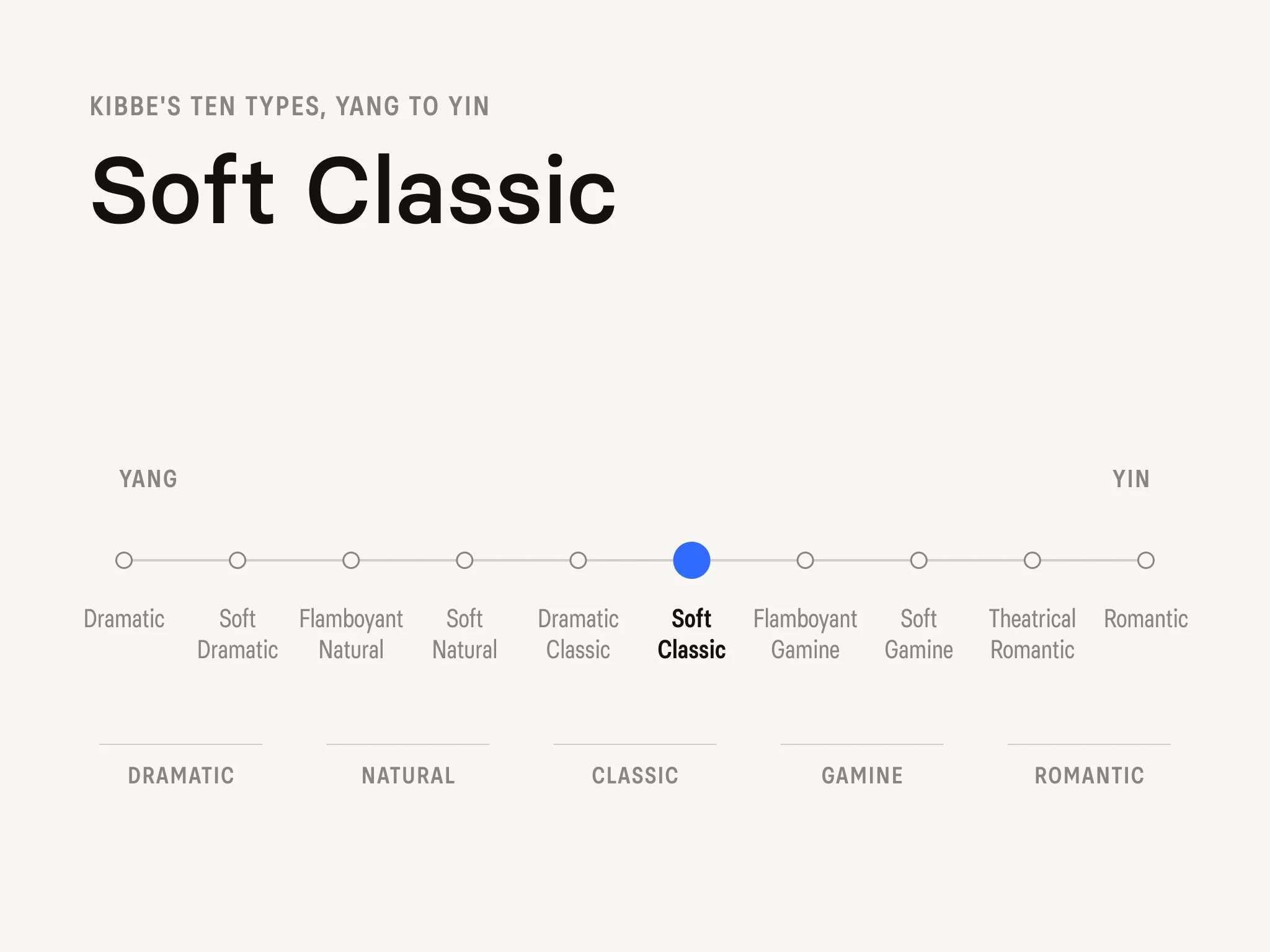
Am I a Soft Classic?
Soft Classic names a type, not a shape, so the question is how your clothes should be built rather than where your width sits. A Soft Classic frame reads balanced and softened at once, with nothing angular or extreme. The waist is the point the silhouette organizes around.
Kibbe's own profile in Metamorphosis, as the Kibbe Body Types fan wiki transcribes it:
- Height: moderate, up to 5 feet 6 inches (about 168 cm).
- Bones: symmetrical, with "soft or slightly rounded edges".
- Proportions: bust, waist and hips evenly proportioned.
- What guides built on the book rule out: a large or angular bone structure, a boyish or muscular build, a frame that reads tall, an extremely petite and delicate one, and "a true hourglass figure, with a waspish waist" (The Concept Wardrobe).
The changing room test takes three checks:
- Put on a wrap dress or a belted coat. A yes: it looks composed, because the garment organizes itself around your waist.
- Put on an oversized shirt. A yes: it looks like it swallowed you. This is not a close call but a hard no, because volume without shape buries the waist.
- Put on a padded-shoulder blazer, then a soft-shoulder shaped one. A yes: the soft shoulder looks like yours and the padded one looks built on top of you.
Three yeses make Soft Classic the reading to test first. In our reading it sits at neutral on the vertical axis, so the clothes do not need to lengthen you or cut you short.
A Kibbe type is not a body shape
Shape says where you carry your width: hourglass, pear or rectangle for women. Those are words you already own, and they still work in a fitting room. A Kibbe type answers a different question: how your clothes should be built.
Take two women who both read as an hourglass, with a waist that curves in clearly. On the one who is a Soft Classic, a trench is a Skip, because it is stiff and cut straight. On the one who is a Dramatic Classic, the same trench is a Wear, so the shape does not tell you the type and the type does not tell you the shape. Guides built on the book even list a waspish hourglass among the signs against Soft Classic, so the example is about the shape as we read it, not a claim that every hourglass is one.
Our analysis starts from the same question, but your page does not name a Kibbe type. It reads two things, your shape and your line (sharp, medium or soft), and gives every cut a verdict with a reason: Wear, Depends or Skip, where a Depends prints the condition it depends on, such as "in a longer cut". The full method is on the body type analysis page.
What Soft Classic asks of your clothes
In Metamorphosis, Kibbe asks Soft Classic for "smooth, soft, symmetrical silhouettes with slight shaping", and his avoid list reads like a map of the neighbors: "hard-edged geometric silhouettes" (Dramatic), "wide, unconstructed silhouettes" (Natural), and "overly crisp and fitted silhouettes with staccato lines" (Gamine). Those are the book's style pages as the fan wiki transcribes them. His 2025 book, David Kibbe's Power of Style, is described by its publisher as an overhaul and update of the Image Identity system, so the 1987 text is the original rather than his last word. These four axes are our translation of Soft Classic into something you can check a garment against.
Construction: soft. Shape without stiffness. A jacket here can be fully tailored, but the cloth has to give.
Volume: fitted to regular. Close to the body or normally cut, with room where the body needs it and no more.
Line: rounded and draped. Curved seams, wrap lines, cloth that moves instead of holding a corner.
Vertical: neutral. Nothing needs lengthening and nothing needs cutting short.
No single axis decides this type on its own: a piece that misses on one axis can still pass with a condition. What the type will not give up is the waist. That makes one conflict non negotiable: oversized volume with no waist emphasis is a hard no rather than a compromise, because it buries the thing the type is built on.
The cuts that work
A blazer with shape and no edge (Wear). A soft-shoulder shaped blazer gives you a waist and a lapel without building an angle into the shoulder, so construction stays soft and the line stays rounded.
Wrap lines (Wear). A wrap dress, a wrap top, a wrap skirt. Each does waist emphasis and a rounded line in one move.
A coat that admits it has a waist (Wear). A belted coat, tied rather than hanging open, keeps the shape through the middle instead of dropping a rectangle over it. The trench looks like the same idea but is built stiff and cut straight, so in our reading it misses construction and line at once and lands on Skip.
Fine knits and drape below the waist (Wear). A fine merino knit or a thin roll-neck holds the line without stiffness. An A-line midi or a bias midi carries the draped half of the line axis and gives room over the curve.
Trousers with a soft line and room over the seat (Wear). Soft pleats with a slight taper, a barrel leg with a curved seam, or a soft pull-on trouser that tapers. Kibbe's 1987 list asks for the same thing in nearly those words, "soft pleats, slight gathers, and a slightly tapered leg", and rules out "man-tailored styles with sharp edges".
A soft-shouldered trouser suit (Depends). It passes once it is shaped at the waist, because the waist is the one thing the type will not trade. A knitted blazer with lapels also passes, in a longer cut.
The list is not a ceiling. A piece that appears on no list can be checked against the same four axes, which is why the axes matter more than the list does. And the final call is per person, not per type: the same pleated trouser can pass on one Soft Classic and fail on another, because the rise it is cut at has to match the rise your proportions call for.
The cuts that fight you
A sharp shoulder (Skip). A padded-shoulder blazer puts a built angle on a frame the type reads as rounded. It misses construction and line in the same seam.
Stiff cloth (Skip). A rigid pencil skirt has no give over the curve, and a stiff stand collar is rejected on Romantic, Theatrical Romantic, Soft Gamine and Soft Classic alike.
Oversized volume with no waist (Skip). An oversized shirt, an oversized sweater, a boxy oversized blazer. Each fails for the same reason: the volume would be tolerable, and the missing waist is what the type cannot accept.
A crisp crop that stops at the hip (Skip). A boxy cropped jacket or a stiff cropped denim jacket ends at the high hip and cuts the outline into blocks. That broken line belongs to the Gamine types, and Kibbe's list names "extremely cropped jackets that are crisp and 'perky'" outright. A short jacket in soft cloth that closes at the waist is a Depends: it can pass, but only because it keeps the waist.
Straight, structured trousers (Skip). Straight-leg tailored trousers, straight high-rise trousers and rigid mom jeans all miss the rounded line, and the tailored and rigid ones miss construction as well. A stretch jean cut for curves is a Depends, passing once it is shaped at the waist, while in our reading the rigid straight jean is a Skip.
Heavy workwear (Skip). A relaxed parka or an oversized shirt jacket is boxy, coarse and shapeless at once. Three misses, one purchase.
For men
The four axes work the same way in menswear, and only the garment vocabulary changes. How a men's jacket sits on different frames is covered in men's proportions and fit.
A men's Soft Classic wardrobe is softly constructed jackets, merino sweaters and roll-necks, soft pleated trousers with a slight taper, and suede rather than a hard polished toe. The jacket is where this type is won or lost. A soft shoulder with a little shaping at the waist reads as tailoring. A hard padded shoulder reads as armor, even in beautiful cloth.
What fails is the hard padded shoulder, stiff cloth and volume with no waist: the structured classic suit, the denim trucker, the parka, the boxy overshirt and the oversized shirt, the last three for the same reason they fail in womenswear. The chore jacket and the heavy tee are closer calls than they look. Both are soft and regular and miss only on line, so in our reading they are a Depends rather than a Skip. A fine merino knit under a softly built jacket, over soft tapered trousers, does the job the overshirt was hired for and does it on axis.
The sample analysis, the real result of our co-founder Filip Poláček, shows how such verdicts read on a page. His page reads Trapezoid with a medium line. His boxy overshirt is a Skip, with the reason in one line: "So much spare cloth in the chest pockets and body that your own shape vanishes." His chore jacket is a Depends, and the condition sits beside it: in a longer cut.
Where people get this wrong
The common misread is Dramatic Classic. Both readings want tailoring and balance, and both look wrong in sloppy clothes. The split is construction: if a sharp shoulder and a stiff cloth read as clean rather than harsh on you, Soft Classic is probably not your reading, because both are flat fails here. The trench is the quickest single test: in our reading it is a Wear on Dramatic Classic and a Skip on Soft Classic.
The second misread runs on the word classic. People hear it as minimal, buy boxy neutral basics in good fabric, and land in exactly the silhouette the type rejects. Boxy is not a safe middle here, and a boxy oversized cut is the hard no. Kibbe's 1987 list rules out "minimal, 'no detail' looks" by name, so Soft Classic keeps the shape and takes the sharpness out.
The third misread is Soft Natural, and it runs through the word soft. Both types want a soft shoulder and both reject stiff cloth, so on jackets they mostly agree. The split is finish against ease. Soft Natural takes relaxed, textured, unconstructed pieces: a long unstructured blazer, straight trousers with room, an oversized linen shirt shaped at the waist, and Soft Classic refuses all three.
Soft Classic takes delicate finish instead: a bias camisole, a ballet wrap cardigan, a blouse with a soft ruffle at the neck. Soft Natural refuses those as too delicate. Try the ruffled blouse, then a washed linen shirt worn loose. If the blouse looks finished and the linen looks careless, test Soft Classic.
The same pieces, read through each neighbor in our four axes, before any body detail comes in (women's wardrobe):
| Type | Trench | Bias camisole |
|---|---|---|
| Soft Classic | Skip | Wear |
| Dramatic Classic | Wear | Skip |
| Soft Natural | Skip | Skip |
| Romantic | Skip | Wear |
Read across a row: Soft Classic and Dramatic Classic give opposite answers on both pieces, which is why the trench is the quickest test. Soft Natural refuses the camisole as too delicate, and the Romantic row matches Soft Classic on both.
| Type | Soft-shouldered trouser suit | Oversized linen shirt |
|---|---|---|
| Soft Classic | Depends | Skip |
| Dramatic Classic | Wear | Skip |
| Soft Natural | Wear | Depends |
| Romantic | Skip | Skip |
Read it the same way: Soft Classic and Romantic agree on the linen shirt and part on the suit, which is the line axis. On Romantic a straight-lined piece fails outright, while on Soft Classic it passes once it is shaped at the waist.
Your body details still outrank your type
The type profile is a starting position, and specific body facts override it. Kibbe says as much about his own quiz: "if you don't know how to answer the questions in the quiz, then the quiz is pointless" (MEL Magazine, 2021). On a Soft Classic, where the waist is the anchor, body details act in four places.
- Seat and hips. A stronger seat or wider hips rule out bottoms with no room over the curve and no stretch, which takes the rigid pencil skirt off the table twice over. They also rule out any top or jacket that ends at the hip, the same place the crisp crop already fails.
- Thighs. Broader thighs rule out trousers with no thigh room, so the soft pleat and the barrel leg stay and the straight tailored cut goes.
- Bust. A fuller bust rules out a crop and a stiff fitted top, which is a second reason to keep the cloth soft.
- Torso and legs. A longer torso or a shorter leg calls for a high rise, which takes the mid and low rises off the list and keeps the line at the waist.
The traffic runs one way: a body detail can take a piece off your list, but it cannot put back one the type has already refused. The label narrows the field. Your body makes the call.
Kibbe Soft Classic: common questions
Not to the inch, but height counts. Kibbe's 1987 profile puts Soft Classic at moderate height, up to 5 feet 6 inches (about 168 cm), and guides built on it count a frame that reads tall as a sign against it. What decides is whether you read moderate or long, not the number on the wall. In our reading Soft Classic sits at neutral on the vertical axis, so the clothes have no length to add and none to take away.
Because the failure lies in volume with no shape put back anywhere, not in ease itself. Soft Classic is organized around the waist, so a garment that covers the waist and offers nothing in its place loses the one thing the type will not trade.
Yes, as long as the shoulder is soft and the waist is real. A soft-shoulder shaped blazer and a padded-shoulder blazer can be identical in cloth and color and still land on opposite sides of the verdict. A little definition is allowed: Kibbe's 1987 list accepts "small, crisp pads". What it rules out is the overly tailored, sharp-edged jacket.
Check how a straight line lands on you, since on paper the two share the same four settings: soft, fitted to regular, rounded, neutral. On Romantic, line and volume decide, so a straight-lined piece fails outright. On Soft Classic no single axis decides, so a soft-shouldered trouser suit passes once it is shaped at the waist, and a knitted blazer with lapels passes in a longer cut. If clean tailoring in soft cloth looks right on you, test Soft Classic first, and if it reads as too plain rather than too sharp, test Romantic.
No. Hourglass is a shape: shoulders and hips close to the same width, with a waist clearly smaller than both. Soft Classic is a type, about how your clothes should be built. Knowing one does not give you the other, and guides built on Kibbe's 1987 book even list "a true hourglass figure, with a waspish waist" among the signs that you are not a Soft Classic.
Kibbe's own examples in Metamorphosis start with Olivia de Havilland, his prime example, and include Merle Oberon, Joan Fontaine, Norma Shearer, Carolina Herrera and Meryl Streep, as the fan wiki transcribes the list. Lists online go further and do not agree with each other: as of October 2026, Grace Kelly is on Our Fashion Garden's list and not on Kibbe Body's. Use them lightly. A red carpet photo shows styling built for that person, not how a jacket will sit on you.
No. Your page does not name a Kibbe type. It reads your shape and your line (sharp, medium or soft), and gives every cut Wear, Depends or Skip with its reason. The sample analysis shows what that looks like.